
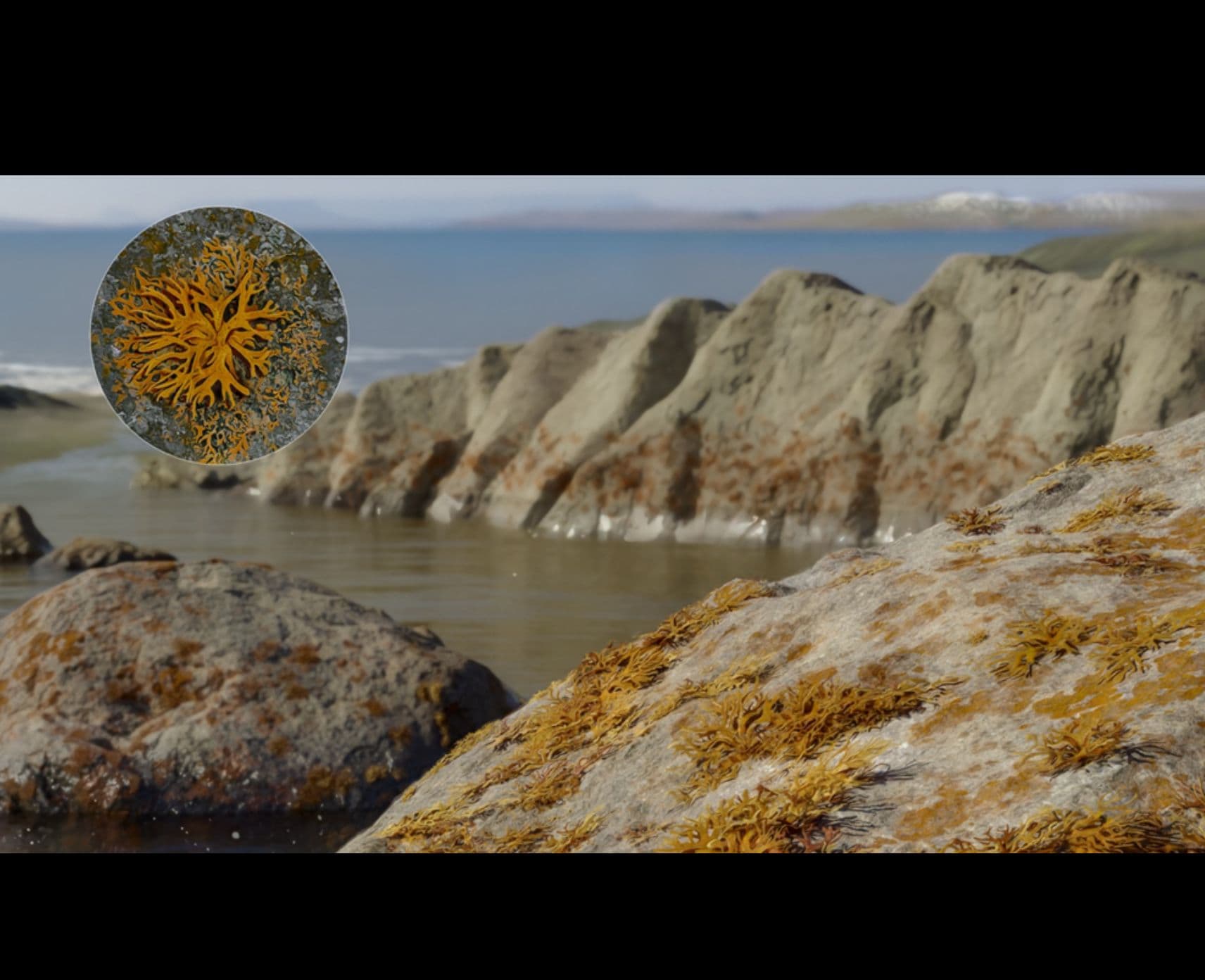
Ancient lichen paved the way for plants and animals to thrive on Earth
Lichens were already widespread over 410 million years ago, according to a new international study which identifies a fossil from Brazil as one of the oldest lichen in Earth’s history.
The team used cutting-edge x-ray imaging and other modern techniques to examine a fossil known as Spongiophyton, from the Devonian time period (around 419.2 to 358.9 million years ago).
According to lead author Dr Bruno Becker-Kerber from Harvard University, the fossil shows a similar combination of fungi and algae to modern lichens.
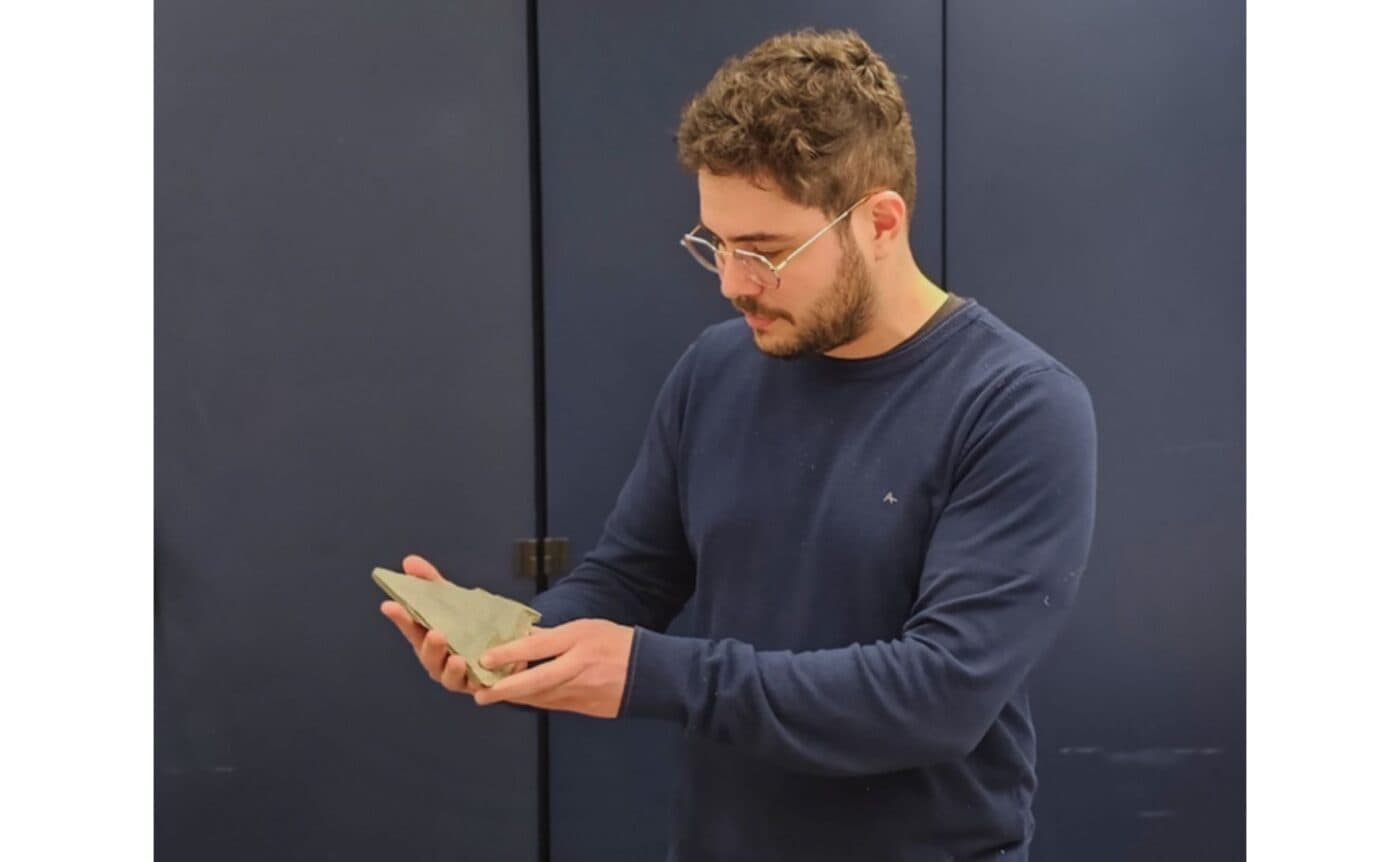
“Our findings show that lichens were not marginal organisms, but key pioneers in the transformation of Earth’s surface,” he said.
“They helped create the soil that allowed plants and animals to take hold and diversify on land.”
The results suggest ancient lichens first evolved in the cold polar regions of the supercontinent Gondwana, in areas that correspond to modern-day South America and Africa.
“Spongiophyton is an extraordinary fossil with extraordinary preservation. It is essentially mummified with organic matter intact,” ANU Professor Jochen Brocks said.
“The tough material in simple plants is cellulose. Lichens, on the other hand, are decidedly weird – they are composed of the same material that makes beetles and other insects tough – chitin.
“Chitin is loaded with the element nitrogen. When we analysed Spongiophyton, we got an enormous nitrogen signal, never seen before. You rarely get such a clear result, it was a Eureka moment.”
According to the authors, lichens still play a crucial role today in producing soil, recycling nutrients, and capturing carbon in extreme environments from deserts to polar regions. Yet their origins have remained obscure due to their fragile nature and scarce fossil record.
“This work shows how essential it is to combine conventional methodologies with cutting-edge techniques,” co-author Nathaly L. Archilha from the Brazilian Synchrotron Light Laboratory said.
“Initial measurements guided us toward key regions of interest, and only then could we collect 3D nanometric imaging, revealing the complex fungal and algal networks that define Spongiophyton as a true lichen.”
The study brought together over 20 institutions and advanced facilities in Brazil, Australia, the U.S., the U.K., and France.
The results are published in Science Advances.
Artistic reconstruction of Spongiophyton. Photo: J. Lacerda.
Contact the media team
Related tags:
You may also like

Scientists observe pairs of atoms existing in two places at once for the first time
In a new quantum physics experiment, ANU researchers have shown that matter can experience entanglement – an effect Einstein dismissed as ‘spooky action at a distance’.
How many Nobel Laureates does it take to light up an auditorium?
Here's what happens when three Nobel Laureates come together to explore the ideas, discoveries and experiences that underpin world-leading research.
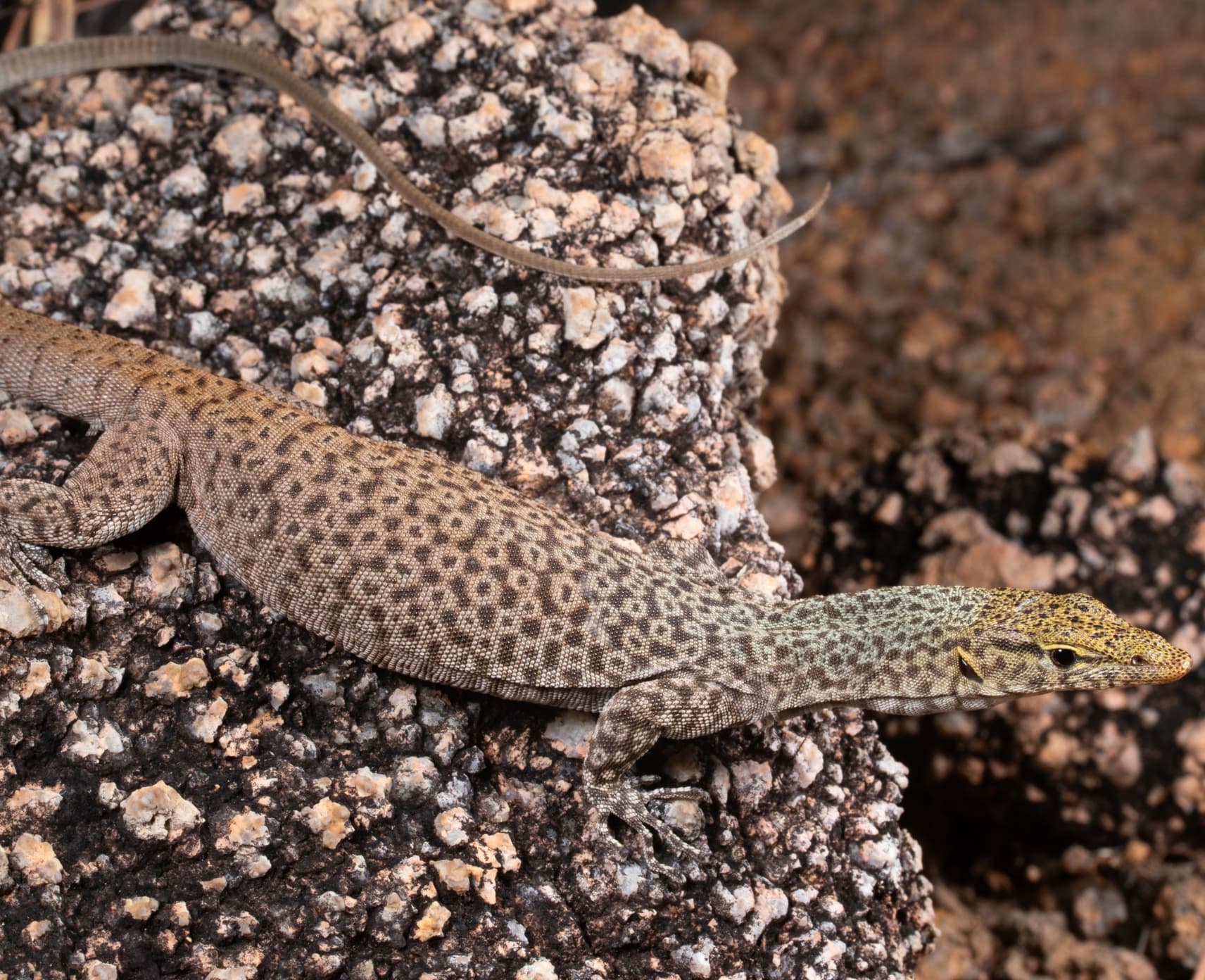
Three new rock monitor lizard species discovered in northern Queensland
These are the first rock monitors known from the eastern Australian savannas.