
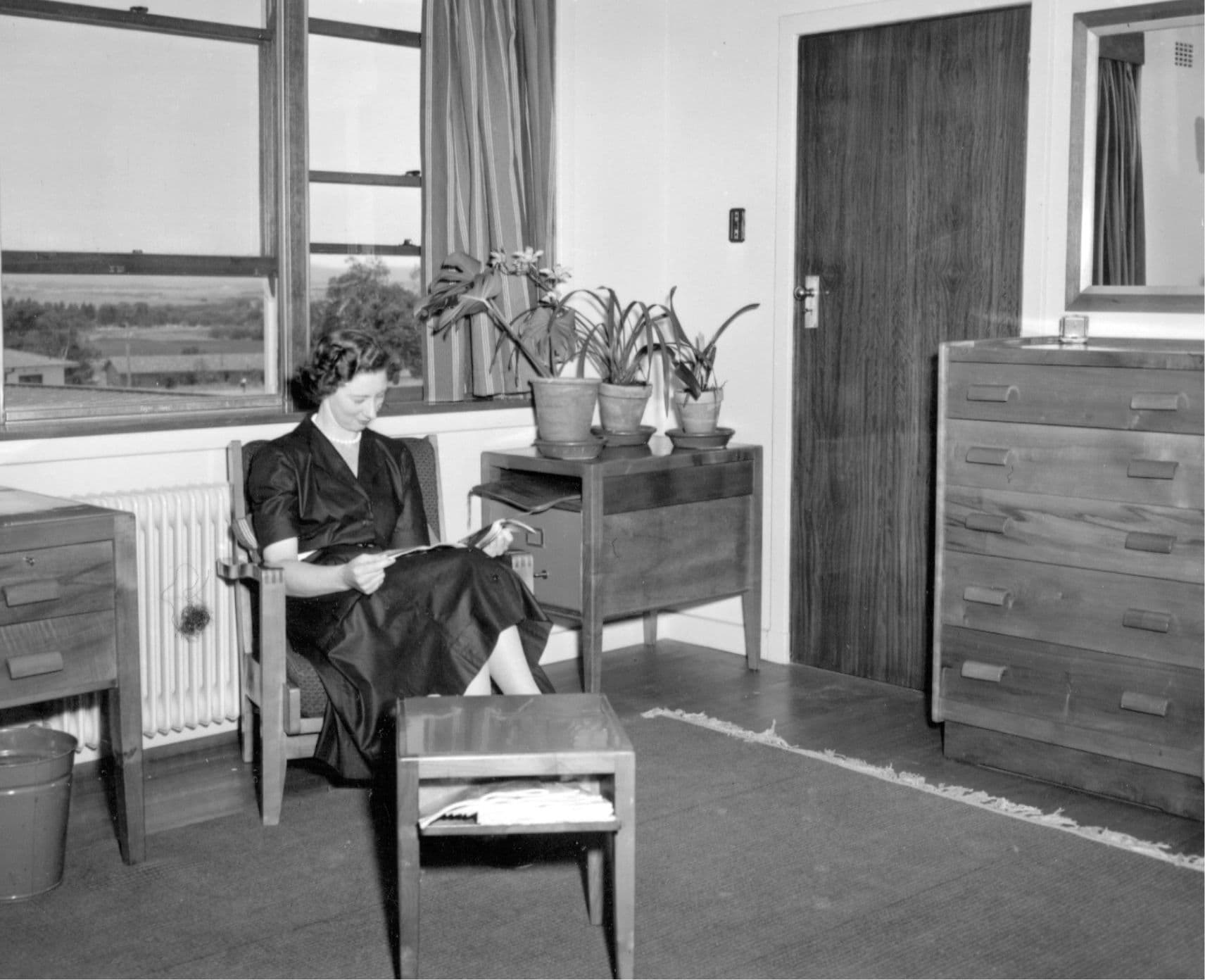
Bringing Fred Ward’s designs back home to University House
The best furniture tells a story before anyone sits down.
Article by:

Yasmin Manning
Contributing writer
When University House opened in 1954, every chair, table, sideboard and armchair was crafted specifically for the building, designed from scratch by Fred Ward, one of Australia’s most significant mid-century designers.
Now, as University House prepares to reopen in August, those same pieces are returning. They have been restored rather than replaced and carry a design philosophy that still feels quietly radical.
Ward’s approach appeared simple: clean lines, practical forms and no unnecessary ornament. Yet beneath that simplicity lay a philosophy that valued how a piece looked, how it functioned and how it fit within its space. Each element was given equal importance.
That idea shaped University House from the beginning.

The man, the designer, the legend
When Ward arrived in Canberra in the early 1950s, he had just won a national competition to design the furniture and furnishings for University House. It was a rare commission, and an ambitious one.
“It was an integrated design, the relationship between the client, architect and furniture designer, which was unheard of at the time,” says Claudia Reppin, Collections Project Manager for the University House Furniture Collection.
Working alongside cabinet makers, upholsterers and installers, she has spent years as the University collection’s chief advocate and the person charged with bringing it home.
Ward’s path into design was anything but conventional. He began as an artist, studying at the National Gallery of Victoria, and only found his way to furniture almost by accident—making pieces for his own home in Melbourne. As Reppin puts it, “creatives started coming into his house and falling in love with his designs.”
What set Ward apart was not just his discerning eye for aesthetics, but his innovative use of materials. While many designers of the era looked to European traditions by staining local timber to mimic heavier continental styles, Ward embraced the resources of his own environment.
“He really wanted to highlight Australian timber,” says Reppin. “No high gloss, just the natural colours, allowing the timber to shine. We’ve got yellows, whites, pinks and dark timbers. He revealed the entire colour wheel of Australian wood.”
By championing native timber decades before it became the hallmark of Australian design, Ward was ahead of his time and setting a standard others would later follow.
Ward’s impact was immediate. After the opening of University House, he was invited to help establish what would become the ANU Design Unit. Formed in the mid-1950s, it is believed to be the first university-based design unit in the world, recognising design as a discipline distinct from architecture, yet equally vital to how a building is experienced.

The dedicated way back
When a severe hailstorm in January 2020 damaged University House, the building entered a prolonged period of restoration. Its terracotta roof tiles were shattered, its copper roofing pierced and the interiors required extensive work. The furniture was removed in its entirety.
Every piece was packed, transported to storage in Mitchell, and meticulously catalogued. What followed was not a routine refurbishment, but a thoughtful commitment to preserve the original collection.
“It would have been far simpler to source new furniture,” Reppin reflects. “Instead, we’ve been preparing around 1,600 original pieces to go back into use.”
Each item has been assessed, cleaned and repaired where needed. Some required only minor attention. Others demanded structural work, reupholstery or full restoration. Cabinet makers, French polishers and upholsterers have all contributed, including apprentices learning their trade on the same pieces that defined the building decades earlier.
This approach reflects Ward’s original intent: the furniture is not separate from the building, but an integral part of its identity.
“Cabinet makers brought us to the 1954 University House opening, and now, decades later, cabinet makers are returning us to that same point,” Reppin says. “I love that echo.”
Keeping the legacy alive
There is a temptation, in projects like this, to modernise. To replace rather than repair and prioritise efficiency over continuity. Instead, this restoration has chosen to preserve what already exists. More than 70 years on, Fred Ward’s designs remain part of the building they were made for.
What many may not realise is that Ward’s furniture never truly left ANU. Over the years, pieces have quietly migrated across campus, into offices, corridors, and common areas, often unrecognised by those who use them daily.
While some contemporary furniture has been introduced to meet the needs of a renewed building, the majority of what fills University House remains Ward’s original pieces, restored and returned. Some original items that did not have a place in the restored building have been deaccessioned from the University’s collection.

To most, it may look like just a chair. But each piece carries a chapter of Australian design history – significant as any work displayed in a gallery.
“It feels fitting that, in the early 1950s and now in 2026, we’re mirroring the approach taken back then,” says Reppin.
That commitment continues: the University has dedicated ongoing funding for the care of the collection, recognising that furniture of this age and significance requires sustained attention, not just a one-time restoration.
For the many students, staff, alumni and visitors who will pass through its doors, the furniture will do what it has always done: create a space that feels welcoming, considered and unmistakably Australian.
“I hope that when people sit in the furniture, open wardrobes, or use drawers, they reflect on how these pieces have been connected to ANU and to the people who made them,” says Reppin.
“But if all they think is, ‘Wow, this is a comfortable chair,’ we’ve still succeeded.”
It is, as Claudia reflects, a lesson that 1950s design continues to offer: simple is not easy. There is nowhere to hide. But when it is done well, it stays with people.
Fred Ward mastered it. And now, quietly, his furniture returns to where it was always meant to be.
Top image: Fred Ward furniture featured heavily throughout University House and ANU. Photo: ANU Archives
You may also like

ANU researcher recognised globally for ocean conservation breakthrough
Associate Professor Ana Sequeira's globally-recognised research offers potential to reshape marine protection, as one-third of species face extinction.
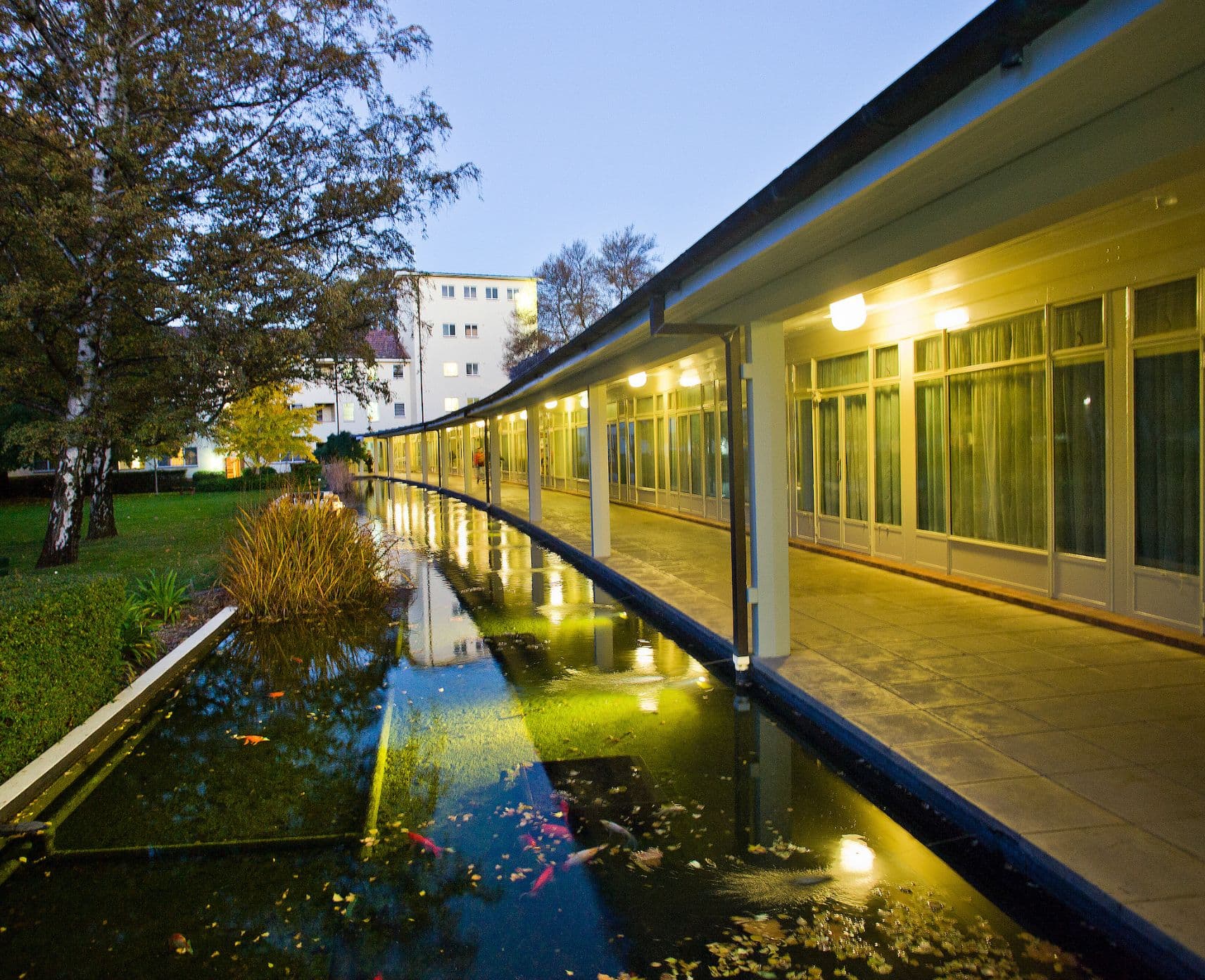
The ceremonial heart of ANU: A first look inside our newly restored University House
University House represents both an intellectual and a social home for many in the ANU community. After five years of complex restoration, it opens again.
ANU second among Australian universities for number of subjects in global top 20
ANU continues to showcase its global research and academic excellence in the 2026 QS World University Rankings by Subject.