
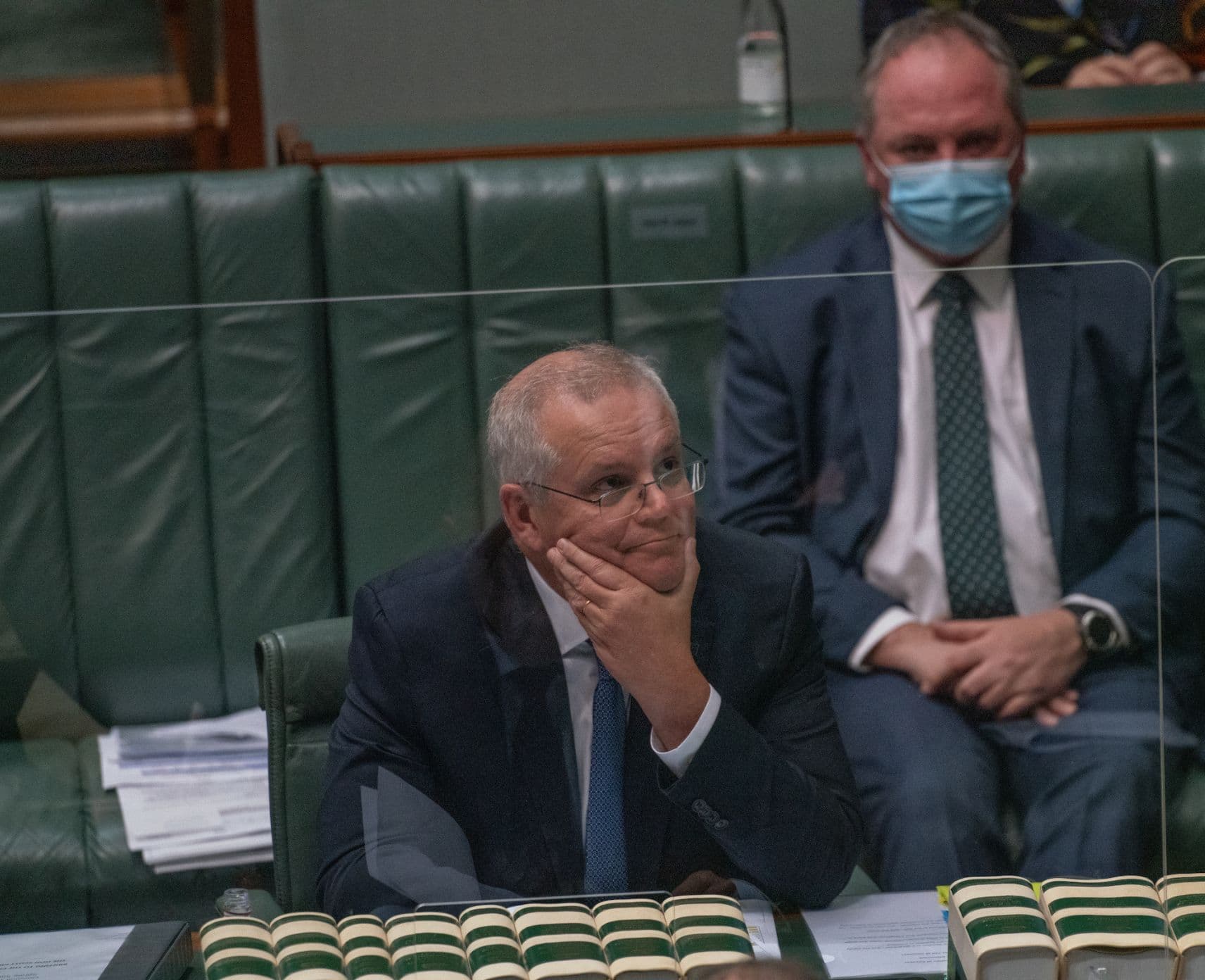
Democracy Sausage: A new political climate?
Acclaimed journalists Karen Middleton and Malcolm Farr join Mark Kenny to pick apart the Australian federal election result.
After a massive election loss, how will the Liberal Party recover – and will it do so by stepping to the left or the right?
Is the ‘teal wave’ likely to be temporary, or will a more varied electoral map become a permanent feature of Australian politics? And what impact will the make-up of the senate have on the Albanese government’s legislative agenda?
Karen Middleton, Chief Political Correspondent for The Saturday Paper, and Malcolm Farr, former National Political Editor of news.com.au, join Professor Mark Kenny to discuss the outcome of Australia’s federal election and what it might mean for the country’s future.
Karen Middleton is the Chief Political Correspondent for The Saturday Paper.
Malcolm Farr is the former National Political Editor of news.com.au.
Mark Kenny is a Professor at the ANU Australian Studies Institute. He came to the University after a high-profile journalistic career including six years as chief political correspondent and national affairs editor for The Sydney Morning Herald, The Age and The Canberra Times.
Democracy Sausage with Mark Kenny is available on Apple Podcasts, Spotify, Pocket Casts, Google Podcasts or wherever you get your podcasts. We’d love to hear your feedback on this series, so send in your questions, comments or suggestions for future episodes to democracysausage@anu.edu.au.
This podcast is produced by The Australian National University.
Top image: Tracey Nearmy/ANU
You may also like
Democracy Sausage: A Democracy Sausage for the Teacher
In this special classroom edition of Democracy Sausage, Dr Jill Sheppard joins the DS team and heads back to school (literally) to discuss the growing distrust in politics amongst young voters.

Democracy Sausage: Budget, Smudge-it: truth, details and the aspiration wars
Treasurer of Australia, Dr Jim Chalmers joins Marija and Mark to discuss last week’s budget, Angus Taylors’ reply and the challenges of ‘getting it right’ in today’s volatile political and economic landscape.
Could we see a Pauline Hanson-led government in 2028? It’s not so far-fetched
Honorary Fellow Dr Simon Copland unpacks Australia’s shift towards right-wing politics, lessons learnt from the Reform UK party, and what One Nation’s recent success at the polls could mean federally.