
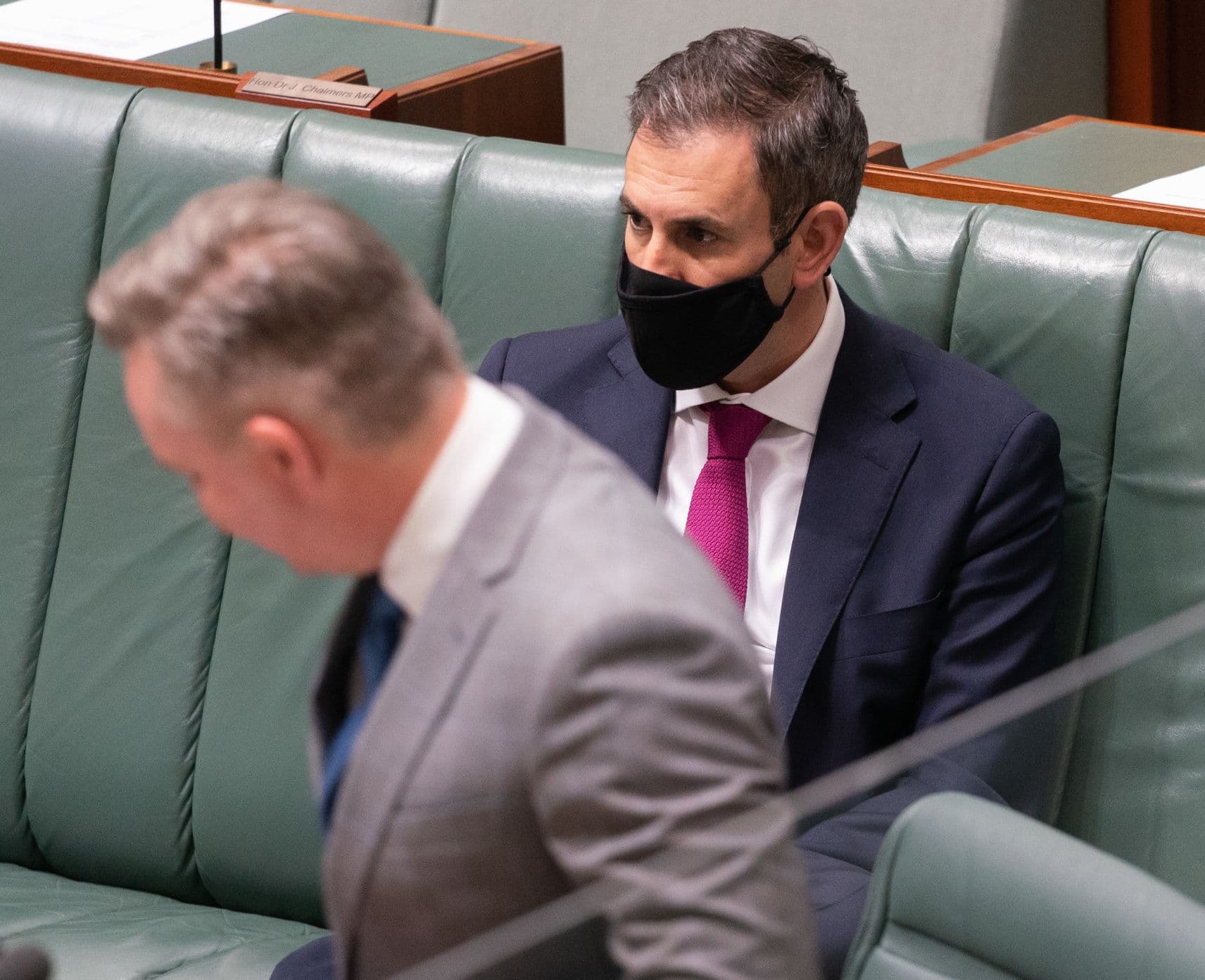
Democracy Sausage: Jim Chalmers on COVID-19 and Australia’s future
Shadow Treasurer Dr Jim Chalmers MP speaks to Mark Kenny about crisis politics, economic recovery, and ensuring the future story of Australia is an inclusive one.
While Australia has so far avoided the more devastating health impacts of COVID-19 that have befallen other nations, the pandemic has caused one of the most significant economic shocks in the country’s history.
With so many in a more precarious financial position than ever, how can policymakers chart an inclusive economic recovery?
Does the collegiate approach taken by federal, state, and territory leaders throughout the crisis signal the beginning of a new period of cooperation among Australian governments? And what changes wrought by the pandemic should the country preserve?
On this Democracy Sausage Extra, Professor Mark Kenny chats with the Shadow Treasurer and Member for Rankin, Dr Jim Chalmers MP, about COVID-19 and navigating Australia’s economy out of the crisis.
Jim Chalmers is the Shadow Treasurer and Member for Rankin.
Mark Kenny is a Professor at the ANU Australian Studies Institute. He came to the University after a high-profile journalistic career including six years as chief political correspondent and national affairs editor for The Sydney Morning Herald, The Age and The Canberra Times.
Democracy Sausage with Mark Kenny is available on Apple Podcasts, Spotify, Pocket Casts, Google Podcasts or wherever you get your podcasts. We’d love to hear your feedback on this series, so send in your questions, comments or suggestions for future episodes to democracysausage@anu.edu.au.
This podcast is produced by The Australian National University.
Top image: Tracey Nearmy/ANU
You may also like
Democracy Sausage: Forty Years On
Treasurer of Australia and ANU Alum the Hon Dr Jim Chalmers MP joins Mark Kenny and Liz Allen on Democracy Sausage to unpack the 2025 Intergenerational Report.

Canada is managing migration without taking a sledgehammer approach. Here’s how Australia can, too
What exactly is Canada doing to manage migration, and what lessons does its experiment have for Australia?

Parental gambling linked to poorer health and educational outcomes for Australian children
New Australian research has found that risky parental gambling is associated with poorer physical health, mental health and educational outcomes among children.