

Democracy Sausage: Punishing kids for adult failures
Teen journalist Leonardo Puglisi and youth justice expert Faith Gordon join Democracy Sausage to discuss social media bans.
How can we manage the very real harms of social media – for young people and society?
Is the youth social media ban the first step towards safer social media or purely performative?
And can large tech and social media companies be regulated?
On this episode of Democracy Sausage, Professor Mark Kenny is joined by Leonardo Puglisi, managing director of 6 News Australia, and Associate Professor Faith Gordon to discuss the blunt instrument of youth social media bans.
Leonardo Puglisi is Chief Anchor and Managing Director of 6 News Australia – a channel to reflect young people’s voices.
Faith Gordon is an Associate Professor and Deputy Associate Dean of Research at the ANU College of Law. She has expertise in areas including youth justice, children’s rights, criminal law, digital technologies, media regulation, and young people and politics.
Mark Kenny is the Director of the ANU Australian Studies Institute. He came to the University after a high-profile journalistic career including six years as chief political correspondent and national affairs editor for The Sydney Morning Herald, The Age and The Canberra Times.
Democracy Sausage with Mark Kenny is available on Apple Podcasts, Spotify, Pocket Casts, Google Podcasts or wherever you get your podcasts. We’d love to hear your feedback on this series, so send in your questions, comments or suggestions for future episodes to democracysausage@anu.edu.au.
Top image: ANU student scrolling Instagram on their phone. Photo: Jack Fox/ANU
Featured experts

You may also like

Experts say social media ban a ‘blunt instrument’
A social media ban for children under the age of 16 is too blunt an instrument to effectively address all of the issues relating to online harm, according to an ANU expert.

Democracy Sausage: The Alchemy of Leadership
Historian and biographer Paul Strangio joins Mark to dissect what makes — and breaks — an Australian prime minister, drawing on his newly shortlisted book The Alchemy of Leadership: Seven Australian Prime Ministers in a Turbulent Twenty-First Century.
Democracy Sausage: Forty Years On
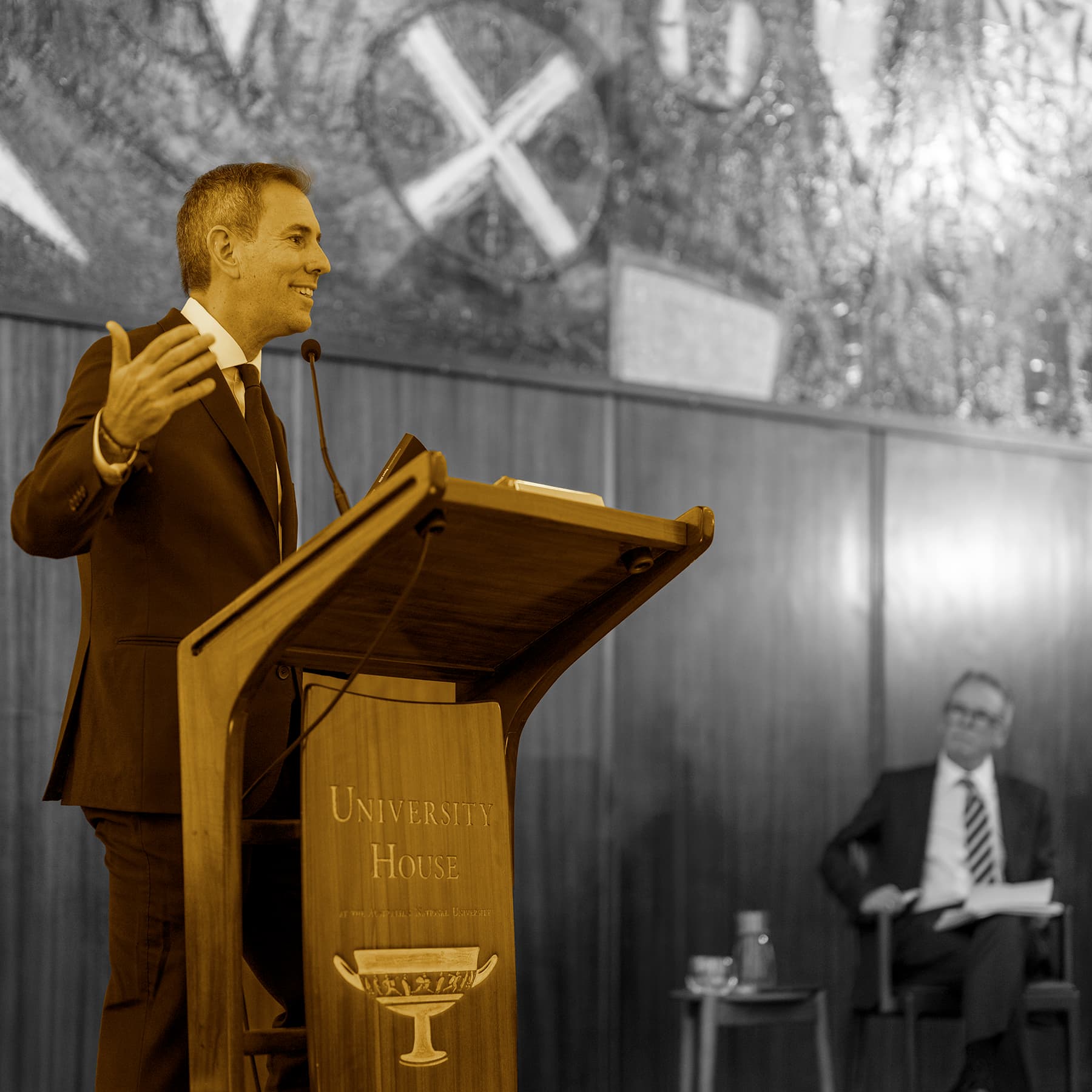
Treasurer of Australia and ANU Alum the Hon Dr Jim Chalmers MP joins Mark Kenny and Liz Allen on Democracy Sausage to unpack the 2025 Intergenerational Report.