

Louis Theroux’s manosphere documentary shows some of the subtle ways we can undermine online misogyny
Manosphere researcher Simon Copland unpacks what we can learn from Louis Theroux’s approach to deep misogyny in his Netflix documentary.
Article by:

Dr Simon Copland
School of Sociology
“Maybe that’s his game, to act like he’s your mate then f**k you.”
This is what online manosphere influencer Harrison Sullivan, or HSTikkyTokky or HS as he’s known to his tens of thousands of online followers, had to say about Louis Theroux’s latest documentary, Inside the Manosphere. HS was featured heavily in the documentary, and his responses to Theroux’s questions show how the journalist managed to undermine, often subtly, the misogyny preached by these extremist anti-feminist online communities and influencers.
Inside the manosphere
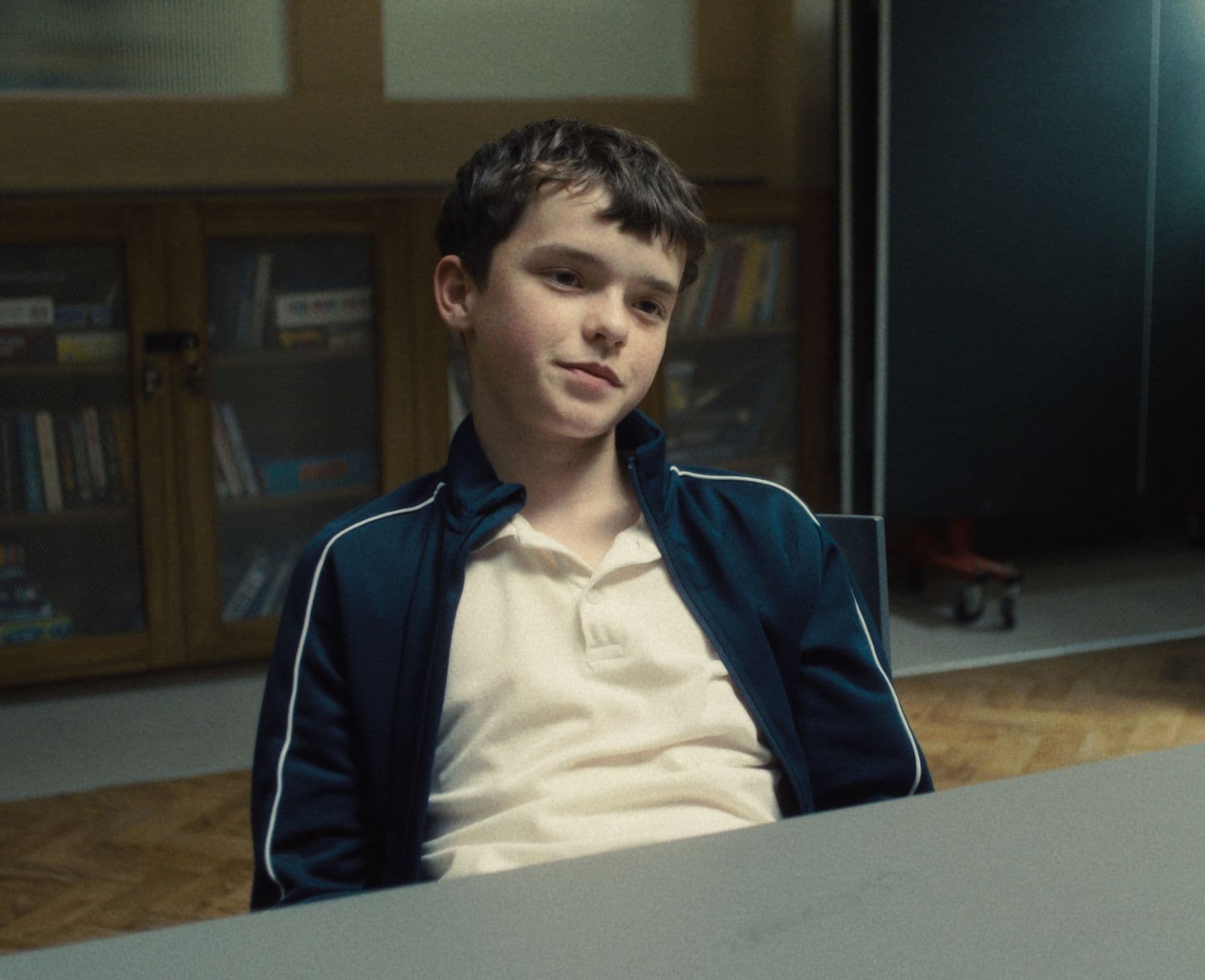
The manosphere is a loose network of blogs, forums and online communities that claim to speak to a wide range of men’s interests – from life philosophies and gender relations to self-improvement tips and strategies for success in life, relationships and sex. This online sub-community of misogynists and anti-feminists that has exploded into international recognition in recent years, starting with the rise of Andrew Tate in 2022, and then the release of the hit Netflix show Adolescence last year.
The movement is led by hypermasculine content creators such as HS and Tate, who proclaim to teach their followers how to be ‘real men’, with a strong focus on tips for making money, getting fit, and to have sex with lots of women. These influencers have made real money, often through selling subscriptions to online financial courses that claim to teach people the secrets to getting rich quick.
Underpinning all of this, however, is a deep, dark misogyny. Manosphere men describe women as having value only through beauty and sexuality and deride them as being less rational or emotionally stable. Theroux shows the way these men treat women – the infamous manosphere influencer Myrion Gaines tells the journalist that he is a “dictator” in his romantic relationships, talking about intimacy as something that he allows, while he expects women to conduct domestic care for him.
A double-edged sword
As the manosphere movement continues to garner global mainstream media attention, it raises serious questions about the ethics of further promoting the platforms of these influencers’ misogynistic and extremist viewpoints.
Manosphere influencers operate in an “attention economy”. The more views, likes, and clicks they get on social media, the more money they make. Theroux notes this in his documentary, highlighting how this can often drive influencers to make more extreme content, as this is what people come back for.
While it can make for good television to belittle these men and let them spit their absurd and bizarre views – including how a satanic cult runs the world – this just provides yet another platform for them to air their views to the world. Journalists often give influencers an unchallenged platform that boosts their profile, giving them new followers and credibility. This often occurs when journalists treat the manosphere community like a sideshow – a weird fascination to observe, and maybe an opportunity for thrill seeking on the journalist’s part.
It begs the question: Did we need another documentary shining a light on the views of these misogynistic men and does it shed new light on the phenomenon? And does this give these controversial content creators an even greater profile, further spreading messages of misogyny and toxic masculinity?
Exposing the hypocrisy
Theroux’s documentary, however, does give us some insight into how we can undermine these influencers. There are things that Theroux does that are clever.
First, while he holds firm on his anti-misogynist views, Theroux does not argue with manosphere figures, and in turn doesn’t give them bait to attack him or show off their bravado. Instead, the journalist asks clever questions delivered in a quiet and gentle manner that undermine the influencers’ ideology, often focused on how these men treat the women in their lives.
One of the themes of the documentary is the demand of manosphere men to have ‘one-way monogamy’ – that they are allowed to sleep around with other women, but their partners must stay faithful. Gaines talks about this multiple times, even suggesting that he wants to have multiple wives. The telling moment comes when Gaines’ girlfriend walks into the frame of the camera. Instead of asking her about Gaines’ opinions, Theroux asks whether she is comfortable with the fact Gaines can sleep with other people while she can’t. She hesitates, and soon Gaines is backtracking, suggesting his idea of multiple wives may not happen at all. Faced with his girlfriend, the bravado immediately falls apart.
These men are perceived as god-like figures by their scores of online followers, yet while talking the talk, these men can’t walk the walk.
This moment was important. Evidence shows that one reason people leave the manosphere is when the hypocrisy of the community is exposed. Throughout the documentary, when facing women in their lives – either Gaines’ girlfriend, or a very telling scene when HS’ mum bosses him around – this exact hypocrisy is exposed. These men are perceived as god-like figures by their scores of online followers, yet while talking the talk, these men can’t walk the walk.
The other vital thing Theroux does is expose the financial fraud of the manosphere community. Again, this is subtle. Theroux at one point invests in HS’ financial scheme. At the end Theroux reveals that through following the influencer’s tips, he lost almost all his money. This is a moment where the hypocrisy is exposed.
Manosphere influencers sell the idea of financial wealth as a foundation of their product, but it is almost always through scams that make themselves rich and others poor. Exposing this puts these influencers at real risk, even when done subtly.
Where Theroux’s documentary falls short
While Theroux’s 90-minute documentary offers plenty of thought-provoking moments, it fails to showcase the real-life consequences of these influencers’ hypermasculine and anti-feminist messaging. Women are largely absent from the documentary, particularly those who have suffered from the violence perpetrated by men who peddle the ideology of ‘traditional masculinity’.
There also needs to be more investigation into how these influencers profit off selling snake oil to vulnerable young men. But Theroux showed that you can expose the hypocrisy of men’s rights influencers like HS without arguments, screaming, or even throwing facts at the screen. In fact, it is much better if we don’t.
As a researcher on the manosphere and online misogyny, I am frequently asked how we should respond to this community. No one has all the answers. But I am pleased to see Theroux show us, even in small moments, some effective ways in taking these men down. All journalists, researchers and activists alike can learn from his subtle, quiet exposing of their hypocrisy.
Top image: Harrison Sullivan featured heavily in the ‘Inside the Manosphere’ documentary. Photo: LiamMurphyPics/Shutterstock.com
Featured experts
You may also like
Teen boys, misogyny, and violence – could Adolescence be Australia’s wake-up call?
The TV series Adolescence might feel like dystopian fiction, but it could be closer to reality than we think.
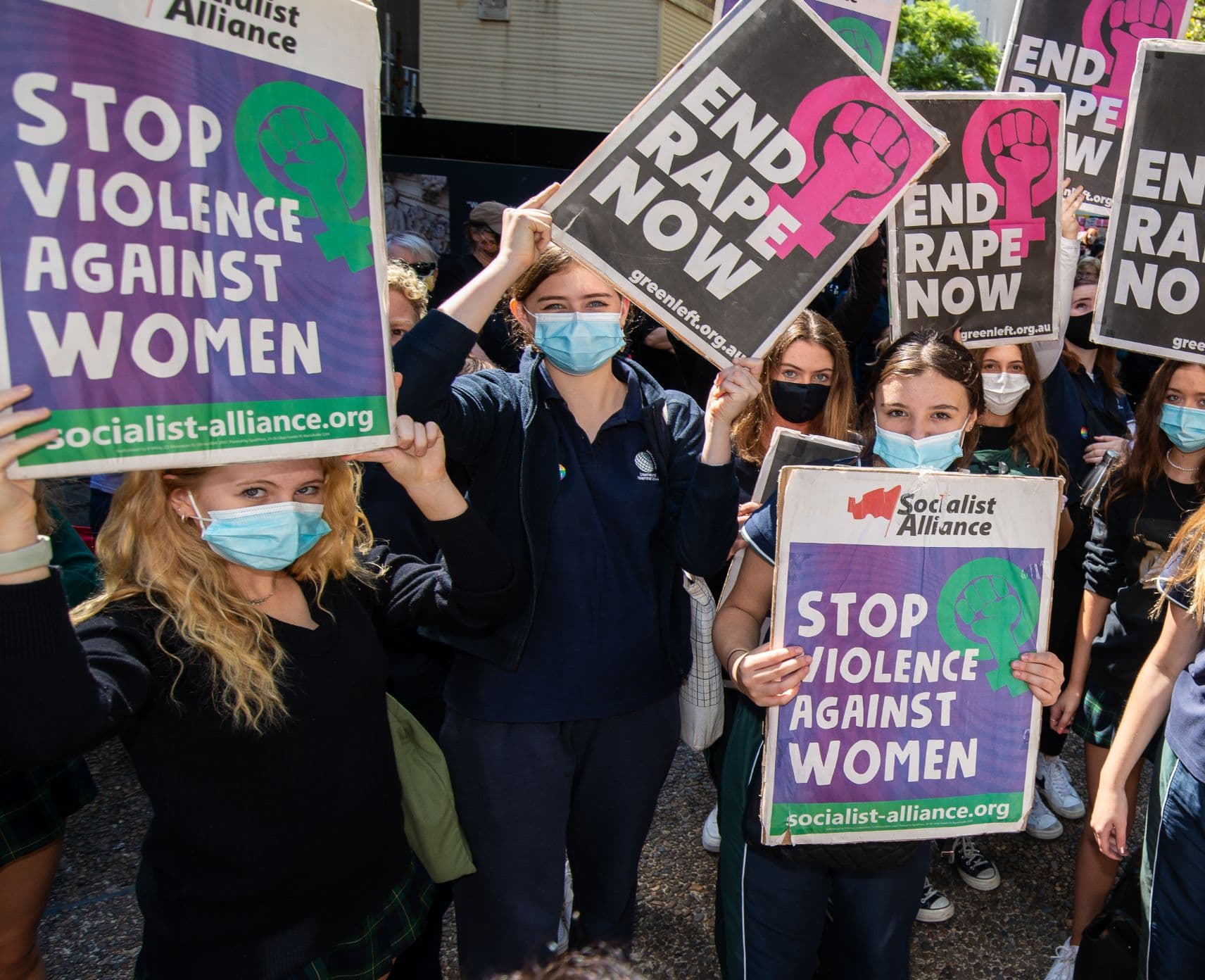
Misogynistic mass violence is on the rise. Why are we ignoring it?
Hatred of women and girls is an underlying factor in many violent crimes. It’s time for society to take this seriously.

Advertising and social media driving online gambling among young Australians
Gambling features in video games and sports betting are the most popular forms of online gambling among young adults in the ACT, with many introduced to it before the age of 18, according to a new ANU study.