
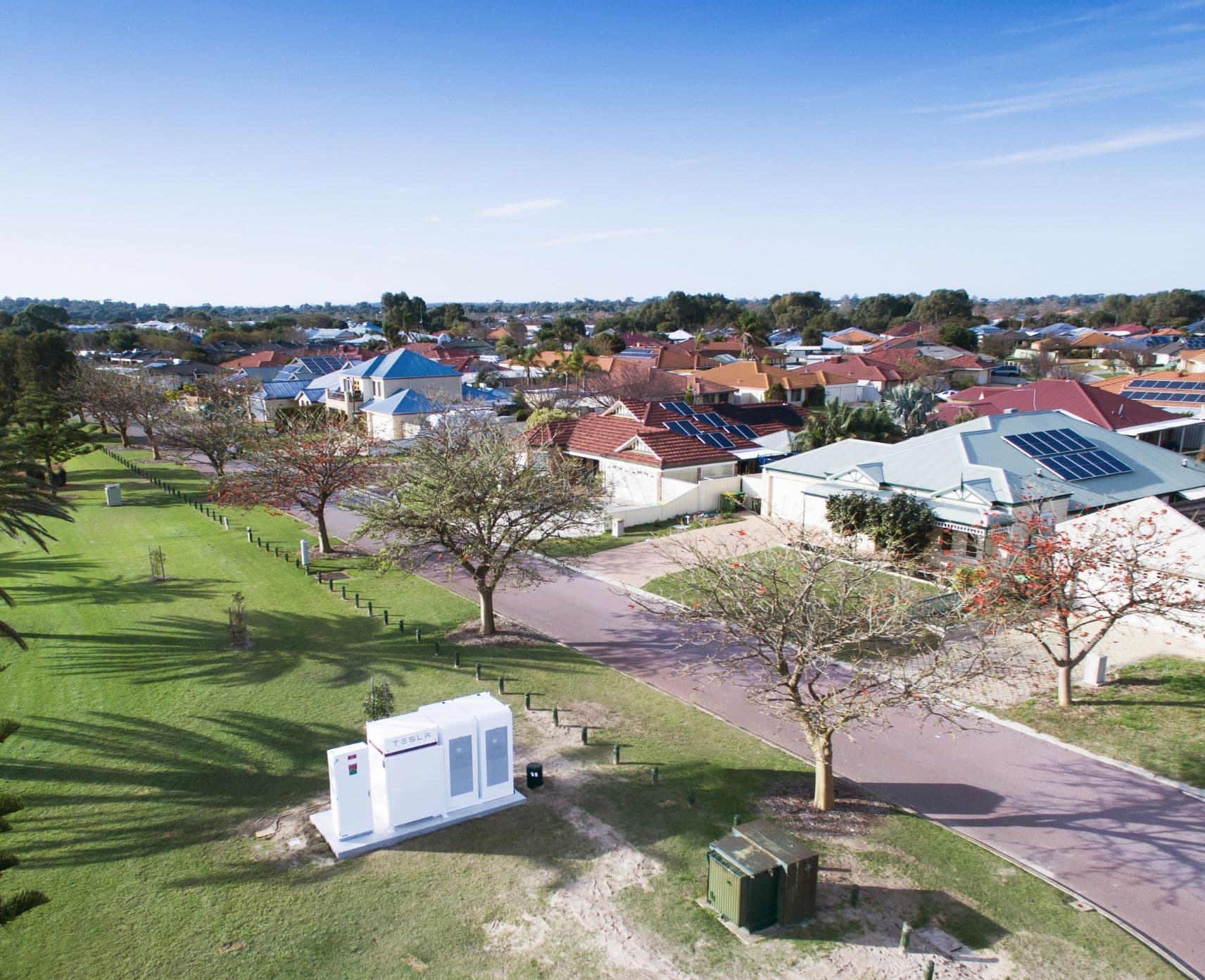
Powering ahead with community batteries
Community-scale batteries are already achievable in Australia, will complement existing household batteries and will allow more solar energy to be stored in our suburbs, analysis from The Australian National University (ANU) shows.
With the move towards community-scale batteries gathering pace across the nation, two new reports from ANU show the best way forward when it comes to their rollout.
The batteries have power capacity of around one megawatt (MW), or enough to power around 100 houses. They help “soak up” solar power generated during the day, improving reliability.
“They have the potential to play an integral role in Australia’s transition to a decentralised grid by keeping generated energy close to where it will be used,” project lead Dr Marnie Shaw from the ANU Battery Storage and Grid Integration Program (BSGIP) said.
“A key finding of our research is that current regulations could do more to encourage local management of rooftop solar and community battery uptake.
“As such, we propose a tariff that incentivises the use of energy, close to where that energy is produced.
“This ‘Local Use of Service tariff’ is essentially a price signal to customers, allowing them to benefit monetarily for storing and using energy locally.”
The reports examined social aspects that drive the uptake of community batteries – including why people are either willing or unwilling to us them.
“We weighed up potential benefits and drawbacks of community-scale batteries,” co-author Dr Hedda Ransan-Cooper said.
“Some risks are relatively easy to overcome, like ensuring safety measures in the event of a fire, while others, such as ensuring the benefits are fairly distributed, are more complicated.”
Several community-scale battery projects are already underway across Australia.
The guidelines set out in the ANU reports will be applied in the Melbourne CBD as part of a partnership with the Yarra Energy Foundation and electricity network CitiPower. ANU will also be delivering tailored software for this trial.
“This will enable a trial of community batteries, or ‘solar sponges’ to be established in the CBD and inner-city suburbs of Melbourne,” Dr Shaw said.
“It’s clear that complex challenges around transitioning from a centralised to a decentralised energy system can really benefit from engineers and social scientists working together.”
The ANU reports are available here and here.
The Battery Storage and Grid Integration Program, hosted at ANU, is jointly funded by the ACT Government under the Renewable Energy Innovation Fund initiative and the ANU. The Program consists of a diverse team that researches solutions to real-world energy and associated systems problems with a strong focus on interdisciplinary research, development and demonstration (RD&D).
Top image: Western Power
Related tags:
You may also like

From the coasts to the plains, bird flu could threaten not just birds – but their homes
Bird flu doesn’t just threaten birds and mammals – it could well affect entire ecosystems, explains ornithologist Penny Olsen.

Indigenous-led conservation helps save endangered cockatoo
An Indigenous community in Indonesia has found a way to protect one of the world's rarest cockatoos without abandoning a centuries-old sacred tradition, offering a new model for conservation.
Not the greatest glider: first study puts Australia’s biggest glider to the test
The first scientific study of southern greater gliders overturns a decades-old belief about how far Australia's largest gliding marsupial can really glide, with important implications for conservation.