
Public confidence in universities higher than many other institutions but has declined
Public confidence in universities has fallen since 2019 but Australians have greater confidence in universities than governments, according to a new research paper.
The paper, Public perceptions of Higher Education and its role in strengthening (and weakening) democracy in Australia was led by Professor Nicholas Biddle, Head of the Australian National University (ANU) School of Politics and International Relations.
Data analysed from the ANUpoll survey series in September and October 2025 found that 62.1 per cent of Australians have “quite a lot” or a “great deal” of confidence in universities.
This is higher than rates of confidence in the Federal Government (37.8 per cent), state and territory governments (47.8 per cent) and the public service (47.3 per cent).
“Australians have relatively high levels of confidence in universities, but this has consistently declined since April 2019 when the ANUpoll found 78.9 per cent had ‘quite a lot’ or a ‘great deal’ of confidence in universities,’’ Professor Biddle said.
The most troubling finding from the paper, according to Professor Biddle, is that the decline in confidence in universities is far more pronounced among Australians without a university degree.
Where previously there was only a small difference between those with and without a degree, the level of confidence is now more than eight percentage points higher for those that have a degree.
“Evaluations of universities are closely connected with democratic resilience. Australians who believe universities are doing a good job are substantially more satisfied with democracy, while perceptions that access is worsening are associated with lower democratic satisfaction.’’
Other key findings include:
- Only a minority of Australians (15.9 per cent) view a university degree as necessary for success, while a substantial proportion (41.2 per cent) believe accessing a university education has become more difficult over the past decade.
- Most Australians believe universities should train young people future jobs and develop new ideas.
- Only three in 10 Australians believes universities should definitely foster informed citizens, encourage civic participation, or provide space for controversial ideas to be debated.
“Universities are a core component of Australia’s broader knowledge infrastructure, alongside schools and TAFE, libraries and archives, cultural institutions, government data providers and media,’’ Professor Biddle said.
“When this infrastructure is trusted, accessible, and seen to deliver public value, it strengthens democratic capability, supporting credible information, civic skills, debate, accountability and policy learning.
“When it is perceived as distant, unfair, or captured by narrow interests, it can contribute to democratic fragility by weakening institutional legitimacy and widening social divides.’’
Professor Biddle said that rebuilding public confidence in universities required more than arguments about funding, rankings, or student places.
“It calls for clearer articulation—and visible enactment—of universities’ civic contribution, strengthened transparency and accountability, and renewed attention to accessibility for disadvantaged and regional Australians,’’ he said.
The research paper, Public perceptions of Higher Education and its role in strengthening (and weakening) democracy in Australia, is published on the ANU website.
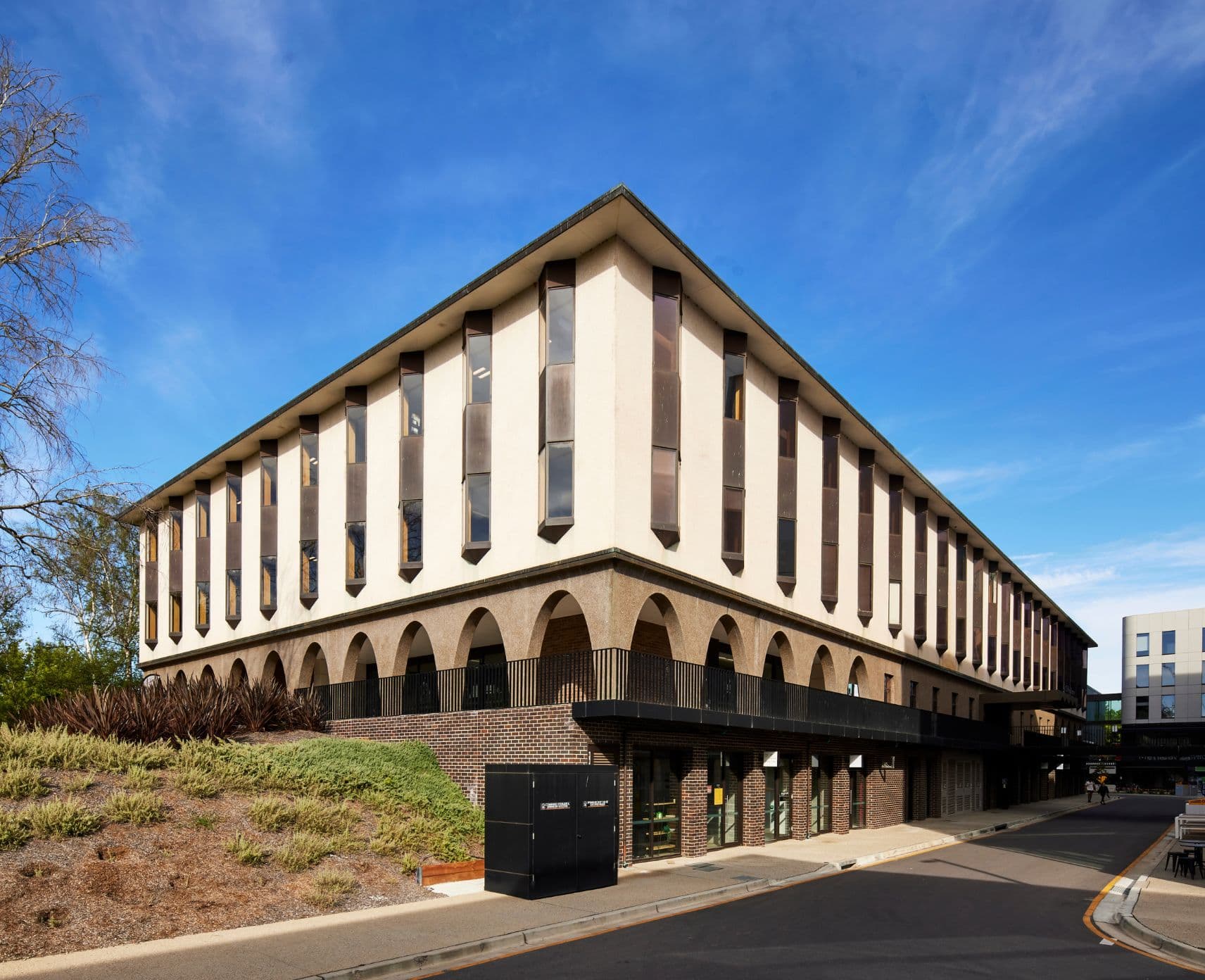
Top image: The JB Chifley Library at the ANU. Photo: Lannon Harley: ANU

Contact the media team
Peter Jean
Contributing writer
You may also like
Democracy Sausage: Forty Years On
Treasurer of Australia and ANU Alum the Hon Dr Jim Chalmers MP joins Mark Kenny and Liz Allen on Democracy Sausage to unpack the 2025 Intergenerational Report.

Canada is managing migration without taking a sledgehammer approach. Here’s how Australia can, too
What exactly is Canada doing to manage migration, and what lessons does its experiment have for Australia?

Parental gambling linked to poorer health and educational outcomes for Australian children
New Australian research has found that risky parental gambling is associated with poorer physical health, mental health and…