
Statement from Acting Chancellor to Senate Estimates Committee
Opening
Chair, thank you for allowing me to provide an opening statement on behalf of the ANU Council; and thank-you, Senators, for your ongoing interest in the Australian National University.
I am the acting Chancellor of the ANU. The interim Chancellor, Dr Larry Marshall, is overseas. He apologises that he cannot be here.
Chair, right at the outset, I want to acknowledge plainly that confidence in the governance and the leadership of the ANU has been seriously damaged in the past few years.
Many staff and students have felt hurt, disillusioned and not valued.
Trust has been lost, and the Council has a duty to confront that directly. I will talk more about that shortly.
Chair, also here today are the interim Vice-Chancellor, Professor Brown, the new Chief Operating Officer, Mr Schwager, and the acting Provost, Professor Leach.
I sincerely thank them for their leadership in recent months to help ANU to now get moving in the right direction.
As requested by the Committee, all ANU Council members are here, and are available to appear as witnesses if required.
I also thank all of them for their service to the university.
Resignations, recent external inquiries
Chair, recently there have been major developments with the governance of the ANU, including a number of resignations in April and May from the Council – too many developments to cover in this opening statement.
It is clear that the situation facing the ANU in past years has meant that difficult decisions often had to be made, and that actions needed to be taken.
The issue is how well informed the key decisions were, how well they were put into effect, and how well change was governed.
Several external and independent inquiries have now examined these issues.
Nixon report
In 2024 and 2025 Dr Christine Nixon AO APM examined three schools at the university, and she made 8 findings and provided 17 recommendations. Her report identified some serious cultural and workplace issues.
Thom report
Dr Vivienne Thom AM has now investigated the issues raised before a Parliamentary Committee on 12 August last year.
Her April report, pursuant to the Public Interest Disclosure Act, made one finding of “disclosable conduct”, of maladministration. It related to grievance procedures.
She also made five adverse findings about former Council members.
While these findings did not meet the evidentiary threshold for “disclosable conduct”, Dr Thom recommended that the Council consider whether there were breaches of the ANU Code of Conduct.
The Council did so, but no action is possible in relation to former Council members.
The ANAO report into ANU financial management
The Australian National Audit Office (ANAO) reported yesterday on aspects of past financial decision making, particularly into the 2024 savings program known as ‘Renew ANU’.
Their detailed analysis identified a gradual deterioration in recent years of the financial position faced by the ANU.
However, it did not agree with the urgency and scale of expenditure reductions that were made, it questioned the quality of the information relied upon, and it pointed to the lack of documentation of key decisions.
TEQSA/Briggs
The Tertiary Education Quality Standards Authority (TEQSA) has appointed Ms Lynelle Briggs AO to examine aspects of the ANU’s past governance. We expect some details and recommendations from them soon.
Media reports
There have recently been various actions, unauthorised leaks, and backgrounding of journalists, which have resulted in a number of media reports.
Some have clearly been directed against Professor Brown.
The Council is concerned and disappointed if these pernicious actions and media articles have had an adverse impact on Professor Brown’s reputation.
I would like to place on the record a categorical rebuttal on three key points:
FoI: Professor Brown did not obstruct the FoI process by refusing to share her “signal” messages.
The Chief Operating Officer has ultimate responsibility for the FoI process.
He has investigated the process in this case and confirmed on the record that he is satisfied an administrative error was made.
The fact there has been leaks to the media about a FoI process is a serious breach of protocol and process.
Withholding legal advice allegations: The Council was aware Professor Brown was seeking legal advice for a particular purpose and that the advice would not be timely.
Professor Brown received the advice after Council had made its decision.
The advice Professor Brown received was consistent with the advice Council had when they made their decision.
Independent Investigation into the former Vice-Chancellor: Allegations of serious misconduct by the former VC were brought to Professor Brown’s attention late last year.
Professor Brown acted responsibly to ensure that those allegations were investigated.
The Council appointed an independent decision-maker to consider the matter. Professor Brown was in no way involved.
Summary: The Council strongly believes that Professor Brown has acted properly, and in the best interests of the university, at all times.
We believe that she has the qualities to lead the university through this current period, and we have full confidence in her.
Appointment of the next Chancellor
Chair, I bring relatively fresh eyes to the overall situation that I have just described.
So let me provide a 22-word summary: there are justifiably grave concerns about many aspects of the governance, leadership, decision-making and culture of the ANU in recent years.
It therefore follows that rebuilding confidence in the governance and leadership of the ANU will require many practical actions, and the resolve to sustain them.
Accordingly, the Council recently made a well-informed, pragmatic and sensible decision to cooperate with the higher education regulator, TEQSA.
Consistent with precedent, the Council delegated to the then Pro-Chancellor, Dr Marshall, the responsibility for recommending the best process to appoint the next Chancellor.
Dr Marshall proposed, and the Council and TEQSA agreed, that the process will involve a largely external panel with an independent chair, Emeritus Professor Peter Coaldrake AO.
I note, in this regard, that we were well aware of the relevant legal opinions.
As noted above, suggestions that Professor Brown somehow “withheld” legal advice from the Council, are wrong.
The final appointment decision is, of course, one for the ANU Council, as provided for by section 32 of the ANU Act.
This largely independent selection committee is one practical way for the ANU Council to start to earn back the trust and confidence that has been lost.
Views of the ANU community
Chair, I have had the opportunity over recent times to engage with and listen to many people in the ANU community.
In doing so, I have met many highly talented and quite exceptional academic and professional staff and students.
Some have described many aspects of the last few years as traumatising.
I have heard words like “anger”, “disillusioned”, “hurt”, and “we were not valued”.
But, overwhelmingly, everyone that I spoke with cares deeply about the university and its mission.
And they have kept doing their best, despite these often challenging events.
Many talk about their “love for the ANU” and feeling “betrayed” by many events in past years.
They want it to again be a great place to work, to teach, to study, to conduct research, and to partner with governments and businesses to create a better future for all Australians.
As we approach the 80th anniversary of the ANU in August, we want it to truly reach its potential as Australia’s national university.
Where to from here?
So, Chair, Senators, this has been a time of deserved scrutiny.
There is now the opportunity, indeed, the obligation, to significantly improve how the ANU is governed and led.
Chair, the university’s situation is complex, and difficult decisions will sometimes need to be made.
But these decisions must be made by a Council that understands the unique academic, financial and campus nature of the ANU; and its national mission including its distinctive responsibilities to advance First Nations leadership, knowledge and cultural authority.
A Council that is always fully and properly informed; where there is a culture of trust and respect; and where curiosity, questioning, discussions and debate all occur freely.
A Council which consults widely and governs with transparency and accountability.
A Council which has a membership with broad skills and expertise, all people who have a strong pro-integrity culture, and who personally model ethical conduct.
In other words, a Council which does everything possible to restore trust and confidence, and to help lead the ANU to realise that incredible potential.
This will take time, wisdom, and hard work; and it needs people who have good brains, and also good hearts.
Thank you Chair.
Andrew Metcalfe AO
Acting Chancellor
The Australian National University
Contact the media team
Related tags:
You may also like
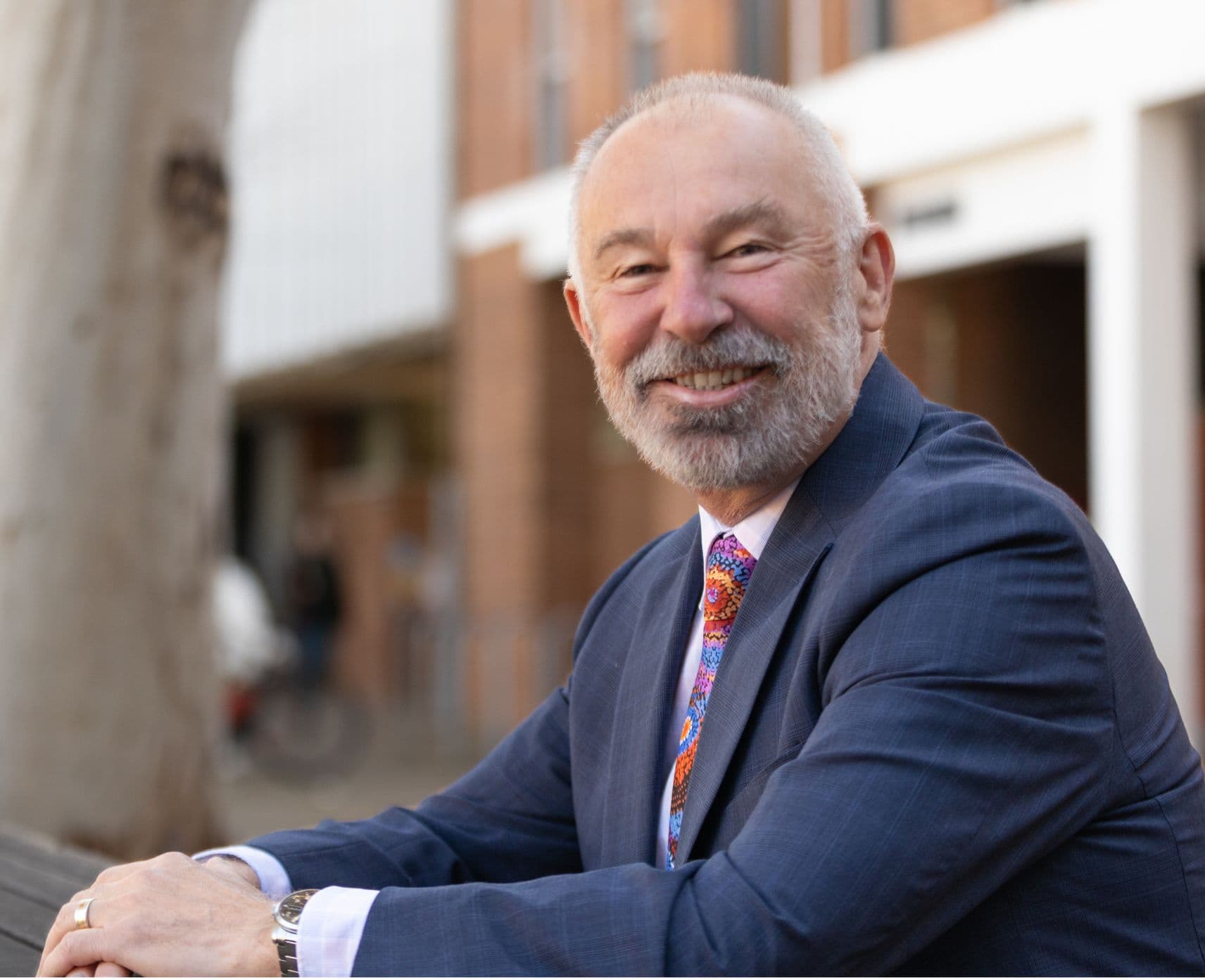
“Universities must not walk away from discomfort”: Gordon de Brouwer on trust, leadership and the power of knowledge institutions
As Dr Gordon de Brouwer steps into the role of Chancellor at his alma mater, he reflects on what it means to be a national institution at this time in history: “truth and knowledge still matter.”

New ANU Vice-Chancellor Scholars Program opens doors for students facing barriers to university
The Australian National University (ANU) has launched a new flagship scholarship program designed to help overcome barriers to higher education and support students from across Australia to study and succeed at the national university.

Statement from ANU on the retirement of Interim Chancellor, Dr Larry Marshall
The Australian National University (ANU) has today acknowledged and thanked Interim Chancellor, Dr Larry Marshall, for his service to the University, following the announcement of the appointment of a new Chancellor.