

The Mushroom Murder case illuminates historical gender patterns in poisoning
Historian Carolyn Strange uses the lens of criminal sentencing to explore how poisoners have been perceived.
Article by:

Professor Carolyn Strange
School of History
Erin Patterson’s sentence to life in prison for three poisoning murders and an attempted murder has captured world-wide attention this year.
Although the trial judge was critical of the intense media interest in the case, he joined the press in describing the ‘Mushroom Murderer’ as unique – a criminal whose crimes fit the “worst category of offending”.
These characterisations overlook the fact that in most respects the convicted poisoner, the nature of her crime, and her condemnation are typical of the history of poisoning.
What’s new, however, is the prominent role of victim impact statements in the sentence Justice Beale imposed. So, do age-old biases possibly echo in modern criminal sentencing?
Poison isn’t solely a woman’s weapon
The ‘fathers’ of criminology, such as Cesare Lombroso and Otto Pollak, defined poisoning as a distinctly ‘female crime’, on account of the offence’s ‘masked character’ and women’s naturally ‘deceptive’ nature. However, men were roughly as likely as women to be prosecuted for poisoning historically.
Historian Katherine D. Watson found that 48 per cent of persons prosecuted for poisoning in England from 1750–1914 were men.
My own research using data from New South Wales uncovered that 47 females were tried for attempted or executed poisonings, between the mid-nineteenth and mid-twentieth centuries, versus 42 males. Males also exploited relationships of trust to cloak their murderous intent.
In 1894, for instance, Sydney man George Dean was sentenced to death for “administering poison with intent to murder” his wife, using lemon syrup, tea and medicines laced with arsenic and strychnine.
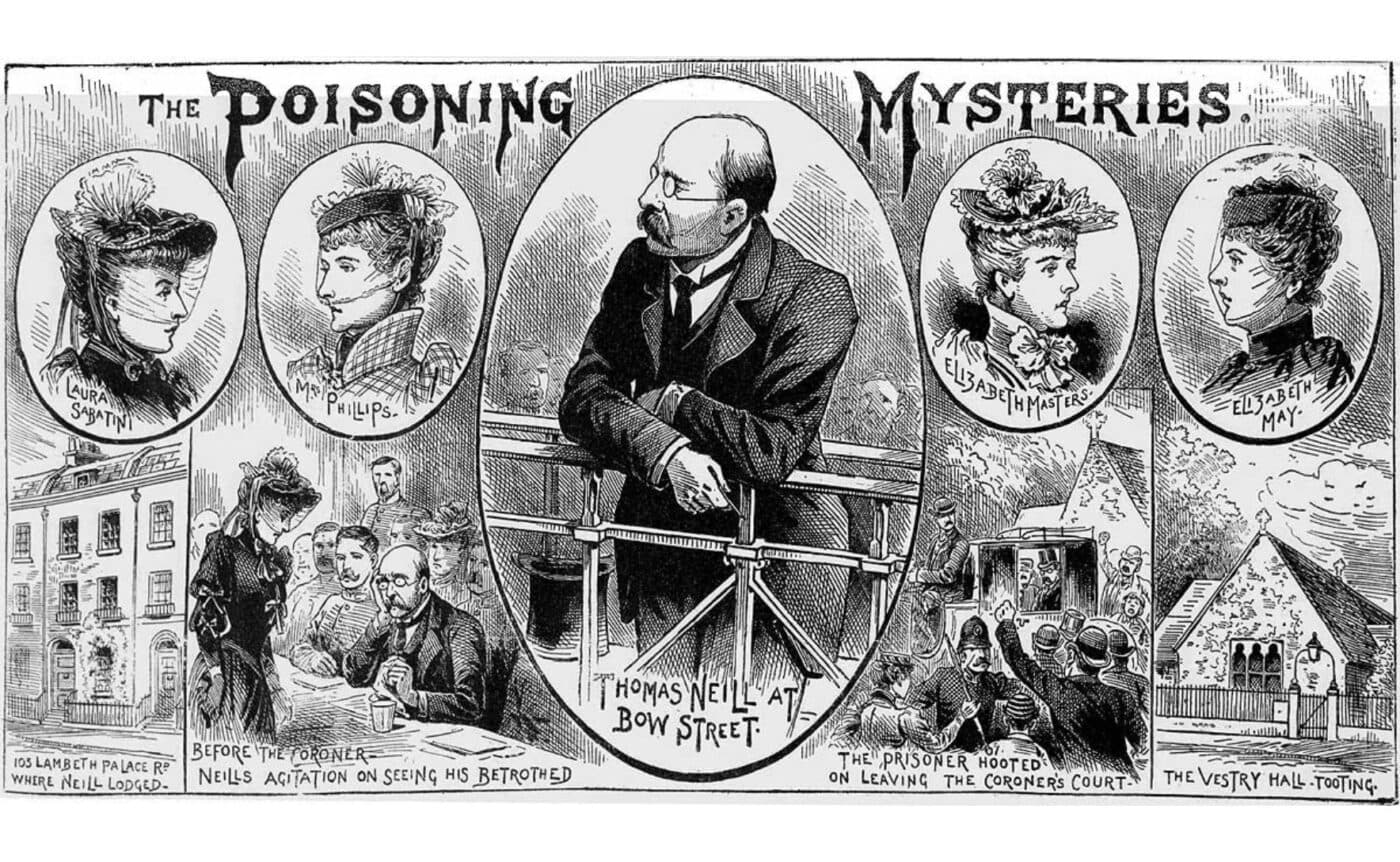
In 1892, Dr Thomas Neill Cream was tried and convicted of four counts of murder and one attempted murder by poison (strychnine). Most of his victims were sex workers, but in late Victorian Britain, it was Cream’s efforts to blackmail fellow doctors for the women’s deaths that led to a further conviction on the charge of extortion.
When judges imposed sentences on men convicted of poisoning, they condemned them as criminal individuals. Yet, the sentencing of female poisoners has typically called out their violation of gender roles, not just criminal laws.
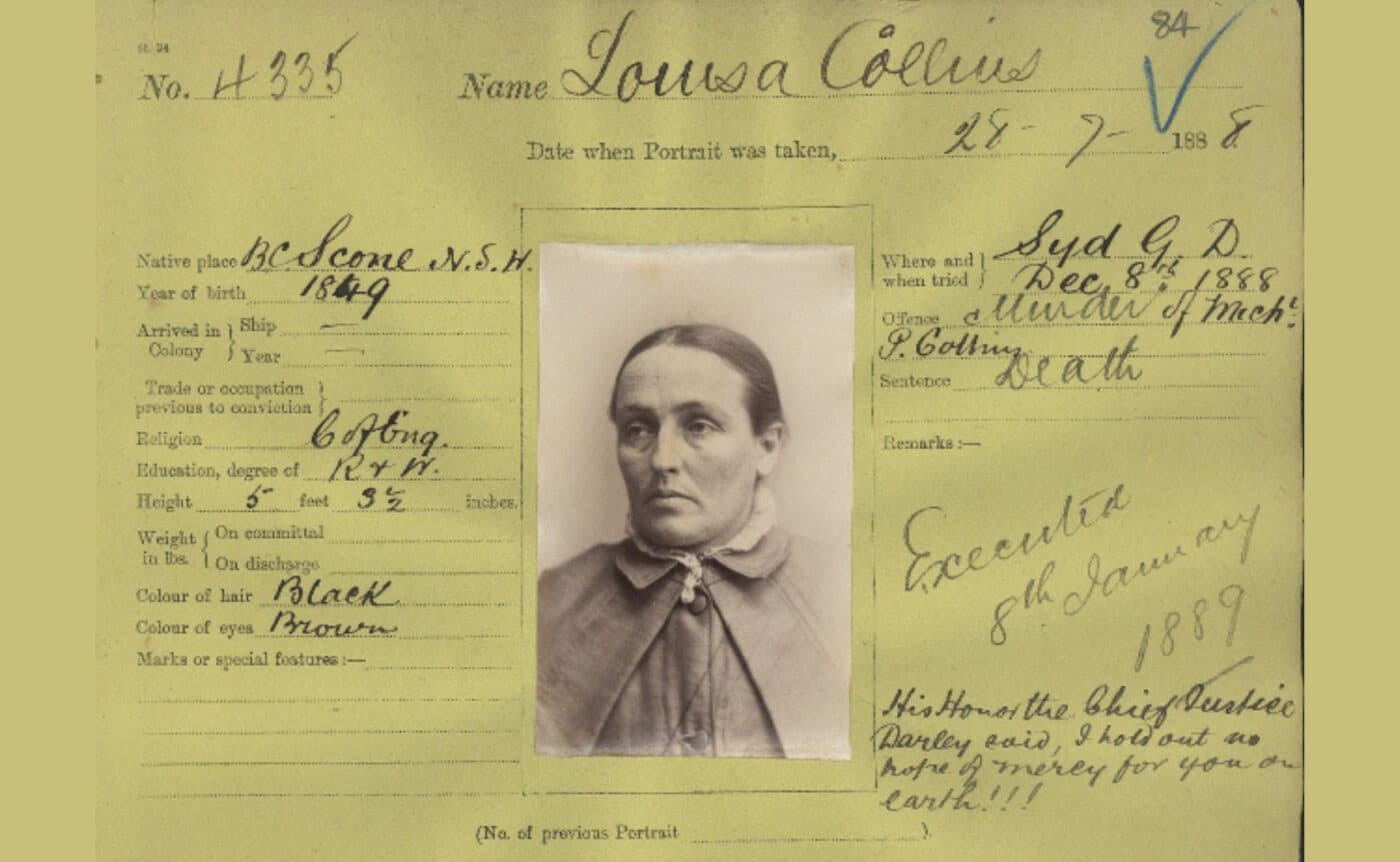
In 1888, when the chief justice of New South Wales sentenced Louisa Collins to death, he expressed his low opinion of her as a woman. After the jury found her guilty of murdering her husband (under suspicion she had poisoned her previous spouse) he told her she had committed a “crime of particular atrocity”:
“You were day-by-day giving poison to the man whom above all others you were bound to cherish and attend. You watched his slow torture and painful death, and this apparently without a moment’s remorse. You were indifferent to his pain, and gained his confidence by your simulated affection.”
Several other Australian women followed Collins – the last woman executed in New South Wales – to the gallows for murder by poison.
In 1909 the trope of the evil step-mother made Perth woman Martha Rendell a target of contempt, outside and inside the courtroom. After the deaths of three of her stepchildren raised suspicions of poisoning, a claim by one of their older siblings – that Rendell had administered hydrochloric acid under the guise of treating diphtheria – lead police to charge her with murder.
In her trial, Rendell testified in her own defence, but the strategy worked against her, according to the judge who sentenced her to death:
“You are guilty of one of the most horrible crimes I have ever heard of. You are and have been, apparently, at all times, responsible for your own actions, and no one having ever suggested that you are mad, you appear to me a MORAL DEFORMITY.
During the whole of this case I have been astonished at your demeanour and taking into account the appalling nature of the case as disclosed, and your behaviour in the dock, I can only term you a most extraordinary woman.”
Had the defence presented evidence of insanity, the judge implied, Rendell might have been spared the gallows. Instead, her protestations of innocence, like Patterson’s, amplified her depravity.
The impact of sentencing based on the victims’ viewpoints
Before Justice Beale sentenced Patterson for the attempted murder of Ian Wilkinson and the murders of Gail and Don Patterson and Heather Wilkinson, he reviewed 29 victim impact statements and cited 19 of them in his reasons for judgment.
“No summary could do justice to the individual and collective power of those statements”, he stated in his livestreamed appearance.
Victoria introduced victim impact statements in 1994, and in 2011 victims were granted the right to deliver their statements in court. But what does it mean for a sentencing court to be informed, in writing or in person, of the consequences of an offence from a victim’s perspective?
In the early phase of the victims’ rights movement, defence lawyers and human rights advocates predicted that judges would lean toward punitiveness if they took victim impact statements into consideration. Critics have also pointed to the likelihood that the ‘worthiness’ of victims may exert an influence over sentences.
Although there is little evidence to substantiate those fears, such contentions are difficult to prove. However, one recent study found links between sentence severity and the number of statements submitted, particularly in homicide cases. Statements delivered orally in court had a similar impact.
Is sentencing mushrooming?
Prior to the late twentieth century, victims could speak in court only to appear as witnesses for the prosecution and to answer questions put to them.
Now, sentencing statements draw directly from victims’ experiences. Justice Beale’s explanation of Patterson’s sentence devoted over ten per cent of his 7,017 words to describe what victims told the court about the harms they experienced.
Guided by the sentencing principles listed in Victoria’s Sentencing Act, the judge sentenced Patterson to a non-parole term of 33 years, owing to the “horrendous nature” of the poisonings.
The Act also states the “sentencing court must have regard to the impact of the offence on any victim of the offence”. Yet, Justice Beale did not explain how he regarded that evidence in reaching his decision.
The condemnation of the female poisoners of the past, reviled for defying gendered expectations of care and empathy toward loved ones, was based on the impact of their crimes on so-called civilised society. Yet they reverberate in the sentencing statement and in those of Patterson’s victims.
Both the defence and the prosecution have filed appeals. For the defence, the question of the impact of victim impact statements is one the Court of Appeal will likely have to answer.
Top image: Death Cap mushroom. Photo: Daisy Arciniega/iNaturalist
You may also like

Democracy Sausage: Forty Years On
Treasurer of Australia and ANU Alum the Hon Dr Jim Chalmers MP joins Mark Kenny and Liz Allen on Democracy Sausage to unpack the 2025 Intergenerational Report.

Canada is managing migration without taking a sledgehammer approach. Here’s how Australia can, too
What exactly is Canada doing to manage migration, and what lessons does its experiment have for Australia?

Parental gambling linked to poorer health and educational outcomes for Australian children
New Australian research has found that risky parental gambling is associated with poorer physical health, mental health and educational outcomes among children.