

ANU updates community on consultancy spending
Today the Australian National University’s Expenditure Taskforce provided an update to our community on consultancy engagements and expenditure.
Key points from the update include:
* ANU will update the way we report consultancy expenditure, so the data better reflects actual spending on these services.
*Up until now, our budget categorisation of “consultancy” spending has been very broad. It’s included activities such as:
- Education agent commissions (e.g. paid for the recruitment of international students)
- Professional services to support research contracts
- Professional services (e.g. audit, tax advisory)
- Software development and support
- Contractors engaged through third parties
* This broad categorisation can result in misinterpretation and lack of clarity.
* Improving how we define and classify spending on consultancies will enhance the accuracy of our budget analysis and forecasting.
* It will also support the University to identify potential cost saving opportunities and enable more meaningful comparisons with similar organisations.
* It will improve clarity and transparency for our community.
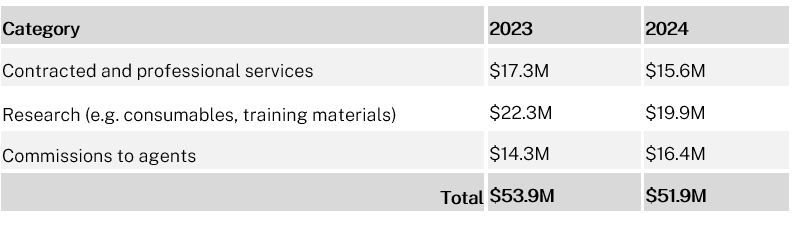
* Consultancy reporting in the Annual Report will now be distributed across the following categories:
- Contracted and professional services (this category is most reflective of actual consultancy spend, but also includes items such as insurance broking).
- Research (e.g. consumables, training materials)
- Commissions to agents
* The $53.9 million in consultancy reported in the 2023 Annual Report, breaks down into the new categories as follows:
You may also like

A battle on two fronts: Chris Taylor’s fight for climate and life
“I’m a student of life, a student for life.” Time is running out for Chris Taylor, but that is not stopping him from working to leave a better world behind.

Bake your PhD: Can you have your doctorate and eat it too?
The tastiest annual tradition has returned in 2026.

“Universities must not walk away from discomfort”: Gordon de Brouwer on trust, leadership and the power of knowledge institutions
As Dr Gordon de Brouwer steps into the role of Chancellor at his alma mater, he reflects on what it means to be a national institution at this time in history: “truth and knowledge still matter.”