
Australia’s rainforests first to switch from carbon sink to source
The trunks and branches of trees in Australia’s tropical rainforests – also known as woody biomass – have become a net source of carbon dioxide to the atmosphere, according to a new international study.
According to the team behind the Nature study, which includes experts from The Australian National University (ANU), Australia’s wet tropics are the first globally to show this response to climate change.
Usually, tropical forests absorb more carbon than they release – what’s known as a carbon sink. Woody biomass plays a key role in this process, alongside forest canopies and soils.
But lead author Dr Hannah Carle, who conducted this work as part of her PhD at ANU and is now based at Western Sydney University, said the capacity of woody biomass to continue working as a carbon sink is at risk.
“Tropical forests are among the most carbon-rich ecosystems on the planet. We rely on them more than most people realise,” Dr Carle said.
“Forests help to curb the worst effects of climate change by absorbing some of the carbon dioxide released from burning fossil fuels. But our work shows this is under threat.
“The change our study describes is largely due to increased tree mortality driven by climate change, including increasingly extreme temperatures, atmospheric dryness and drought.
“Regrettably, the associated increase in carbon losses to the atmosphere has not been offset by increased tree growth. This is surprising because higher carbon dioxide levels should make it easier for plants to scavenge carbon dioxide from the air, leading to more tree growth and greater carbon sink capacity.”
The findings have significant implications for emissions reduction targets, which are partly based on the estimated capacity of forests to continue to absorb emissions and help mitigate climate change.
“Current models may overestimate the capacity of tropical forests to help offset fossil fuel emissions,” Dr Carle said.
“We also found that cyclones suppress the carbon sink capacity of woody biomass in these forests. This is cause for concern with cyclones projected to become increasingly severe under climate change, and to impact areas further south, affecting additional stretches of forest to a potentially greater extent.”
Co-author Professor Adrienne Nicotra from ANU added: “The rainforest sites at the heart of this research provide unusually long-term and high-resolution data on forest health through time. We need to pay attention to that data.”
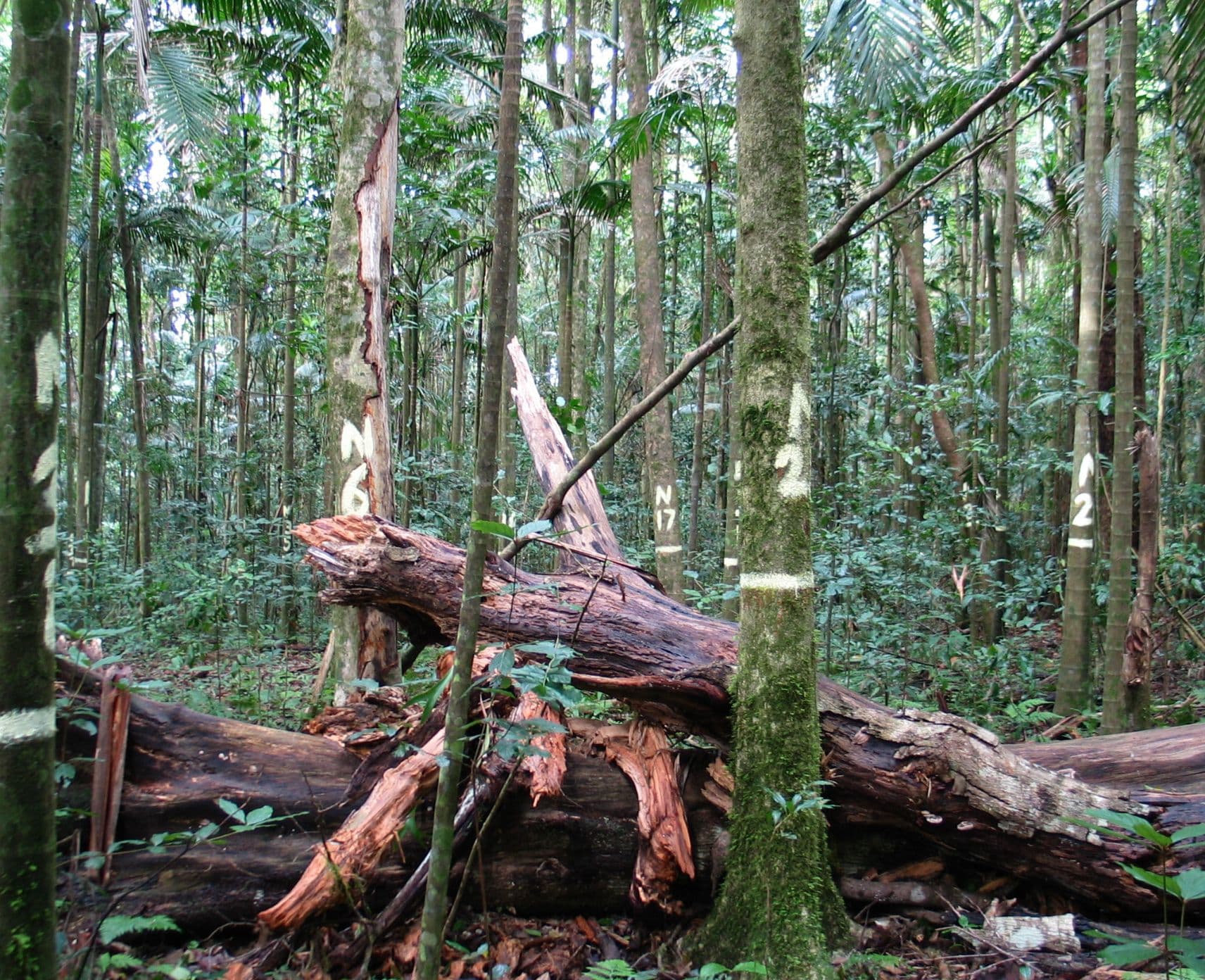
Top image: Australia’s relict tropical rainforest is one of the oldest, most isolated rainforests in the world. Photo: Andrew Ford.
Featured experts

Contact the media team
Related tags:
You may also like

Australia doesn’t need more gas to meet energy needs, research finds
Pumped hydro and battery storage can enable Australia to meet its energy needs without increasing the use of gas to fuel electricity plants, according to a new paper by researchers at The Australian National University (ANU).

Mapping the shadows: scientists predict the ‘hidden highways’ of Mexico’s illegal wildlife trade
Researchers have mapped the hidden routes of Mexico's illegal parrot trade, using almost 30 years of data to predict trafficking hotspots.
From the coasts to the plains, bird flu could threaten not just birds – but their homes
Bird flu doesn’t just threaten birds and mammals – it could well affect entire ecosystems, explains ornithologist Penny Olsen.