
Bake your PhD: Can you have your doctorate and eat it too?
The tastiest annual tradition has returned in 2026.

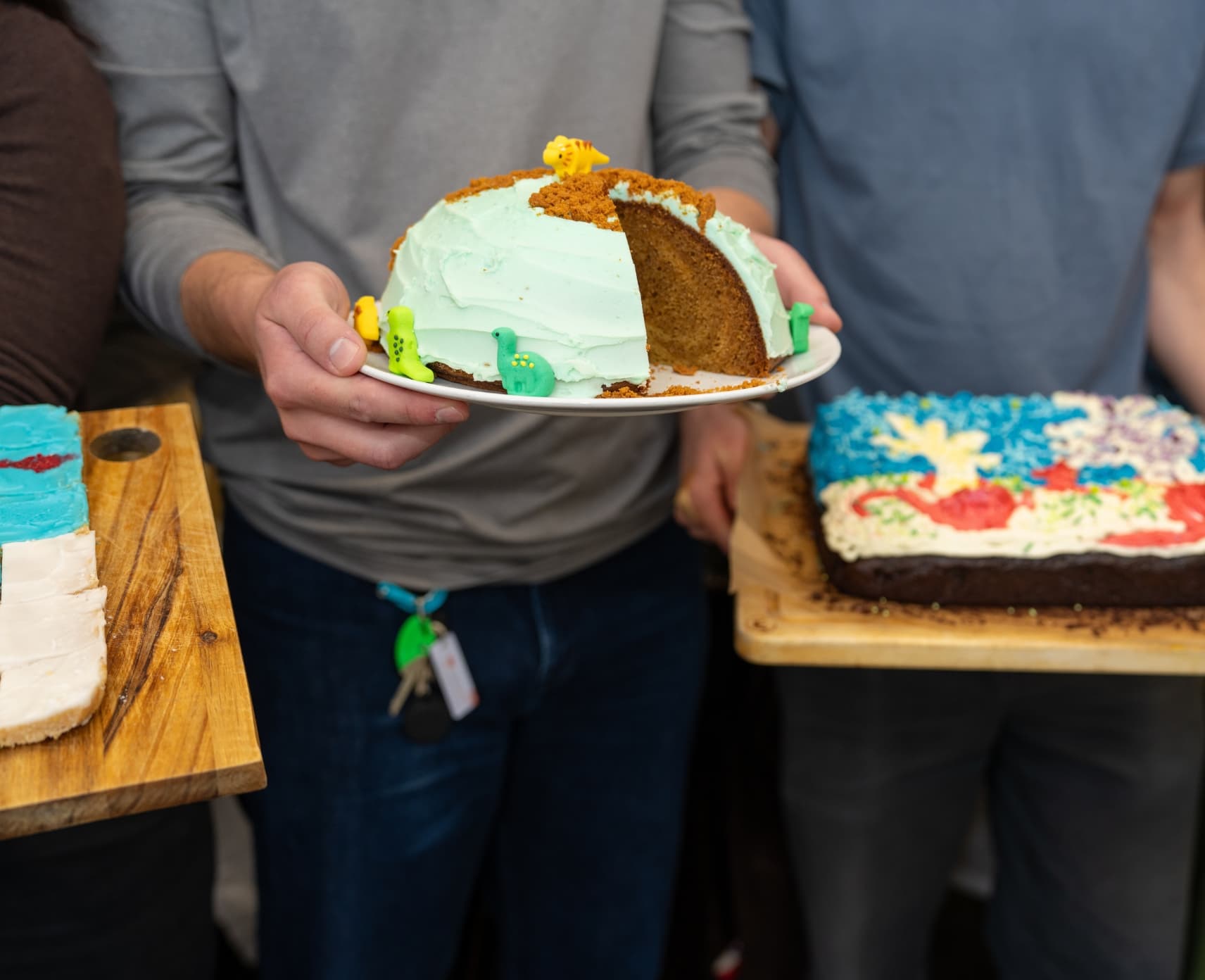
PhD students at The Australian National University Research School of Earth Sciences (RSES) took their science into the kitchen for a chance to be crowned the winner of this year’s Bake Your PhD competition at the annual student conference, StuCon.
Returning after a year’s hiatus, the competition challenges students to put their best science communication foot forward and explain their research through the medium of baked goods.
“Everyone was really keen and we’ve got 14 participants today. I think the competition is going to be quite tough, but I’ll do my best to win,” said organiser and participant Salome Urien.

Salome’s sedimentary layer cake depicted her search to uncover when certain algae appeared in the marine ecosystem and their impact on oxygen levels and the food chain (bonus points for the caramel representing the extracted oil that she analyses, surely).
Baking is often called an exact science with a recipe replacing a protocol, ingredients replacing reagents, and heat-powered reactions that need to be just right to create the perfect sweet treat.
People’s Choice winner Yun-Ze Cheng is using the ground-shaking recordings of the moonquake from the Apollo missions to help tell us how the Moon formed, and prepare for the next generation of Moon missions, including Blue Ghost II which will carry the first Australian-designed instrument built to record moonquake from the far side of the Moon.
Yun-Ze shared his moon core research in the form of traditional moon cakes, often shared during the Mid-Autumn Festival in Taiwan.
“The layers of a mooncake are actually similar to the layers of the Moon. Getting the crust right was the hardest part. To make it taste crunchy, it needs many thin layers of dough, it took a lot of trial and error to get them right,” he explained.

Slices, tartlets, cakes and pastry were canvases for stories about tiny minerals to vast oceans. Pistachio represented phosphate, Oreos a reservoir wall, and sprinkles became an entire symbiotic coral reef ecosystem.
Katja Curtin’s childhood lemon slice recipe became the heat and carbon stored in the ocean around Antarctica, and Hitank Kasaundhan’s matcha cake was the right green for his high-pressure, high-temperature experiments on olivine.
Expert judges Professors Ann Evans (Pro-Vice Chancellor of Research Training), Kiaran Kirk (Dean of the College of Science and Medicine) and Rhodri Davies (RSES Director) based their scores on visual creativity, how well each creation related to the research project being depicted, and tastiness.

Competition was indeed fierce. Jackson Copeland attempted to topple his officemate and 2023’s winner Edgar Leong with an 80s-inspired Biscoff marble cake, but Edgar’s four months of torture trying to interpret seismic data paid off when it inspired a filo pastry masterpiece filled with kaya (Malaysian coconut jam) – earning first place.
“I’m working on the evolution of sedimentary basins – really large bowls in Earth’s crust filled with sedimentary rock that carry metals we need for low-carbon technology. For my cake this year, I was hoping to capture some of the many geological structures you might find in these rocks,” Edgar explained.
His advice for taking home the gold again?
“A great bunch of friends and colleagues with good banter keeping me humble and telling me my first win was a fluke.”
Top image: Bake Your PhD. Photo: Nic Vevers/ANU
Related tags:
You may also like
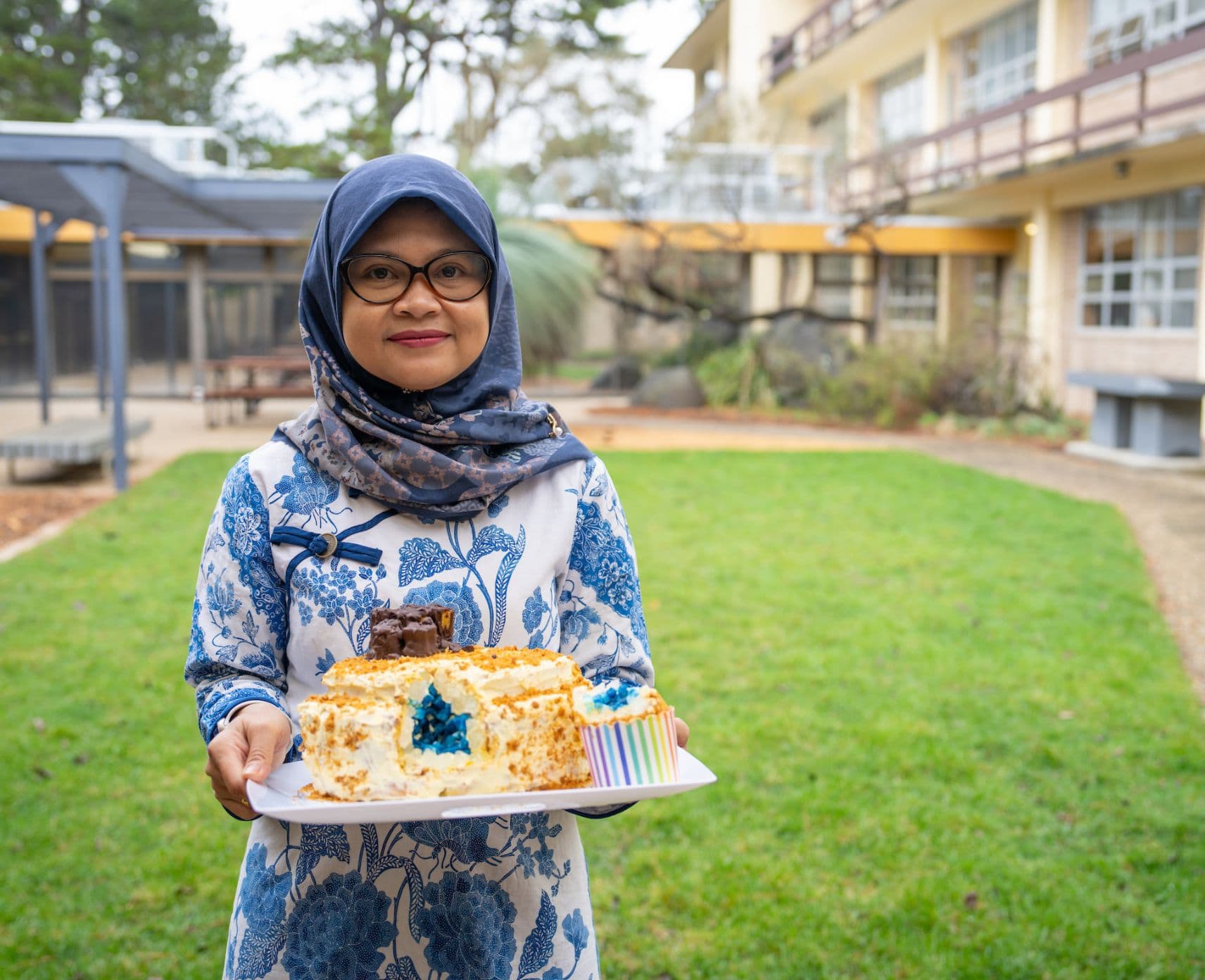
Bake Your PhD: the sweetest side of Earth Science
What happens when research rolls into the kitchen? These PhD students will tell you that you can have your cake and eat it too.
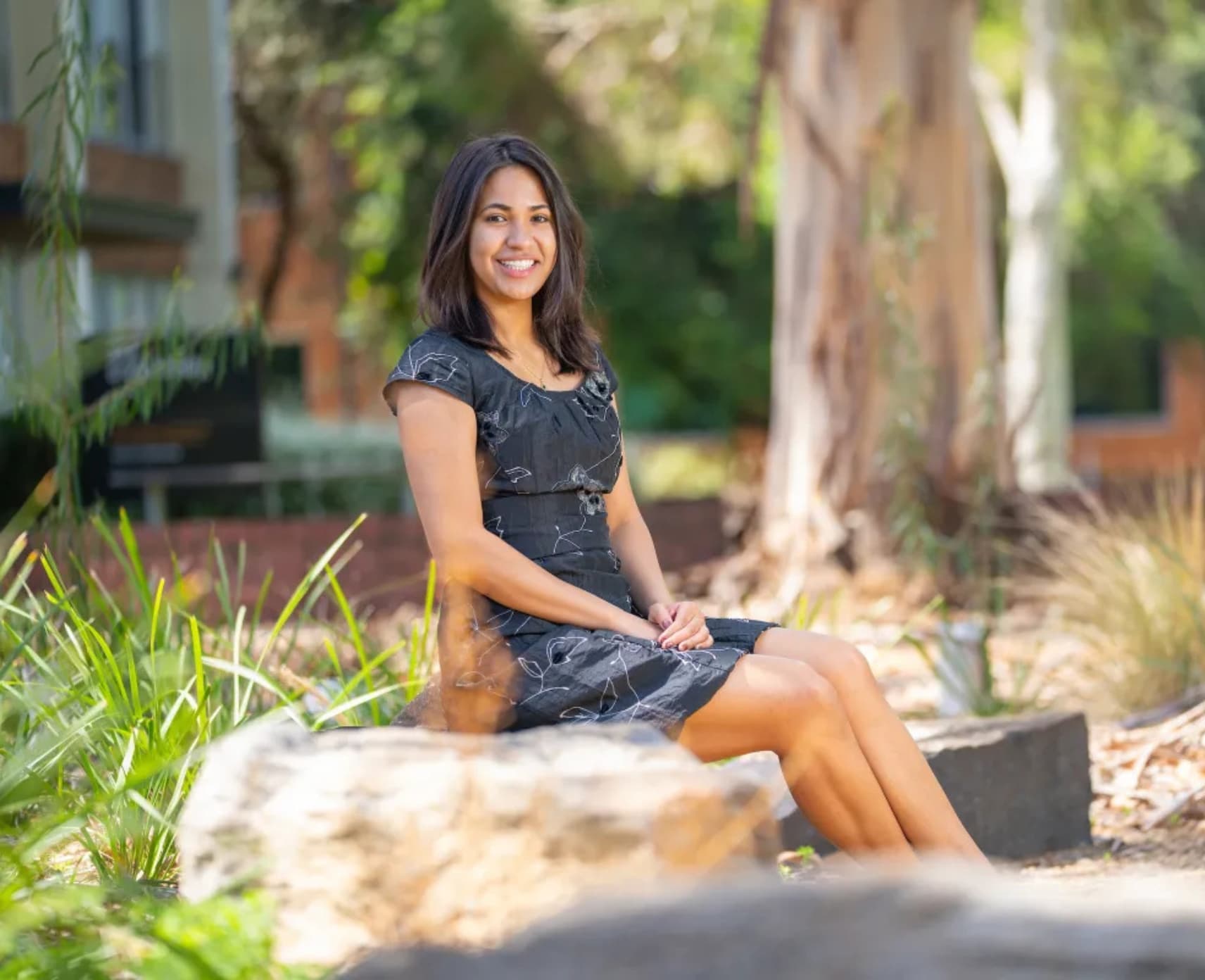
A groundbreaking PhD: earthquake data is the key to exploring the Earth’s interior
Having researched the deepest part of Earth's inner core for her PhD, Dr Thuany Costa de Lima is ready to rock the seismological world.
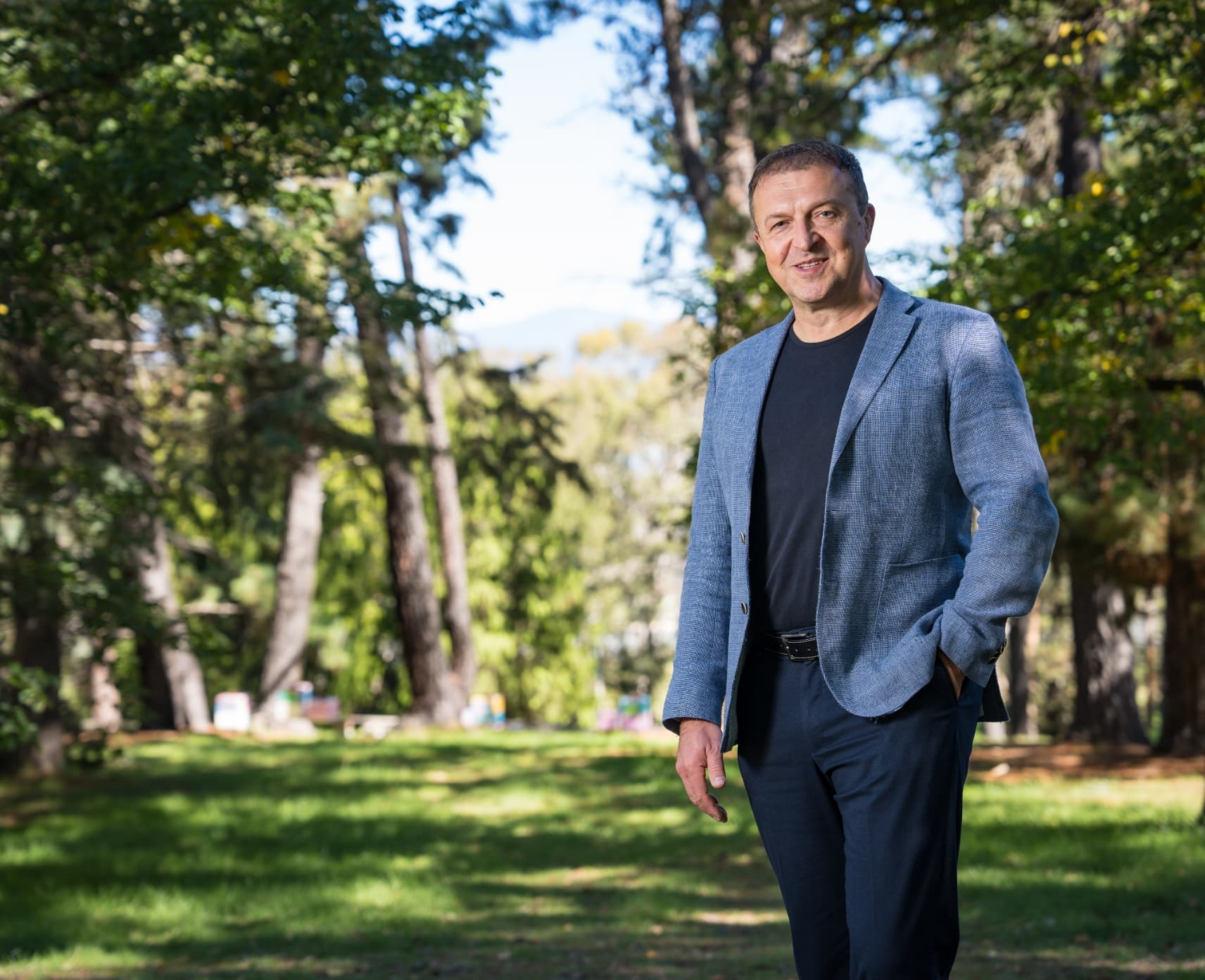
An ANU researcher’s journey from the centre of Earth to Mars and beyond
Professor Hrvoje Tkalčić is helping unlock clues about Earth's deep interior and other planets such as Mars and the Moon.