
Changing the story of medical research for Aboriginal and Torres Strait Islander peoples
The National Centre for Indigenous Genomics is working with Indigenous communities on the ethical and respectful use of the stories held within DNA.
Article by:

Amanda Cox
Contributing writer
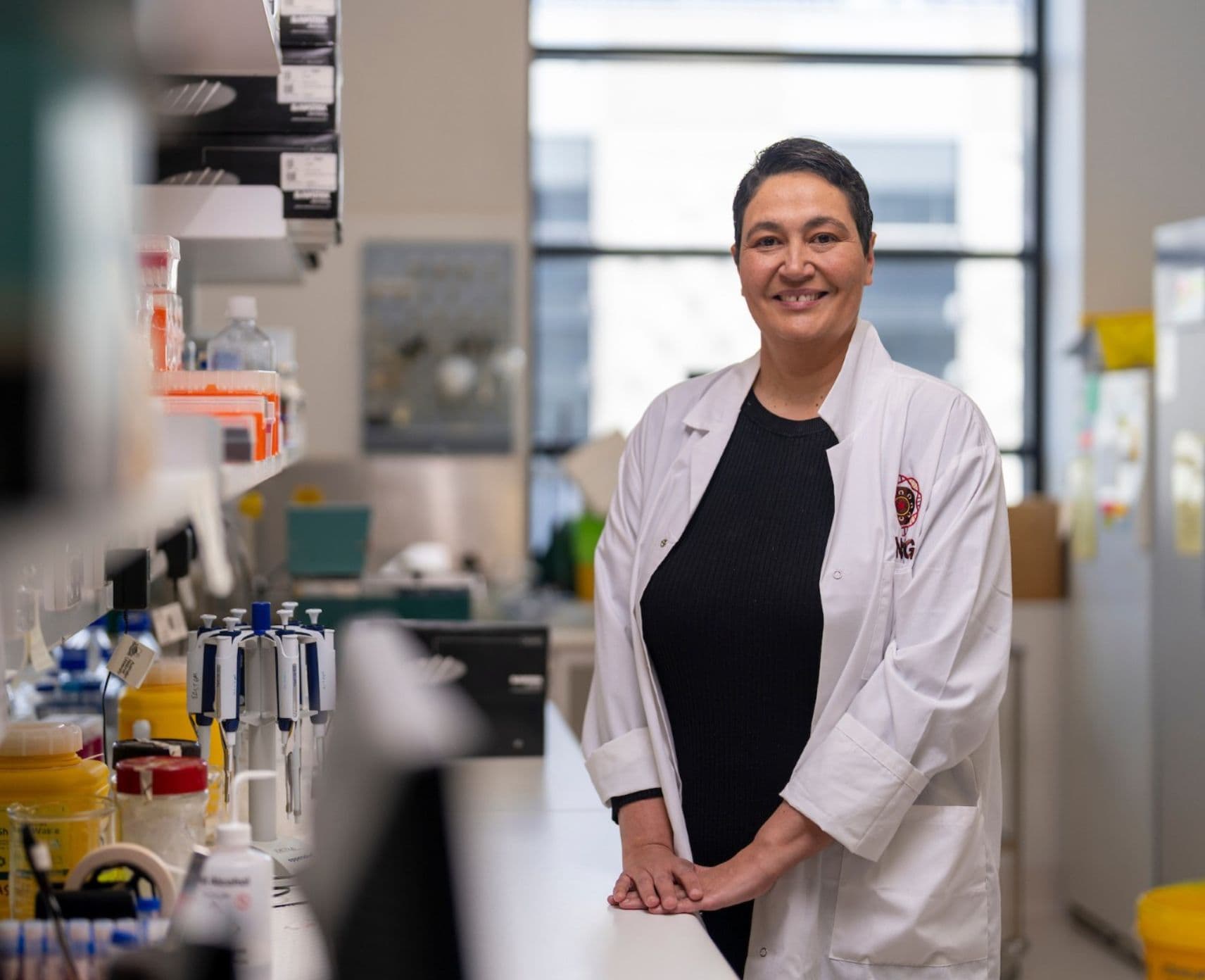
“I really believe in this science,” begins Associate Professor Azure Hermes. “When we think about closing the gap for Aboriginal and Torres Strait Islander people, you have to think that genomics can play a part in that.”
Associate Professor Hermes is a proud Gimuy Walubara Yidinji woman and the Deputy Director of the National Centre for Indigenous Genomics (NCIG).
The Centre within The John Curtin School of Medical Research at ANU is addressing gaps in Aboriginal and Torres Strait Islander healthcare by putting people first.
“We’re trying to build a biobank for Aboriginal and Torres Strait Islander people, essentially a library of Indigenous DNA samples,” says Associate Professor Hermes.
“We want Aboriginal and Torres Strait Islander people to be the decision makers and the knowledge holders, and that means also being the knowledge holders of our genomic information.”
At the heart of this work is co-designing the ethical and respectful use of the genetic stories in the NCIG biobank with Indigenous communities. But this wasn’t always the case.
“NCIG holds a collection of 7,000 historical blood samples that were collected between the 1960s and the 1990s,” says Associate Professor Hermes.
“We don’t really know too much about the consent process for those samples but given that the majority of them were collected between the 60s and 70s, we don’t think that informed consent was given.”
Doing the work needed to make things right is a responsibility that weighs heavily on everyone at NCIG.
Especially for Associate Professor Hermes, who goes out into communities to listen and talk about genomics and what it means to be part of this new science.
It’s a long process with a focus on building trust. That way, people have the information needed to make informed decisions about what to do next. It provides them with an opportunity to understand the science and decide if they want to participate in it.
“It’s a responsibility that I take very seriously, whether that’s to destroy a sample, repatriate it back to country, or to collect it and put it in the biobank,” she says.
“We give them that space, we give them that time, and we give them that assurance that whatever it is you decide to do, we will respect that decision.”

Renowned for her leadership in culturally safe genomics, Associate Professor Hermes won the Traditional Knowledge Innovation Award from the Australian Academy of Technological Sciences and Engineering recently.
NCIG research covers a broad range of fields, from providing a reference genome to support medical research into diseases to social science studies investigating how Indigenous people feel about genomics and its potential outcomes.
Associate Professor Hardip Patel’s area of interest is bioinformatics. He, along with others at NCIG, uses advances in computing to help investigate large datasets of genomic information.
He hopes that understanding how genomics makes people unique will help Aboriginal and Torres Strait Islander communities better deal with the health concerns most important to them down the track.
“Genomics data is very powerful in not only diagnosing and treating disease,” he says. “In the future, it will be powerful in predictive work. Data is never boring. Data tells a story.”
Working in collaboration with Aboriginal and Torres Strait Islander people is a powerful way to help link the stories found in DNA with what is important for communities.
However, uncovering these genomic stories requires a large amount of computing power. Thankfully, the team can use the National Computational Infrastructure facility on campus at ANU.
“Typically, we generate in excess of a terabyte of data from a single person.”
Importantly, the data held by NCIG also has a story outside of the computers that house it.
“It must be understood in the context and priorities of communities,” says Associate Professor Hardip Patel.
“Everyone here has a similar passion. They want to make sure that nobody is left behind in the benefits of genomic research.”
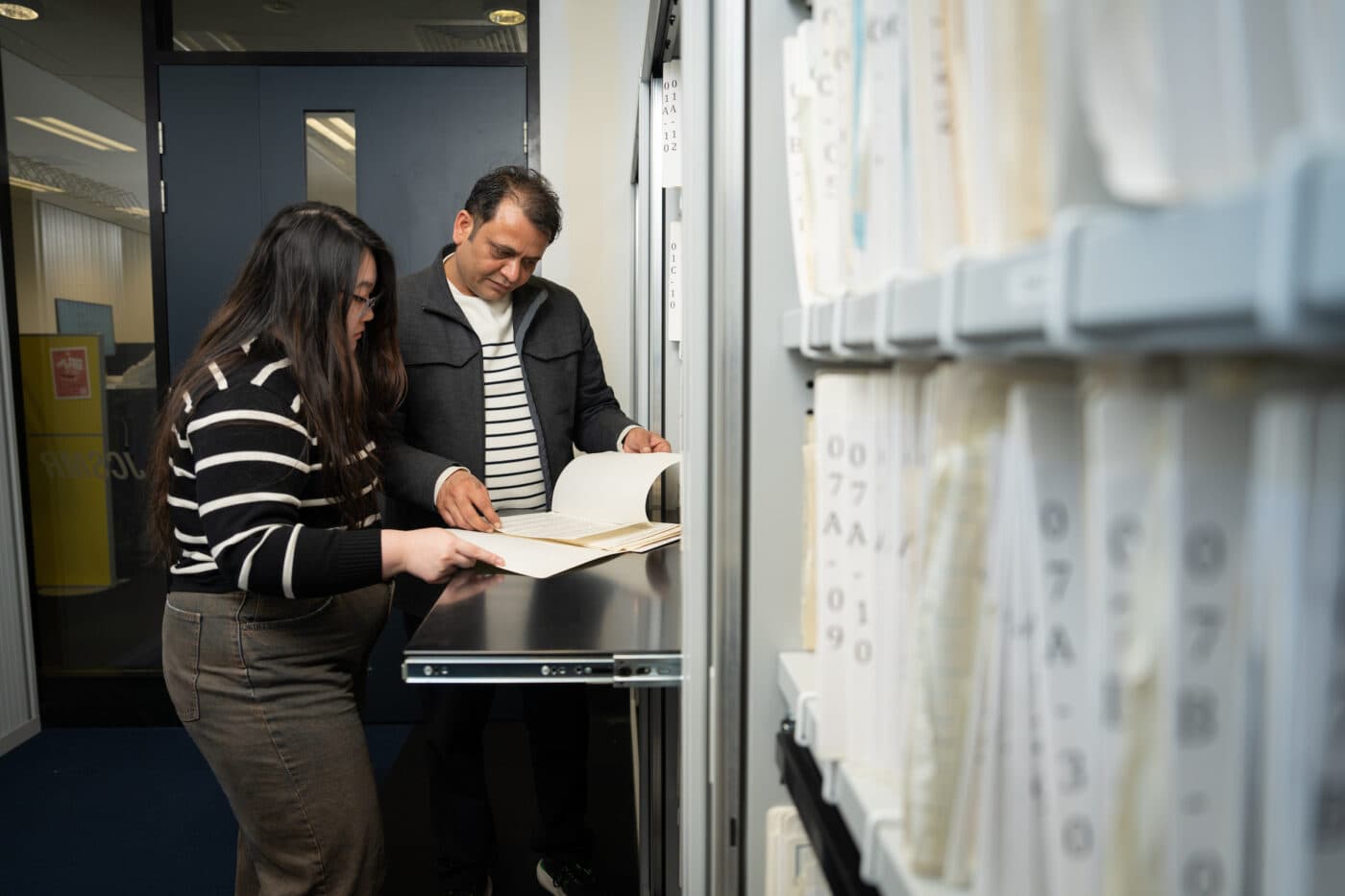
Community engagement is also about looking to the future and ensuring that the work of NCIG can one day deliver benefits back to the community on issues that are important to them.
“I love going to community. It fills my cup,” says Associate Professor Hermes. “I love hearing people’s stories, and I love watching them take ownership and really think about what it is that’s right for them and their families and their communities.”
One thing that became clear from visits to community was the need for culturally appropriate resources about genetics and genomics. Talking about our genes and our health is a series of animated and first-person stories that answer some common questions that people have about genomics.
This work is part of a vision to expand the work of NCIG to deliver greater connections between Aboriginal and Torres Strait Islander people and people working in health and medical research.
“I’d like to see NCIG become a truly big national centre where we have more Aboriginal and Torres Strait Islander people working in the space,” says Associate Professor Hermes.
“I’d like to see all the benefits that we are talking about with Indigenous communities spread out across all of Australia. Because we know that when we look at Indigenous science, and when we look at Indigenous genomics, that the benefits will be for all Australians.”
This article was first published by the ANU College of Science and Medicine.
Top image: Associate Professor Azure Hermes. Photo: Jamie Kidston/ANU
You may also like
Empowering Indigenous communities in genomics
Internationally leading Aboriginal researcher and clinician Professor Alex Brown will lead a National Indigenous Genomics Consortium for the future of health for Indigenous Australians.

Blood sample return a powerful symbol of reconciliation
The Australian National University (ANU) will today return over 200 blood samples to the Galiwin’ku community of Elcho…
DNA discovery opens door to tailored medicine for Indigenous Australians
Groundbreaking new research from ANU scientists could help address health inequities for Aboriginal and Torres Strait Islander peoples.