
Crafting crime fiction: When economics and creative writing collide
Professor Alison Booth discusses traversing the line between labour economist and fiction writer and how the two worlds work surprisingly well together.
Article by:

Pip Hill
Contributing writer
Professor Alison Booth has spent decades studying why people work, how they’re paid, and what shapes their choices. It is perhaps not the obvious background for a crime novelist.
But for Booth – who is an Emeritus Professor at The Australian National University (ANU) College of Business and Economics and author of eight Australian novels – the two worlds have always made more sense together than apart.
Booth published her first crime-fiction novel, Death at Booroomba, last year. A classic whodunnit, the story explores the complicated relationships between the townspeople of Warrawolong, a fictional town at the back of Eden, NSW, who seem eager to conceal the truth surrounding the death of Samuel Lomond, a friend of the story’s protagonist Jack O’Rourke.
Returning from the First World War, Jack is surprised to find Samuel has bequeathed his estate to him, a decision that angers the people of Warrawolong, and actively puts him back in the line of fire.
The setting draws on a childhood memory Booth has never forgotten.
“My mother’s school friend had a farm at the back of Eden, and one year we stopped at this house,” she says.
“It was a weatherboard house, with an upper floor, a beautiful kitchen and bathroom block. It was like stepping into the past whenever we visited.”
The house would become the inspiration for the estate featured in Death at Booroomba and unintentionally memorialise the property Booth once romanticised.

“When I was thinking of this book, I went to look for this house, and it was gone. It had been turned into pine plantations,” she says.
“I made some changes in the story, like removing the upper floor. It would have made things much too complicated – too many rooms for potential drama.”
At first glance, a work of such creativity may not seem to marry well with the image of a labour economist. For Booth, it is a duality that is more logical than flawed.
“Economists aim to understand human behaviour and human interactions with the world,” she says.
“Novelists aim to illustrate how human interactions affect individuals, emotions and behaviour. In doing so, both fields teach us about the world.”
The throughline, she argues, is storytelling itself.
“I think people do get the wrong idea of economists,” Booth says. “Good economists have a good story to tell and a good issue to investigate.”
To illustrate, Booth points to an obituary written about John Maynard Keynes, the economist whose ideas about government spending reshaped the 20th century.
“Keynes had all that a good economist needs – he was a mathematician, he could write and he had excellent ideas,” Booth says.
“He was an amazing man in many respects, and he was particularly influential with the notion that if there’s a depression, you may need to increase aggregate demand to get the economy running again.”
“Good economists have a good story to tell and a good issue to investigate.”
For Booth, the two personas of economist and creative writer may intermingle in a way that is beneficial, but to an extent there must be a shedding of one so the other can thrive.
“As an economist, you would never want to show any emotion. Economics has to be logical, analytical and based in fact and figures. Emotion has probably guided your ideas as to what’s interesting and important, but it must be logical,” she explains.
“Creative writing demands the opposite. It demands more emotion. It’s like taking off one hat and putting on another. You can be more poetic, but having written more consistently in non-emotional tones, I found it a challenge to step into that space.”
Writing fictional characters is helpful in this process, Booth explains.
“The characters appear and they’re nothing to do with me, so I can inhabit them completely,” she says.
Exploring the world of fiction writing had been a desire of Booth’s since she was young.
“My parents loved literature and I’d always wanted to write fiction. Several decades into my academic career, I started to write short stories to figure out, you know, what was my voice going to be?” she says.
“One of my friends said, ‘Why don’t you write a novel?’. Well, that seemed like a lot of work.”
Daunted though she may have been by the prospect, it was a seed of encouragement that Booth used to begin writing her first novel in 2005. Five years later, it was published.
“To my surprise I got offered a contract to do three books. I also have to say it was to my horror, because at that stage I had all sorts of academic commitments. It was a very busy period!” she reflects.
Booth was realising her long-held desire to tell Australian stories. In a modern-day Australia that’s built on immigration, there are many stories to tell.
“It’s my great interest, how we’re not a homogenous population. We’re a mix of different people,” she says.
“I think about Australia’s immigrants and their stories. Though they don’t feature in Death at Booroomba, they inform the background of the book, and that relates very much to being a labour economist, I think.”
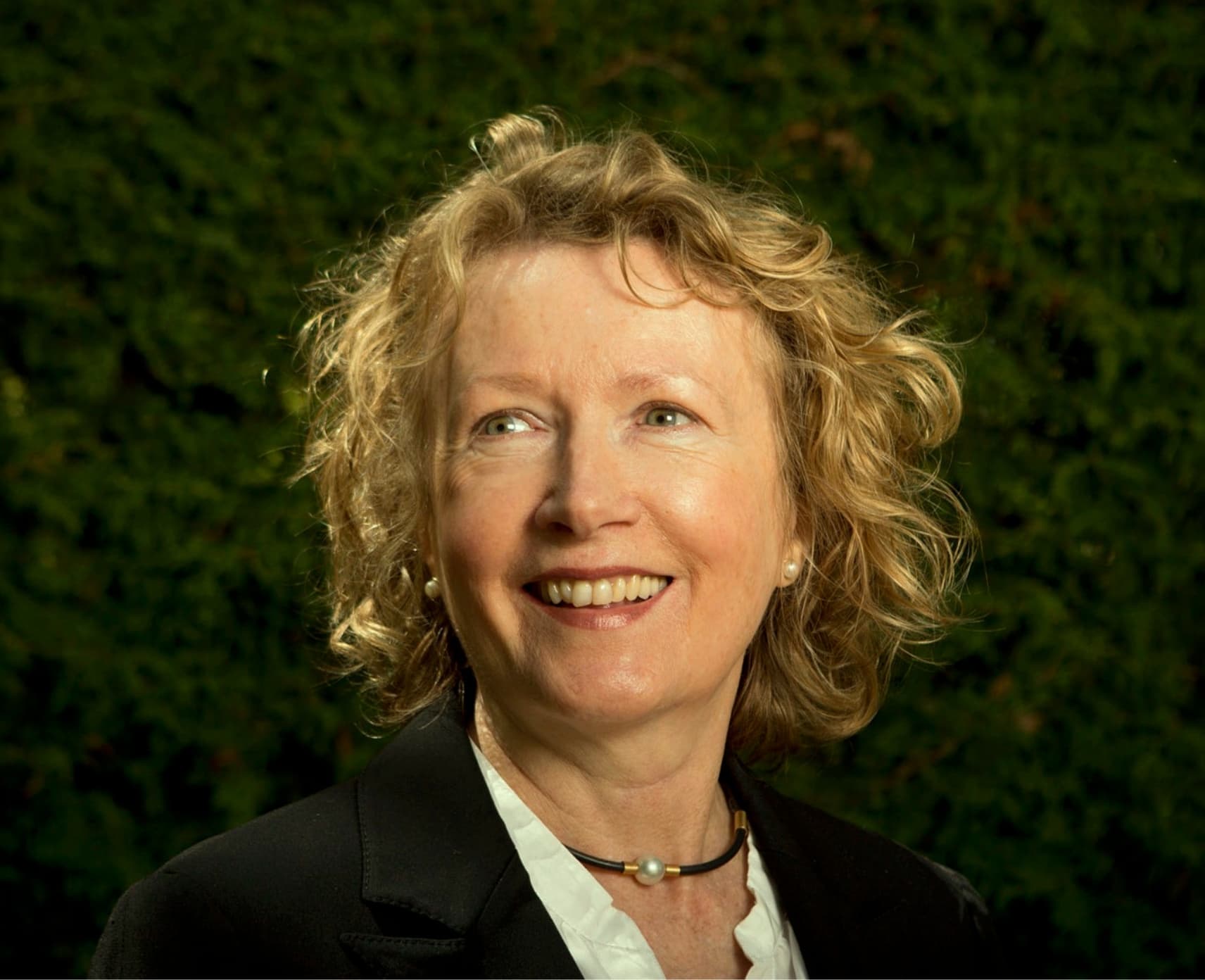
Top image: Professor Alison Booth, supplied
Related tags:
You may also like
Is AI changing how we write? Meet the novelist exploring how tech shapes our creativity
Associate Professor Lucy Neave wants to understand how writers have adapted to technological innovation over the past 65 years.

How ANU set the scene for Emily Maguire’s award-winning novel, Rapture
Working on her historical novel at the ANU inspired and shaped the book in surprising ways, says author and HC Coombs Creative Arts Fellow, Emily Maguire.
Award-winning ANU economist on leading the way in transformative teaching
Professor Creina Day’s research in macroeconomics and innovative teaching approach transcends the lecture theatres – her impact endures long after the class is over.