
Discovery of binary stars the first step in creating ‘movie of the universe’
A world-first discovery of binary stars could be the first step in building a more complete picture of how our galaxy formed, according to astronomers from The Australian National University (ANU).
The discovery is part of an ambitious 10-year program to scan the entire southern sky every few nights.
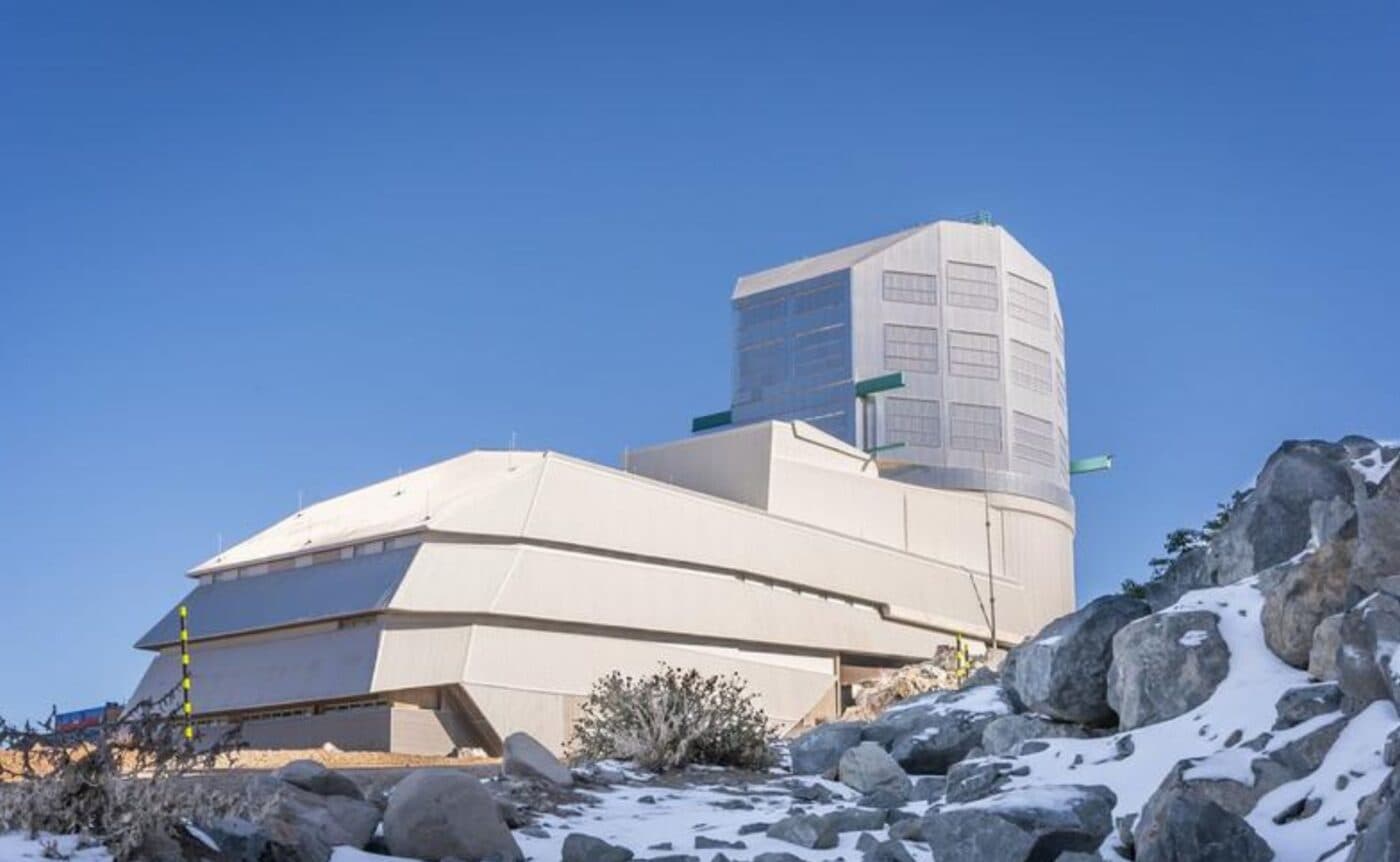
The study’s lead author, ANU researcher Dr Giacomo Cordoni, said the Legacy Survey of Space and Time (LSST) will build an extraordinary “movie of the universe”.
“This survey—run from the Vera C. Rubin Observatory in Chile—will allow us to track billions of stars and galaxies as they change over time. It’s designed to unravel the history of star clusters, galaxies and the Milky Way itself,” Dr Cordoni said.
“One thing we’re looking at is globular clusters—among the oldest and most crowded star systems in the universe. Each one holds hundreds of thousands of stars packed into a relatively small space, making them natural laboratories to study how stars evolve and interact.
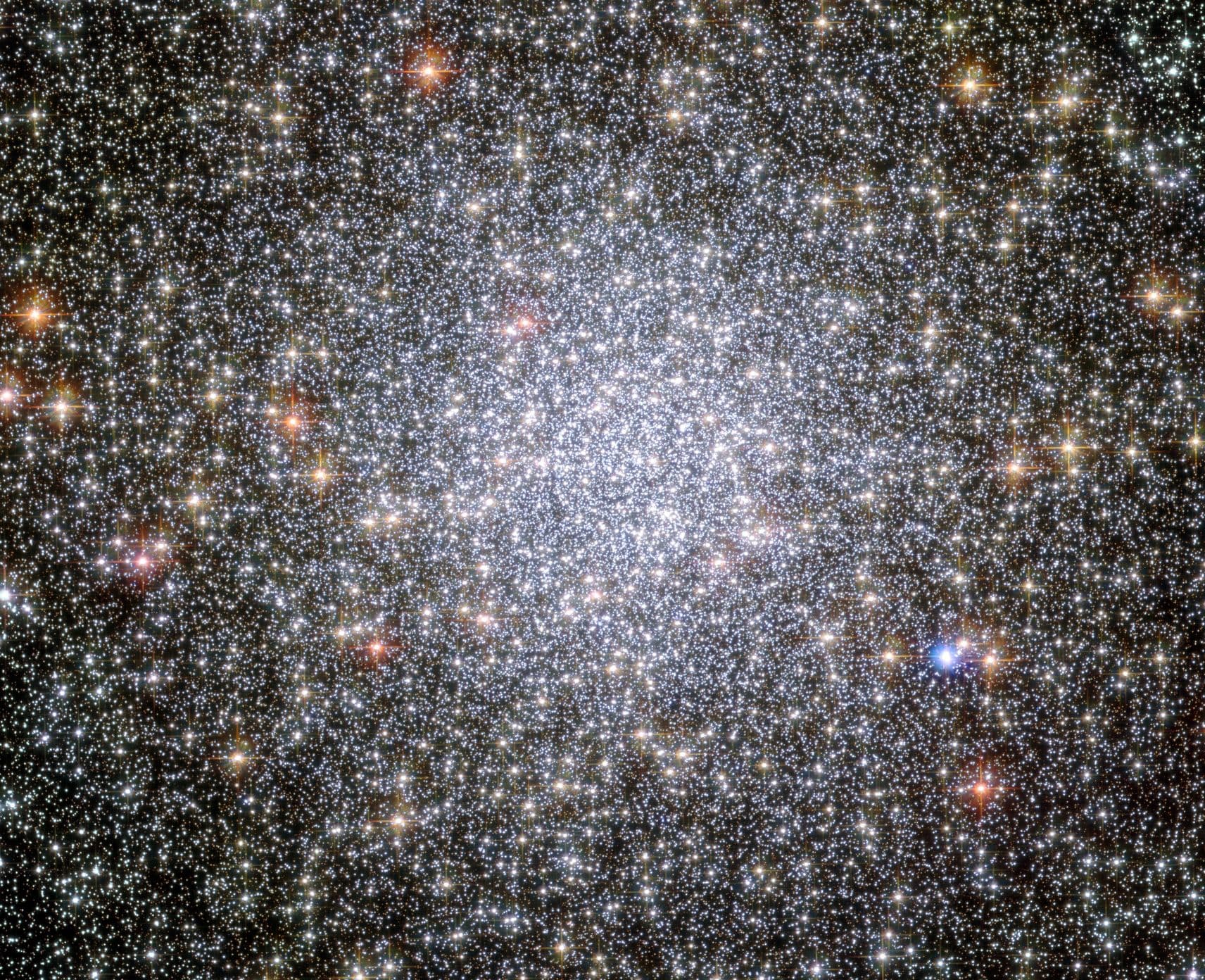
“Our own Milky Way contains over 150 of these clusters, including the spectacular 47 Tucanae, which is visible to the naked eye from the Southern Hemisphere and often used as a benchmark for models of cluster evolution.”
Within these clusters, binary stars—pairs of stars orbiting a common centre of gravity—play a key role. They exchange energy with their neighbours, influence whether a cluster survives for billions of years, and can give rise to exotic objects such as luminous blue stars known as blue stragglers.
Using Rubin’s first public dataset, Data Preview 1, ANU astronomers detected binary stars across the outer regions of 47 Tucanae for the first time. They found that the frequency of binaries in the outskirts of the cluster is about three times higher than in the dense central regions, which had previously been studied with the Hubble Space Telescope.
The results suggest that while binaries are gradually destroyed or disrupted in the crowded centre, those living in the quieter outskirts can survive—preserving something closer to the cluster’s original population.
“This is remarkable because 47 Tucanae has been studied for over 100 years, but only now, thanks to Rubin, we can map its outskirts in detail and understand what’s really happening there, and how these mysterious clusters assembled,” study co-author Professor Luca Casagrande said.
This discovery is a crucial new piece of the puzzle of how globular clusters—some of the Milky Way’s oldest inhabitants—formed and evolved.
According to the researchers, it also highlights the transformative power of the Rubin Observatory.
“Even in its first test data, LSST is already opening a new window on stellar populations and dynamics,” study co-author Professor Helmut Jerjen said.
“Over the coming decade, Rubin will map binaries and other stars across the entire sky, providing the first complete census of these systems and delivering a decisive test for theories of how clusters and galaxies came together to build the universe we see today.”
The study will be published in Publications of the Astronomical Society of Australia.
Australia has access to Rubin through Astronomy Australia Ltd (AAL), the Australian Government’s LIEF scheme, and contributions from partner institutions. More information is available at https://astronomyaustralia.org.au/blog/portfolio/vera-c-rubin-observatory/
Top image: NASA/ESA Hubble Space Telescope image of the globular cluster known as 47 Tucanae. Credit: NASA, ESA, and the Hubble Heritage (STScI/AURA)-ESA/Hubble Collaboration. Acknowledgment: J. Mack (STScI) and G. Piotto (University of Padova, Italy)
Contact the media team
You may also like

Codebreakers tackle cancer drug resistance with machine learning
Dr Eli Niktab is building a genome atlas to tackle chemotherapy resistance – and is attracting significant global funding.
Ultra-precise ANU coatings help power the next generation of gravitational wave detectors
ANU researchers have developed ultra-precise optical coatings for LIGO’s specialised beamsplitters, helping improve the observatory’s ability to detect faint gravitational waves from across the universe.

Bake your PhD: Can you have your doctorate and eat it too?
The tastiest annual tradition has returned in 2026.