
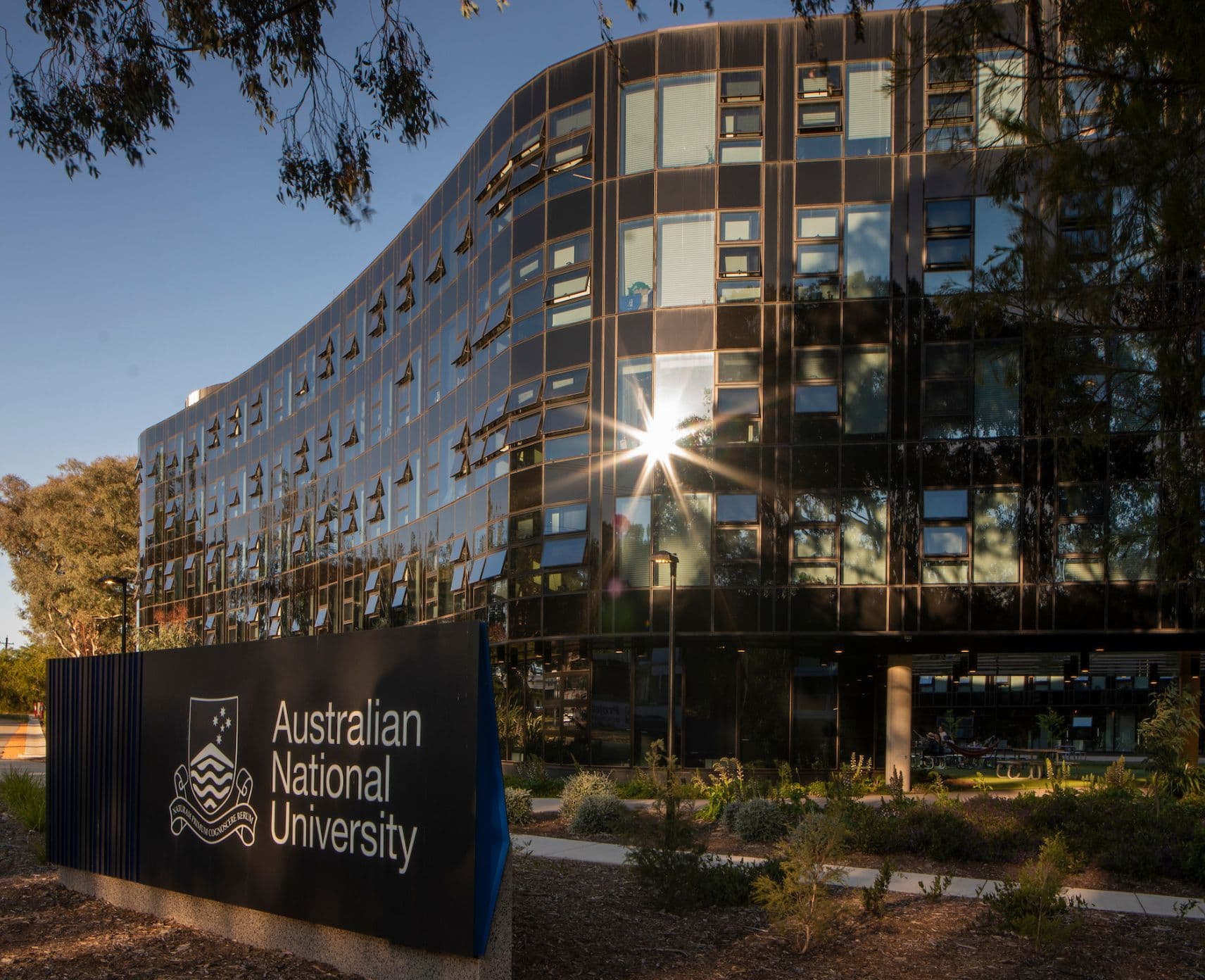
Five ANU researchers receive prestigious Australian Academy of Science honorific awards
Five talented researchers from The Australian National University (ANU) have been recognised by the Australian Academy of Science for advancing scientific research.
Associate Professor Liang Zheng, and early-career researchers Dr Kai Xun Chan, Dr Caroline Eakin, Dr Mark Hoggard and Dr Adele Morrison, have each received prestigious honorific awards, acknowledged for the depth, rigour and impact of their work across disciplines from artificial intelligence to biology, Earth sciences and climate research.

Associate Professor Liang Zheng from the ANU School of Computing has been awarded the Brian Anderson Medal for his pioneering contributions to representation learning in artificial intelligence.
He has developed widely used data augmentation methods that improve how images are represented in complex environments, boosting performance in areas like crop disease detection, robotics and speech understanding. He has also released influential datasets and algorithms for recognising and tracking objects.
His work has advanced computer vision and enables practical applications in areas such as smart cities, autonomous systems and image generation.
“Brian Anderson’s commitment to fundamental research has always been inspiring, and this recognition motivates me to carry forward that same spirit in my own work,” he said.
Dr Kai Xun Chan, a researcher in the ANU Research School of Biology, is working to transform our understanding of plant cellular communication during environmental stress.
Looking at how plants make survival decisions at the cellular level, Dr Chan’s work explores how chloroplasts – the ‘solar panels’ of plants – use sensor proteins to detect stress and send chemical signals that coordinate with hormones and control stomata, helping plants reduce water loss during drought and strong sunlight.
His research into molecular aspects of plant responses to their environment, including collaborations with local custodian Paul Girrawah House to explore heat resilience in Australian native plants and how these plants respond to Indigenous burning, has earned him the Fenner Medal.
Dr Chan said the award of the Fenner Medal will be transformative for his career.
“It enables me to keep pushing the boundaries in discovering the fundamental secrets of plant cells for the future engineering of climate-resilient crops,” he said.
Dr Caroline Eakin, from the ANU Research School of Earth Sciences has been acknowledged with the Dorothy Hill Medal for her groundbreaking work in seismology.
Her work uses seismic waves from earthquakes to see inside the Earth, connecting deep processes with surface events like earthquakes and volcanoes. By installing seismometers in key locations – from the Andes to the ocean floor and Australian deserts – Dr Eakin and her team have improved understanding of tectonic processes.
Her research has revealed how plates deform as they sink, uncovered upwelling beneath oceanic transform faults, and shown how Australia’s tectonic history is preserved deep within the Earth.
“Recognition from one’s peers is something truly special, and a testament to the environment and the teams we work within,” Dr Eakin said.
“I’m particularly grateful for the wonderful colleagues, students, collaborators and the broader community that I get to work with every day at RSES.”
Dr Mark Hoggard, an observational geodynamicist in the ANU Research School of Earth Sciences, has been awarded the Anton Hales Medal for his research linking Earth’s surface evolution to interior dynamics.
He uses field observations and modelling across multiple Earth science disciplines to solve important societal and economic problems, such as predicting sea-level rise, identifying mineral resources, and distinguishing underground nuclear tests from natural earthquakes.
His cross-disciplinary research has led to key discoveries in geodynamics and gained international recognition.
“I work amongst an extensive team of highly talented researchers and am honoured by this formal recognition of our collective endeavour,” said Dr Hoggard.
Dr Adele Morrison from the ANU Research School of Earth Sciences has been awarded the Frederick White Medal for her research on how climate change will affect the Southern Ocean and Antarctica.
Dr Morrison’s work uses ocean physics and supercomputing to model future changes in ocean circulation, including impacts on the global carbon cycle and marine ecosystems. Her work also examines how Antarctic coastal waters will respond to climate change, with implications for the stability of the Antarctic Ice Sheet and global sea-level rise.
Her contributions have strengthened Australia’s capability in Antarctic Ocean modelling and established her as a leader in ocean–sea ice research.
“It’s especially meaningful to see our work on the Southern Ocean’s role in climate and sea level recognised as important to Australia’s future,” she said.
You can find full details of the 2026 Australian Academy of Science Honorific Awards here.
Top image: ANU
Related tags:
You may also like

Bake your PhD: Can you have your doctorate and eat it too?
The tastiest annual tradition has returned in 2026.

We need to chat to our kids about AI chatbots
AI is changing childhood. ANU researchers are talking to children aged 9–12 to understand how AI chatbots affect their wellbeing and friendships.
The universe is full of strange ‘little red dots’. A new study shines light on their real nature
Scientists have found potential evidence of the earliest supermassive black holes. They could hold clues to how stars and galaxies formed in the earliest years of the universe.