
The inheritance of making: Dennis Golding’s art honours community and his Redfern roots
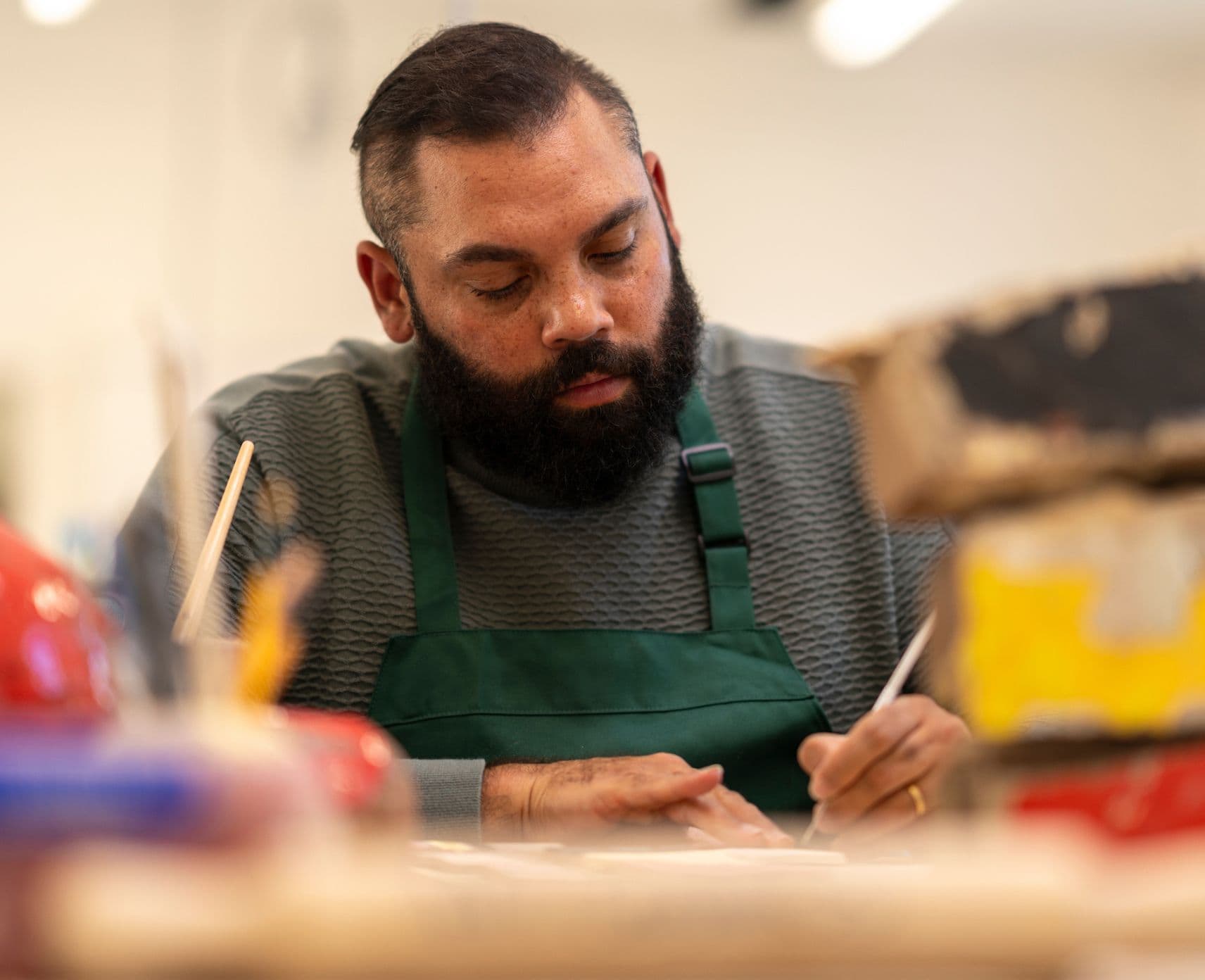
Celebrated artist and H.C. Coombs Creative Arts Fellow Dennis Golding wants his artwork to represent Redfern as he sees it: a place of community, strength and healing.
Article by:

Erika McGown
Contributing writer
When artist Dennis Golding was a boy growing up on Eveleigh Street, Redfern, also known as ‘The Block’, his Nan Faye sold cupcakes and icy-cups from her front yard. The air would fill with the sugary smell of vanilla and the sound of cousins laughing as they handed over gold coins to neighbours. At the time, it just felt like fun; it was something to do after school, something sweet to eat.
It wasn’t until years later that Golding understood what his grandmother was really teaching them.
“She was keeping us busy, keeping us out of trouble – just something to do,” he says.
“But she was also showing us that you’ve got to do something you love, something that helps you survive in this city.”
That spirit of survival and of turning small, everyday acts into powerful statements of care and connection runs through everything Golding creates.

A legacy in colour and clay
The 2025 H.C. Coombs Creative Arts Fellow at The Australian National University (ANU) School of Art & Design, Golding was raised in a home where creativity was as natural as conversation.
In his nan’s terrace, he watched his mother, a painter, bring a magnificent Rainbow Serpent sculpture to life for his pre-school near Redfern. From those early days, he learned that art lived in the everyday, in the scent of turpentine and eucalyptus, the rhythm of a brushstroke, and the way his mum transformed memory into story.
“That was the first time I really paid attention to painting,” he recalls. “From then, I just knew that’s what I wanted to do.”
That small studio, tucked in the back room of a suburban terrace on Eveleigh Street, became his first classroom, a place where art and family, history and imagination, blurred into one.
In 2014, Golding’s practice expanded beyond paint. He credits his university experience with reshaping how he saw both himself and his work.
“You’re challenged to think critically about identity, not just as an artist,” he explains.
“That’s where I learned how I could express stories drawn directly from my own childhood memory and lived experiences of growing up in an urban space as an Aboriginal person.”
In time, Golding came to see each medium as a storyteller in its own right.
“I let the medium speak to the story,” he says. “I allow the object to be the vessel of conversation and story.”
Those meanings are often rooted in childhood memory and community history, the streets in ‘The Block’, the family decisions that shaped his life, and the resilience of his grandparents, who left country towns along the Barwon River to build a future in the city.
Symbols of empowerment
Golding’s breakthrough came with his acclaimed superhero cape series, in which he reimagines cultural Indigenous iconography through the lens of pop culture.
“I started thinking about how superheroes are celebrated but all are predominantly white bodies,” he says. “I wanted to reclaim that symbolism, to empower young Aboriginal people.”
Each cape carries a symbol drawn from memory, place or family, turning the language of fantasy into one of strength and cultural pride. The project, The Future Is Here, has since travelled across the country, inspiring hundreds of Aboriginal and Torres Strait Islander students and the broader community to design their own superhero symbols.
“Working with these young people reminds me of how important it is for kids to see themselves as powerful, not marginalised,” Golding says.
“That’s what both my nans and my mum did for me, they showed me a creative path.”
A practice built on relationships
Golding’s work has taken him to major exhibitions and residencies, including a national tour and a forthcoming presentation at the Biennale of Sydney. Yet collaboration and care remain at the heart of his practice.
“I learnt from my mentor, curator Tess Allas, that being an artist is about relationships with other artists, with stories, with community,” he says. “It’s about listening as much as creating.”
At ANU, Golding is working primarily in ceramics, developing a new body of work that responds to the demolition of the iconic Aboriginal flag mural in Redfern, a symbol deeply connected to his community.
“Ceramics felt right,” he says. “The material speaks to fragility and permanence, just like memory, just like culture.”

Home, hope and heritage
Though gentrification has scattered many families from the Redfern Block, Golding’s sense of home endures.
“Redfern was a place of empowerment, a birthplace of Aboriginal civil rights movements, of healing, and protest,” he says.
“I want my work to remind people of those stories, the strength, and creativity. Not just a story of Redfern from the media.”
In everything he makes, from shimmering chandeliers to hand-built vessels, that early lesson of survival from his grandmothers guides him. And perhaps that’s the true recipe for Golding’s art: part memory, part making, and a generous measure of care, passed down from one generation’s hands to the next.
You may also like
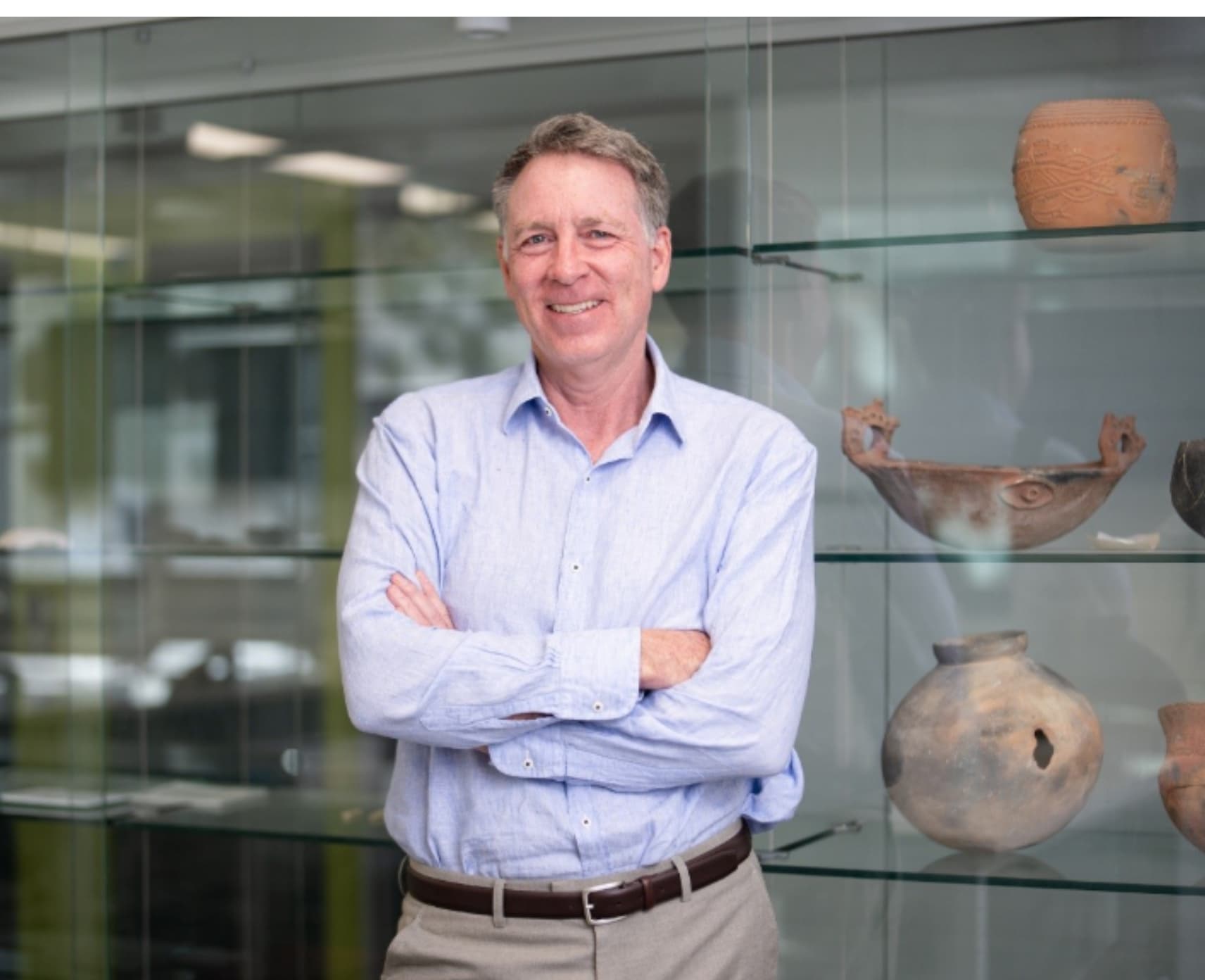
The archaeologist unearthing a new chapter in the history of Southeast Asia
Professor Dougald O’Reilly’s new book breathes life into the prehistoric pasts of Myanmar, Malaysia, Indonesia, Cambodia, Thailand and Vietnam.
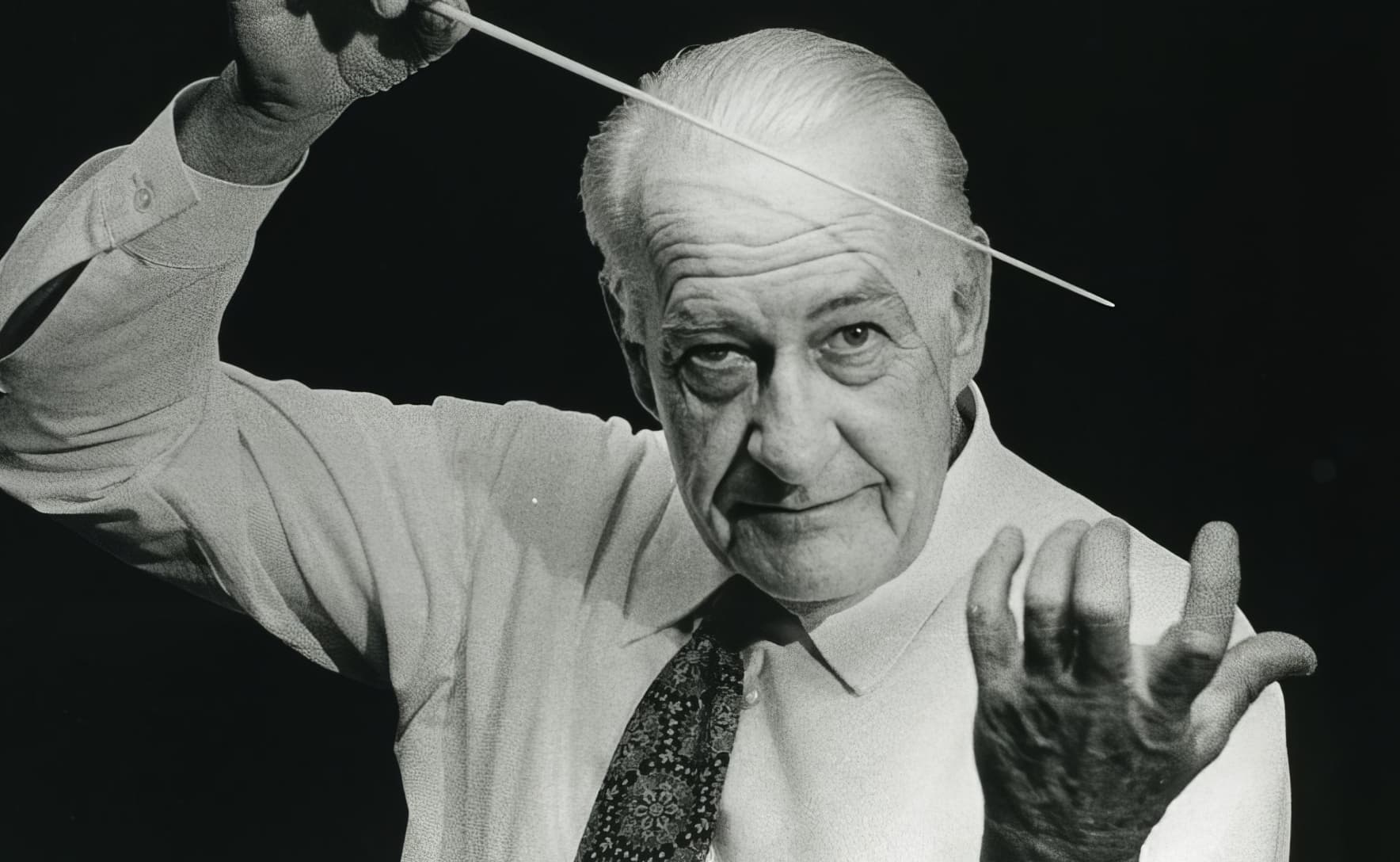
Remembering Ernie: the man behind Llewellyn Hall
As Llewellyn Hall marks its 50th anniversary, Emeritus Professor Larry Sitsky reflects on the musician and friend for whom the hall is named.
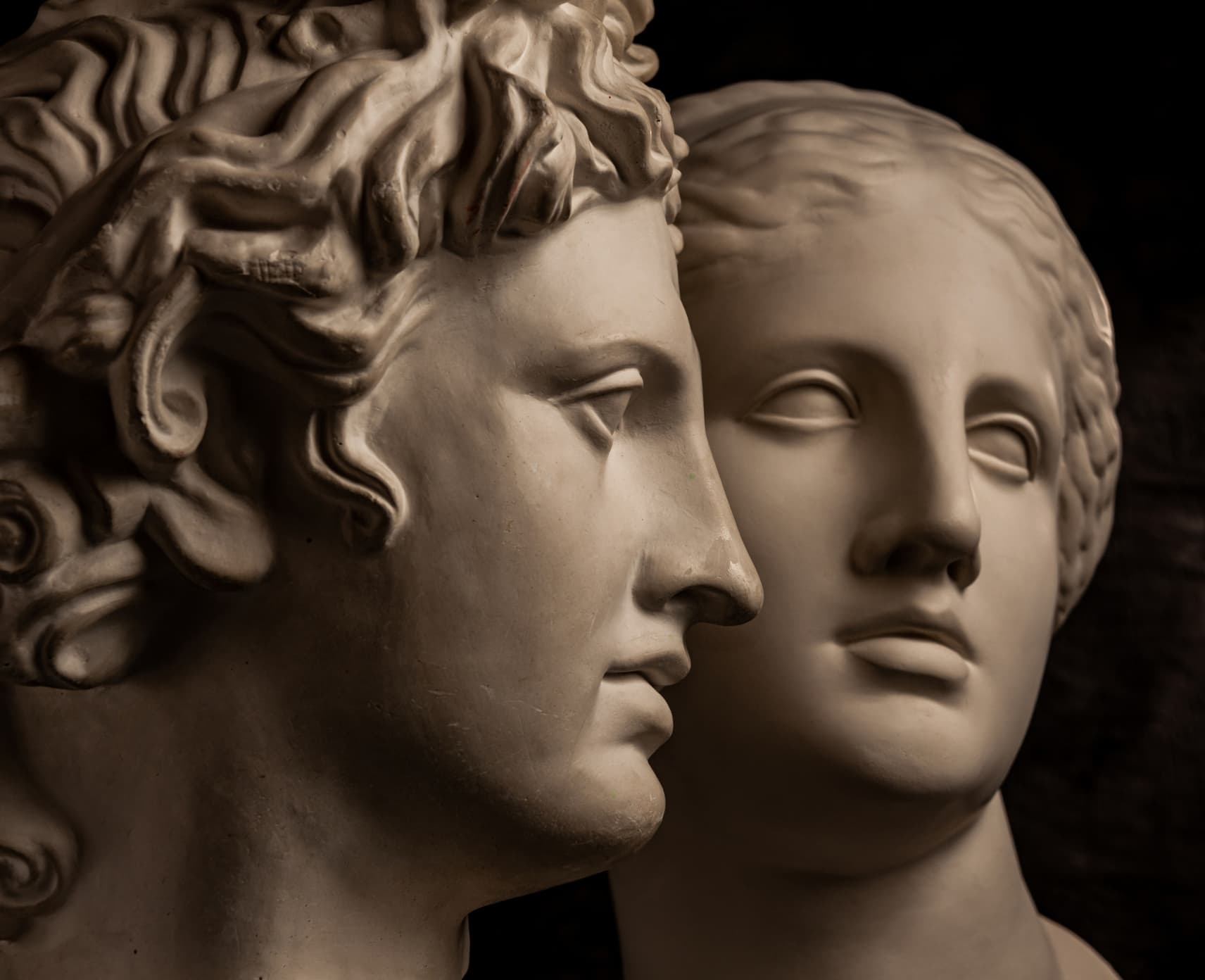
One historian, centuries of gossip and a fresh look at Ancient Rome
What did ordinary Romans really think of their rulers? Professor Caillan Davenport’s new book draws on juicy rumours and gossip to reveal the answer.