
Verses of reconciliation: Elfie Shiosaki’s poetry is helping Australia heal
Noongar and Yawuru scholar Elfie Shiosaki sees poetry as a technology for peace and truth-telling.
Article by:

Luis Perez
Contributing writer
Family means everything to Associate Professor Elfie Shiosaki. Her own family has been held together by unconditional love and extraordinary resilience.
Spanning Yawuru and Noongar Country with roots reaching to Japan, Shiosaki’s lineage is a testament to Western Australia’s long history of connection with Southeast Asia.
Her great-grandfather’s family migrated to Broome from Japan to work in what was then the busiest pearling port in the world. There, he met a Yawuru woman, and together they built a family that bridged cultures and continents.
“Our story is a roadmap of how the world could be if we saw each other as family rather than people separated by geographical borders,” Shiosaki says.
Reflecting on the lives of her forebears, Shiosaki can only imagine the barriers they faced living under the White Australia Policy, particularly during the Second World War.
In 1941, the government detained thousands of Japanese people and their families under broad suspicions of espionage – usually with no evidence of wrongdoing.
“My grandfather used to tell me stories about growing up in an internment camp in Victoria and the interactions he had with Australian soldiers,” she says.
“What stood out to me was that, despite having a Yawuru mother, he was still treated as an outsider in his own country.
“But no matter what, they stayed together through these difficult periods. They must have really loved each other.”
That love, passed down through generations, lives on in Shiosaki’s devotion to her own mother – the woman who taught her to read and write in her homeland of Noongar Country.
“My mother kept an archive of stories I had written in her class. One of my first stories was about my grandmother and how much I loved her. It came with a drawing of her as a princess,” she says.
This admiration later found its fullest expression in Homecoming, Shiosaki’s highly acclaimed poetry book – an ode to her grandmother and four generations of Noongar women who fought to keep their families together against the ravages of colonisation.
Today, this collection of poems is studied in primary and high schools across Australia.

Poetry, though, was never part of Shiosaki’s original plan.
For nearly a decade, she built a career in government, working at the Department of Foreign Affairs and Trade.
“When I was working in government, I had to confront the realities of the world – what it was – but in academia and teaching young people I can imagine what the world could be. The colour has come back into my life,” she says.
Her students, whom she credits as her greatest source of inspiration, brought her face to face with her own creative voice.
“It all happened when I was teaching at the School of Indigenous Studies at the University of Western Australia, and involved in courses about Indigenous storytelling and creative writing,” she says.
Shiosaki left these classes so inspired by the courage her students brought to writing poetry that one day she decided to give it a go.
What followed was an award-winning literary career.
Healing the nation
Indigenous peoples have been producing knowledge for millennia, long before universities existed.
Not through papers or peer-reviewed journals, but through stories that made sense of the world and carried wisdom from one generation to the next.
Shiosaki sees her own poetry as part of that long tradition.
She came to that realisation after years of archival research in Western Australia, where she examined personal letters and colonial records bearing the marks of the discriminatory 1905 Aborigines Act.
“People know the estimated numbers of children removed and the policies the government used. But I don’t think they know what it feels like to have your children taken from your arms.”
“These archives were really hard to read. It was like looking directly into the face of racism,” she says.
“We found examples of parents writing and campaigning for their children to be allowed to return home, demonstrating that they were employed and had the capacity to care for them and send them to school.”
In those painful fragments of the past, Shiosaki discovered something deeply personal.
“I read that my grandmother’s mother had been removed as part of the Stolen Generations and her father had written to the authorities for over a decade to bring her and his three other children home,” she says.
For many, the easy thing would’ve been to fly into a rage. Shiosaki chose to do something braver.
She confronted the truth head-on and began thinking about how those stories could be retold from a place of love.
But the deeper she went, the more she felt conventional research could not carry the emotional weight of what she was uncovering.
Poetry, ultimately, presented itself as the ideal vessel.
“Through poetry, we come to feel rather than know Aboriginal and Torres Strait Islander people’s truths and lived experiences,” Shiosaki says.
“People know the estimated numbers of children removed and the policies the government used. But I don’t think they know what it feels like to have your children taken from your arms.”
From this research emerged the critically celebrated Homecoming, published in 2022.
Two years later, Shiosaki released Refugia, written with Western Australia’s 2029 Bicentenary in mind.
“Communities have walked with parallel stories of the state for too long – a white story and an Aboriginal story. This has caused a lot of harm,” she says.
“Refugia tries to reckon with and repair those relationships before this milestone in Western Australia’s history.”

may the ambition of our hearts
be peace,
not expansion
be family,
not empire
be contentment,
not a lusty thirst for sweet waters that do not belong to us
~ from ‘Shores’, published in Refugia by Elfie Shiosaki
For Shiosaki, this is what storytelling has always been – a technology for conflict resolution.
“Stories that uphold the dignity of First Nations people and truthfully reflect on who we are and where we come from as a nation can bring peace,” she says.
Walking side by side
In addition to her art and scholarship, Shiosaki leads the ANU Centre for Indigenous Policy Research (CIPR).
At the heart of her mission is to decolonise and repair a research system that still carries remnants of colonialism.
“When the British arrived on Noongar country in the 1820s, there wasn’t only military officers on those boats,” she says.
“There were researchers undertaking work to justify racist assumptions of European cultural superiority. Australian universities have inherited that tradition.
“Our work is to reckon with that history and repair relationships. Many academics and universities have started doing that work but there’s so much more that needs to be done.”
The path forward, Shiosaki says, requires Indigenous research to be led and governed by Indigenous people, in accordance with their right to self-determination.
This urgency is backed by evidence. The Productivity Commission’s 2024 review of the National Agreement on Closing the Gap found that government had not fulfilled their commitments to overcome the entrenched inequality faced by Aboriginal and Torres Strait Islander people.
Among the key recommendations was to share power and recognise the knowledge and expertise of local communities.
Shiosaki’s vision for CIPR follows that lead – empowering Indigenous communities to make decisions about matters that directly affect them.
“Our research needs to be driven by community priorities. We need to be led by communities and be accountable to them with the research we deliver.
“We are seeing incredible, local solutions to global challenges that are being designed by communities on the ground. Our role is to celebrate them and think how they can be implemented nationally and internationally.”
“We should be walking alongside each other, rather than walking far ahead of Indigenous communities, which is what often happens in the Indigenous policy space.”
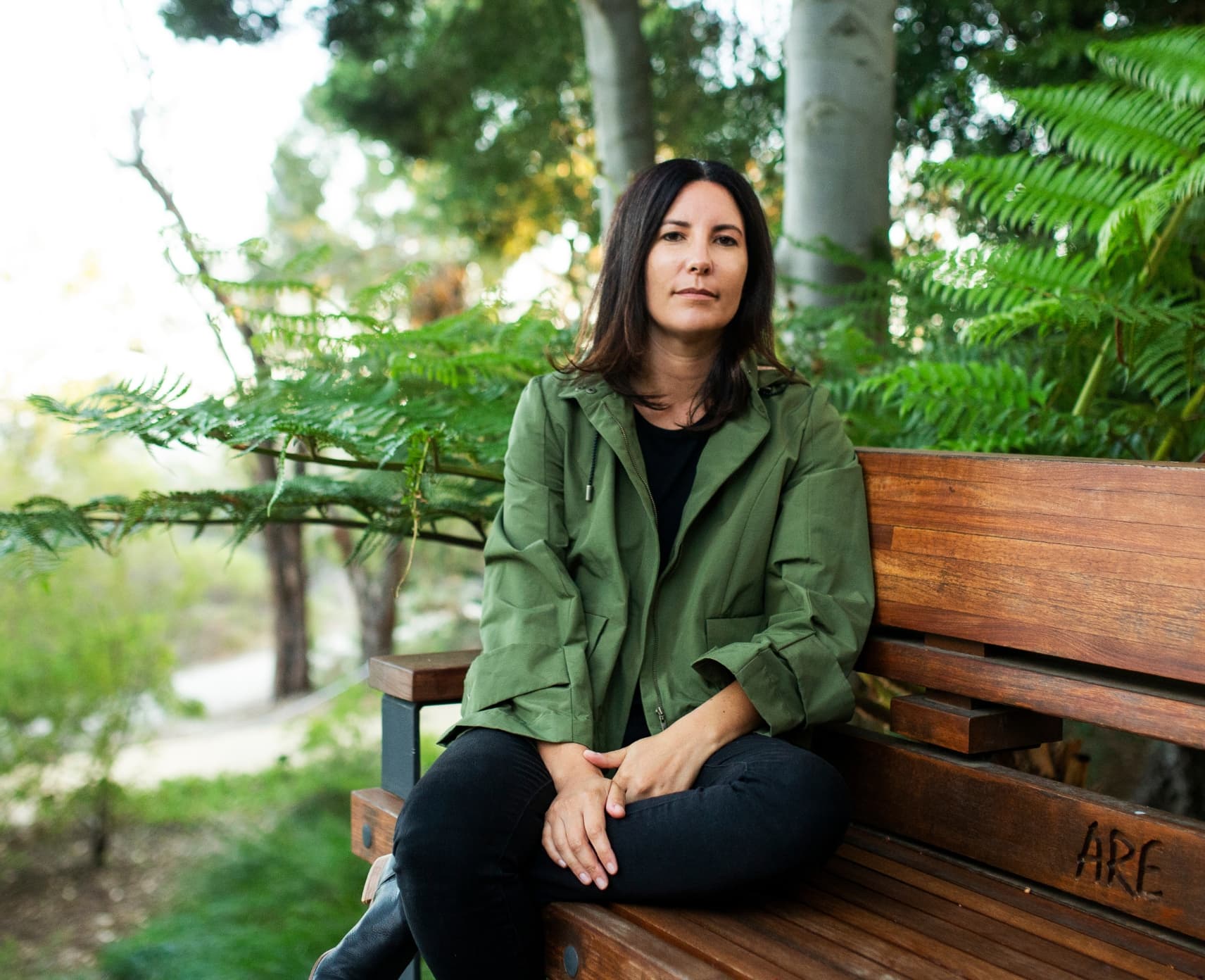
Top image: Elfie Shiosaki. Photo: Jacqueline Jane
You may also like
The archaeologist unearthing a new chapter in the history of Southeast Asia
Professor Dougald O’Reilly’s new book breathes life into the prehistoric pasts of Myanmar, Malaysia, Indonesia, Cambodia, Thailand and Vietnam.
Remembering Ernie: the man behind Llewellyn Hall
As Llewellyn Hall marks its 50th anniversary, Emeritus Professor Larry Sitsky reflects on the musician and friend for whom the hall is named.
One historian, centuries of gossip and a fresh look at Ancient Rome
What did ordinary Romans really think of their rulers? Professor Caillan Davenport’s new book draws on juicy rumours and gossip to reveal the answer.