
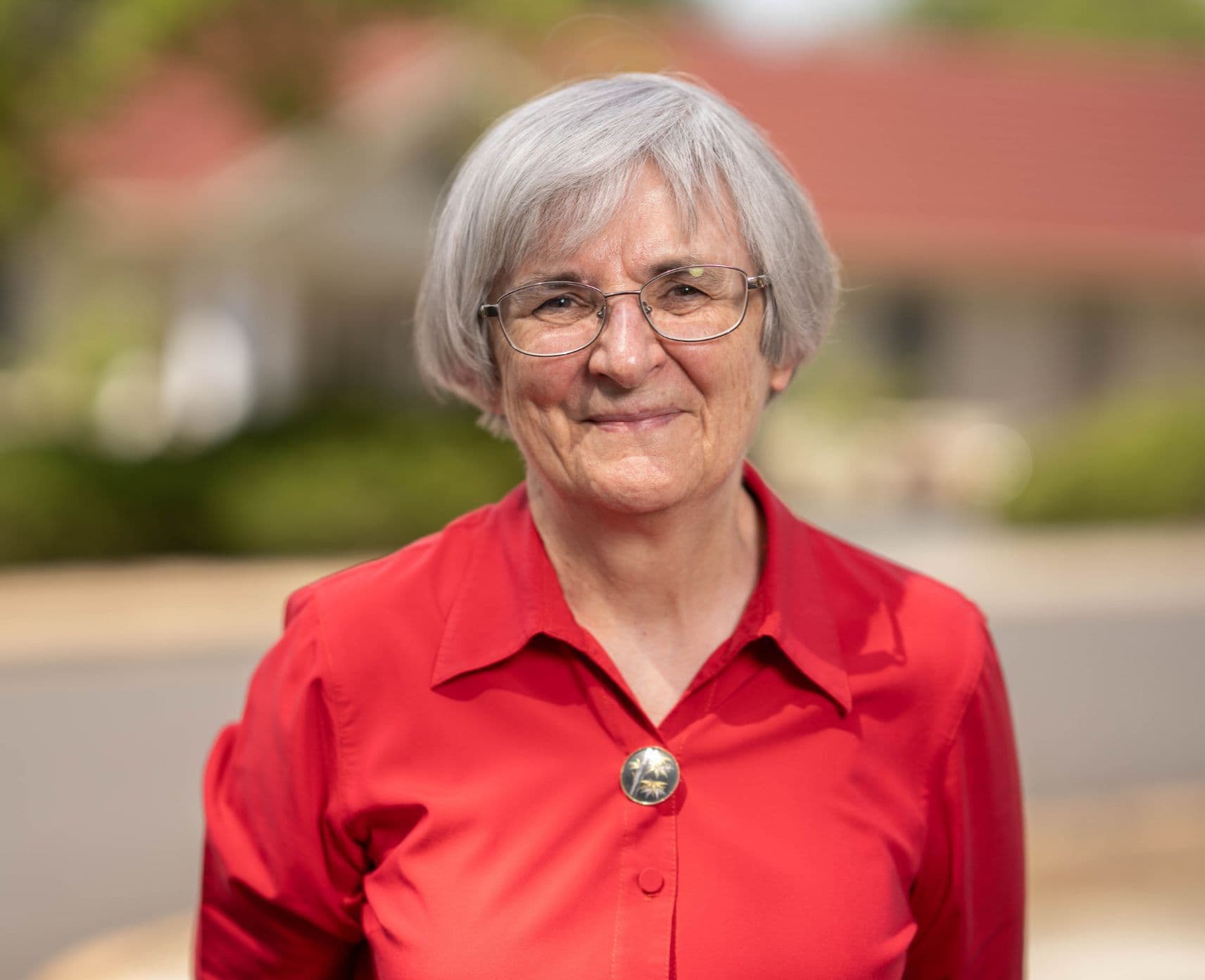
Wicked problems and a lifelong quest to tackle them
Professor Gabriele Bammer has spent a career supporting academics to deal with complex problems involving human behaviour and social processes.

In 1973, design theorist Horst Rittel and urban designer Melvin Webber made a provocative claim: “The search for scientific bases for confronting problems of social policy is bound to fail.”
That’s because problems that involve human behaviour and social processes often become so messy and interconnected that it’s not enough to simply break it down into smaller pieces.
Rittel and Webber called such issues ‘wicked problems’.
Unlike ‘tame’ ones – building a bridge or designing a more efficient battery, for example – wicked problems like climate change, poverty, or tobacco control have no definitive formulation, no agreed solution, and no rule to tell if they’ve been solved.
“‘Solving’ is simply the wrong terminology,” says Professor Gabriele Bammer from the ANU National Centre for Epidemiology and Population Health (NCEPH).
“But we can still look for best possible outcomes.”
This conviction has driven Bammer to find a way for academic research to better address complex problems facing human societies.
Connecting people, connecting disciplines
As a student in the 1970s, Bammer was told the key to future innovations lay in bringing different disciplines together.
She was already the first at her university to simultaneously do both science and arts degrees. With this advice in hand, she spent two decades ricocheting across departments searching for an intellectual home for that multidisciplinary ideal.
Then, in the 1990s, came an opportunity to lead research into a politically charged question: the feasibility of prescribing heroin as a treatment for heroin dependence.
Bammer’s team brought together a range of disciplines, as well as the police, drug users, parents, policy makers, and clinicians to explore the legal, social, ethical, methodological and logistic dimensions of this incredibly complex issue.
“We knew what we wanted to do, but there was no tool set to draw on at all,” recalls Bammer. “So, we really did it all by the seat of our pants.”
The feasibility research recommended a pilot study, which was approved in July 1997, before being abruptly stopped when the Federal Government reversed its support.
While the methodology for her project was widely praised and went on to inform further international heroin dependency treatment trials, Bammer was thinking “there’s got to be a better approach.”
She started searching across fields like systems thinking, interdisciplinarity, and action research. Bammer was right that something useful was already out there – just scattered across small, isolated communities.
“Each had something useful, but none covered all the territory; each lamented not being more powerful, yet stayed more siloed than the disciplines they criticised,” she says.
A way to bring these fields together arrived in 2015, when the US National Socio-Environmental Synthesis Centre invited Bammer to lead and connect the efforts of three research teams.
Bammer proposed something simple, but promising: a shared blog where the teams – and the wider research community – could exchange ideas in real time.
It worked better than anyone expected.
From that small experiment grew Integration and Implementation Insights, i2Insights for short, a community blog and toolkit for improving research on complex real-world problems.
A decade later, i2Insights hosts nearly 600 indexed tools contributed by more than 750 authors around the world.
For researchers approaching a complex problem, it provides them with a framework and eleven core considerations, ranging from understanding unknowns to engaging stakeholders.
“When you have nothing on hand, you end up reinventing the wheel,” Bammer says, “Now, we have a set of good wheels ready for use.”
Shaping education
For Bammer, i2Insights is more than a repository of resources; it’s a bridge to connect researchers.
“A lot more people now understand that complex problems need to be tackled differently from tame ones, and there are far more tools available than when I started,” she says.
But i2Insights is only part of a much larger vision.
Bammer would like to see a new discipline emerge for studying complex problems in a transdisciplinary way. She proposes calling it Integration and Implementation Sciences.
She is realistic about how long it takes for a new discipline to form, but optimistic too.
“As a field, we have felt like we’ve been riding our bicycles into a strong headwind,” Bammer says.
“For the last few years, we are starting to feel like we’ve got the wind at our backs.”
The momentum has started to shape education.
In 2022, the ANU Academic Board agreed that every undergraduate should graduate with the capability to apply their discipline-based knowledge in transdisciplinary problem solving.
The i2Insights blog is a toolkit they can turn to.
Bammer is particularly heartened by the next generation’s enthusiasm for working with affected communities and decisionmakers to tackle real-world problems across disciplinary boundaries.
Her advice to upcoming students? To thrive in academia, you need intellectual excitement and good people to share it with, she says.
“So, make sure you also have fun.”
As for Bammer’s own legacy, she pauses and ponders.
“I would like there to be a good toolkit for people to use – and it doesn’t need to be i2Insights,” she says.
“If the blog was the thin end of the wedge that opened our thinking, that would be a hugely wonderful outcome.”
Top image: ANU Professor Gabriele Bammer. Photo: Jack Fox/ANU

You may also like
Democracy Sausage: The One Nation vote: a map of government neglect
Redbridge Group director Kos Samaras joins Mark and Marija to unpack the new Australian Resilience Index. It maps the financial, health and social resilience of communities across all 150 federal electorates.

Democracy Sausage: Not here to fix Labor
On this episode, Professor Mark Kenny and Dr Marija Taflaga look at what was behind the Greens' first truly competitive leadership contest. They discuss why personal relationships carry so much weight in a party room that could fit in a minivan, and whether the Greens are really just a privatised left faction of the ALP.

Democracy Sausage: The Alchemy of Leadership
Historian and biographer Paul Strangio joins Mark to dissect what makes — and breaks — an Australian prime minister, drawing on his newly shortlisted book The Alchemy of Leadership: Seven Australian Prime Ministers in a Turbulent Twenty-First Century.