
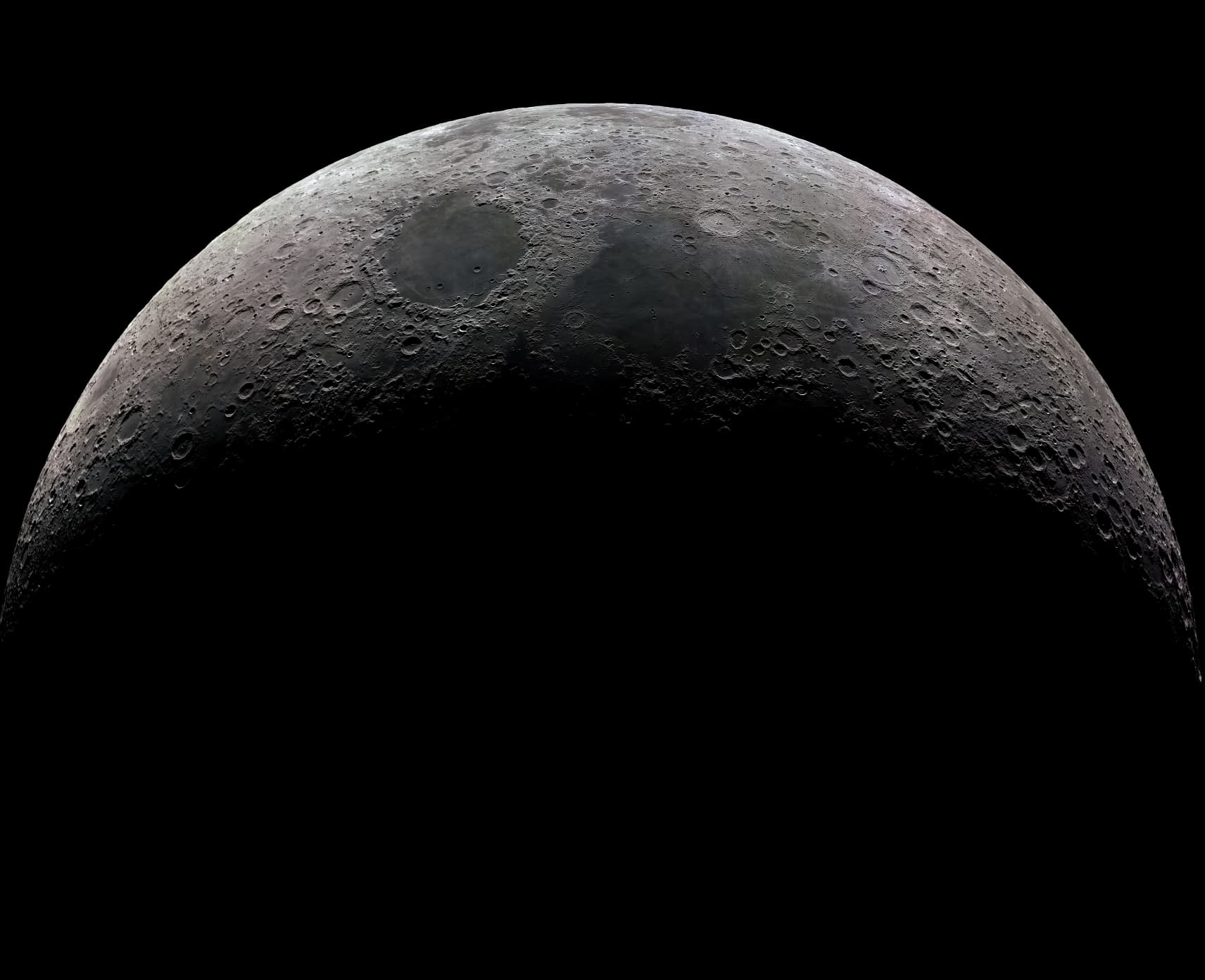
ANU provides laser communications support for NASA’s Artemis II crewed moon mission
The Artemis II mission will see astronauts orbit the moon for the first time in more than 50 years.
Article by:

George Booth
Contributing writer
The Australian National University (ANU) is partnering with NASA along with the Australian Space Agency (ASA) and CSIRO as it prepares to send astronauts back to the moon as part of the Artemis II mission – the space agency’s first crewed mission beyond Earth’s orbit in more than 50 years.
NASA will fly an optical (laser) communications system aboard the Orion spacecraft to test the technology’s operational utility to support human spaceflight operations.
In support of the demonstration, the ANU Quantum Optical Ground Station (QOGS) at Mount Stromlo Observatory will track, transmit and receive communications from Orion. This unique opportunity will test optical ground station capabilities with the potential to support future lunar-based missions for NASA.
“ANU has been working with NASA teams to create a capability in the Southern Hemisphere to support the agency’s future optical communication needs,” said ANU Professor Francis Bennet, the Australian project lead for Artemis II.
“We have been able to build cutting-edge capability rapidly thanks to investments from the Australian Government, and the collaboration with NASA and the work its teams have done to develop low-cost and reconfigurable optical communications systems.”
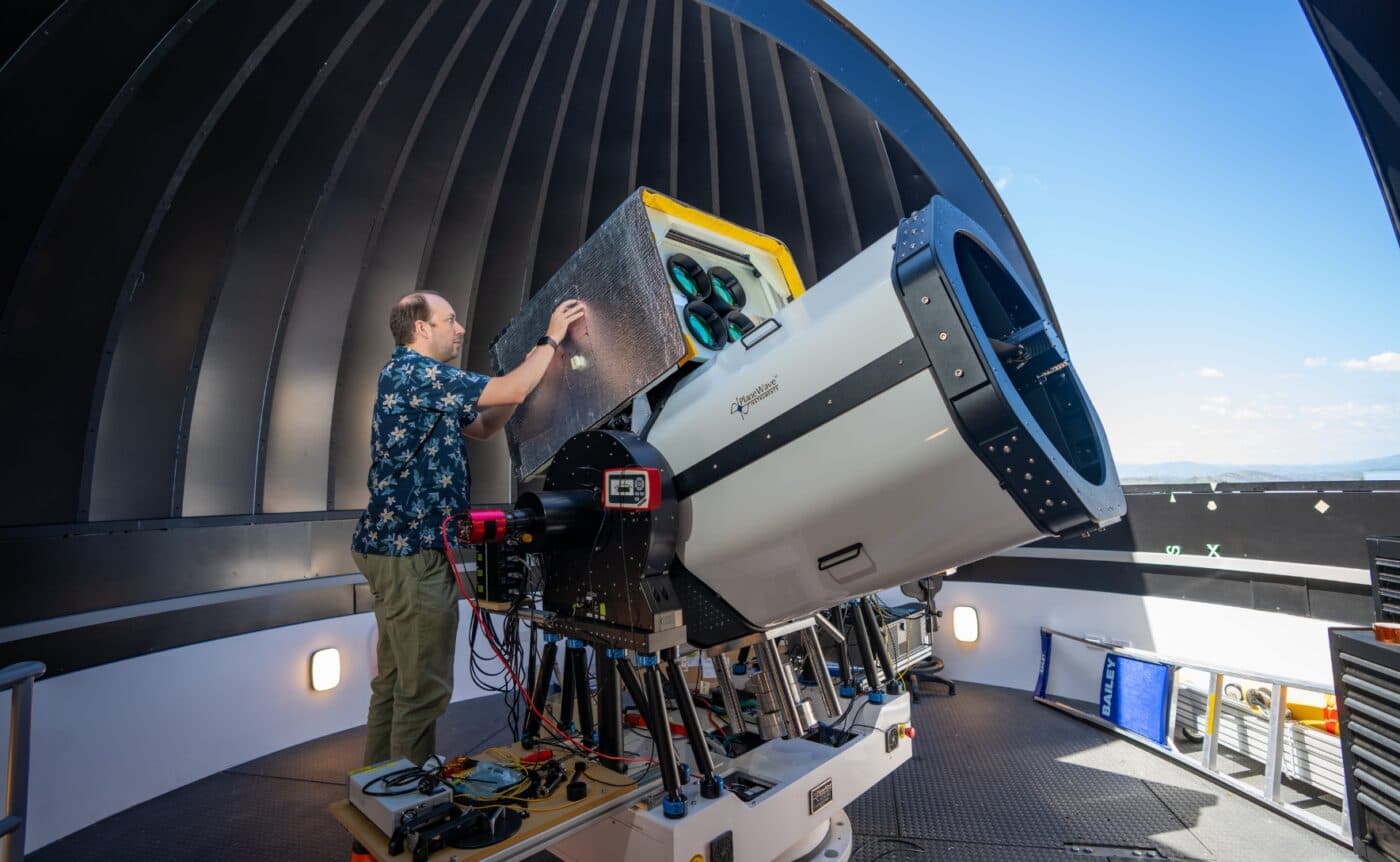
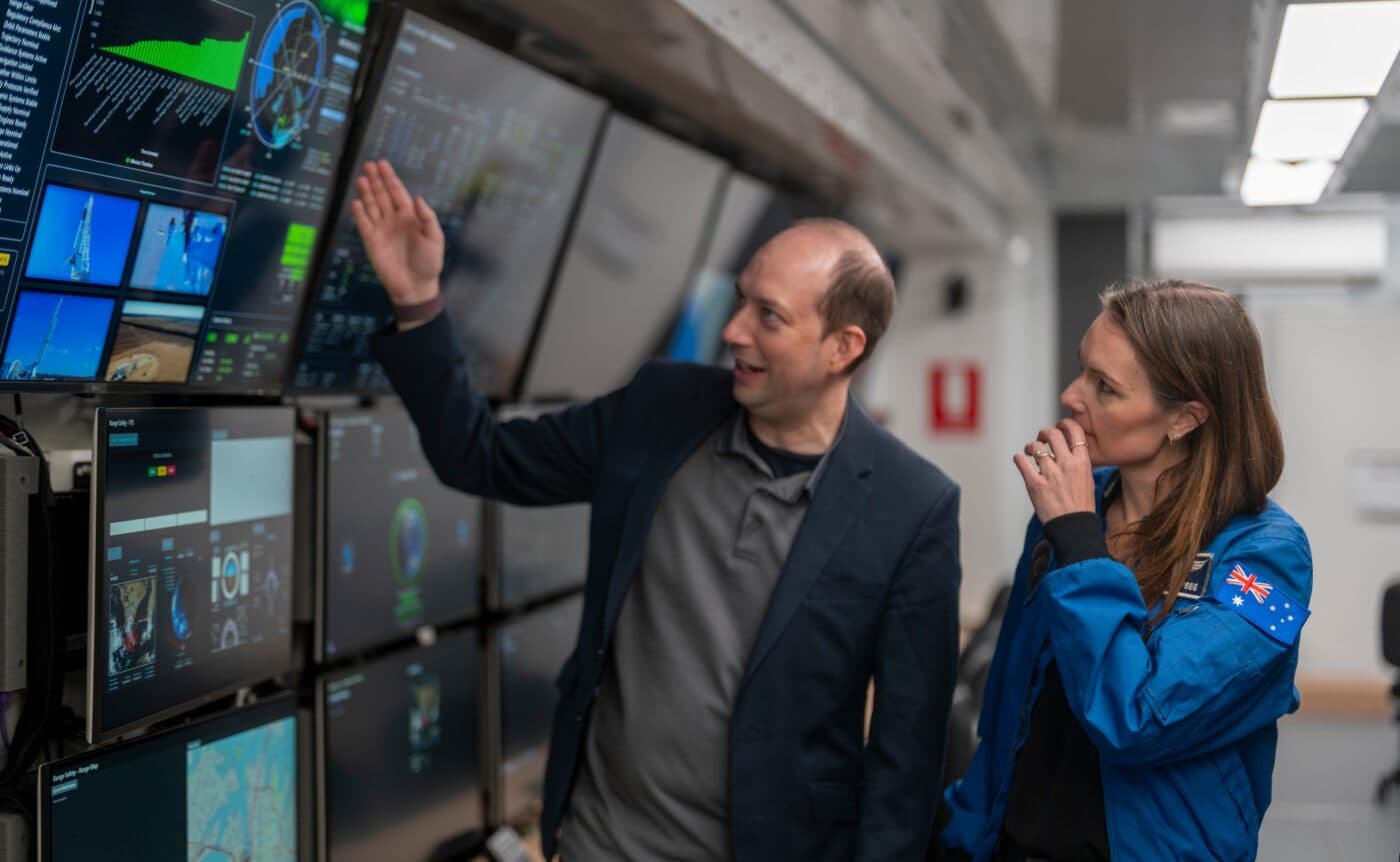
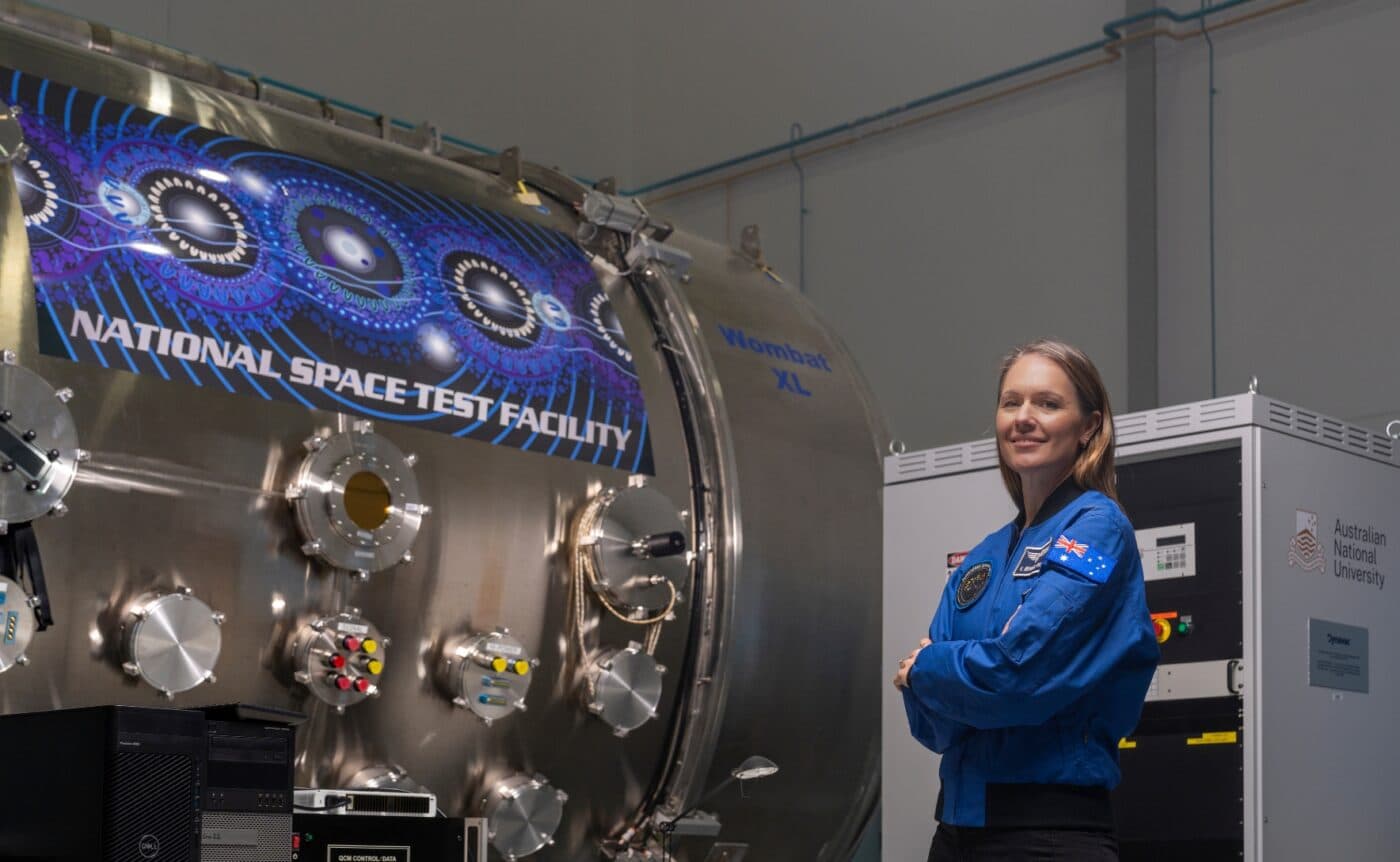
Professor Francis Bennet (pictured) with a state-of-the-art telescope at the ANU Quantum Optical Ground Station (QOGS), capable of providing space-to-ground laser communications. Photo: Nic Vevers/ANU
“Building this capability in the Southern Hemisphere is critical to establishing reliable communication to the moon and the Solar System,” said Dr Kate Ferguson, Associate Director Strategic Projects at the ANU Institute for Space.
“This demonstration will showcase the University’s research expertise in optical ground stations and optical communication capabilities. This mission is the culmination of years of capability development in optical communications at ANU and validates that ANU and Australia are ready to support future space exploration and commercial missions.”
During the mission, ANU researchers at Mount Stromlo will work with their counterparts from NASA’s Glenn Research Center in Cleveland, Ohio, Goddard Space Flight Center in Greenbelt, Maryland, and with the Mission Control Center at Johnson Space Center in Houston, Texas.
Communicating in space usually relies on radio waves. By using laser communications, data can be sent and received up to 100 times faster.
Instead of radio signals, laser communications systems use infrared light to transmit high-definition video, picture, voice and science data across vast distances in less time.
NASA has used laser communications during previous technology demonstrations, but Artemis II will be the first crewed mission to attempt using lasers to transmit data from such a distance.
The QOGS at Mount Stromlo will serve as an important test location for the new transceiver design, which will examine how lasers send data to and from deep space.
NASA’s primary optical ground stations are located at the White Sands Complex in Las Cruces, New Mexico, and on Table Mountain in Southern California. However, through a partnership with the ASA, the Orion Artemis II Optical Communications System also will downlink data to the ANU QOGS during the mission.
“Australian researchers are recognised globally as world-class in optical communications. The involvement of ANU in the historic Artemis II mission is another signal of Australia’s growing capability and offerings for space exploration and space services here on Earth,” said Enrico Palermo, Head of the ASA.
“The Australian Space Agency is proud to have backed its development.”
“By pairing the state-of-the-art laser communications technology at ANU with our geographic advantages, Australia is furthering its role as a valued and trusted global space partner.”
The 10-day Artemis II test flight is scheduled for no earlier than Thursday 2 April Canberra time. Through Artemis, NASA will send astronauts to explore the moon for scientific discovery, economic benefits and to build the foundation for the first crewed missions to Mars.
The QOGS lunar communications system is supported by the ASA, which invested $4.5 million through its Moon to Mars Demonstrator Mission Grant program. This investment has enabled the operational capability of the Australian Deep Space Optical Ground Station Network.
The QOGS at ANU was established with funding from the ACT Government, CSIRO and the ANU Institute for Space.
Top image: manuelhuss/stock.adobe.com
Featured experts

Professor Francis Bennet
Research School of Astronomy and Astrophysics
Professor Francis Bennet is a researcher of optical instrumentation at the ANU Research School of Astronomy and Astrophysics and a Mission Specialist at ANU InSpace.

Dr Kate Ferguson
Associate Director, Strategic Projects, ANU Institute for Space
Dr Kate Ferguson is the Associate Director of Strategic Projects at InSpace.
Contact the media team
You may also like
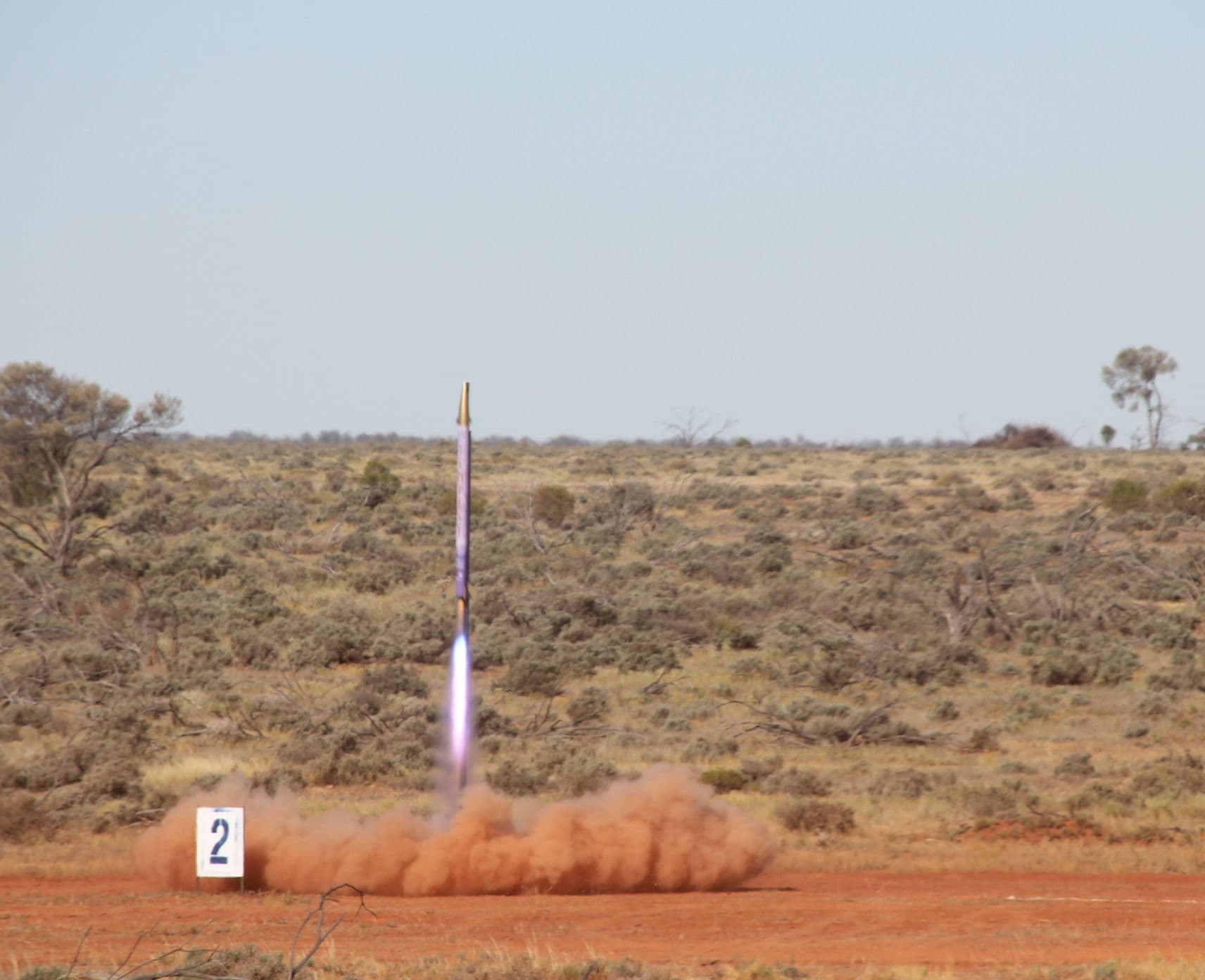
ANU Rocketry reaches new heights with national competition win
After months of design, testing and preparation, ANU students have soared to victory at the 2026 Australian Universities Rocket Competition.

Codebreakers tackle cancer drug resistance with machine learning
Dr Eli Niktab is building a genome atlas to tackle chemotherapy resistance – and is attracting significant global funding.
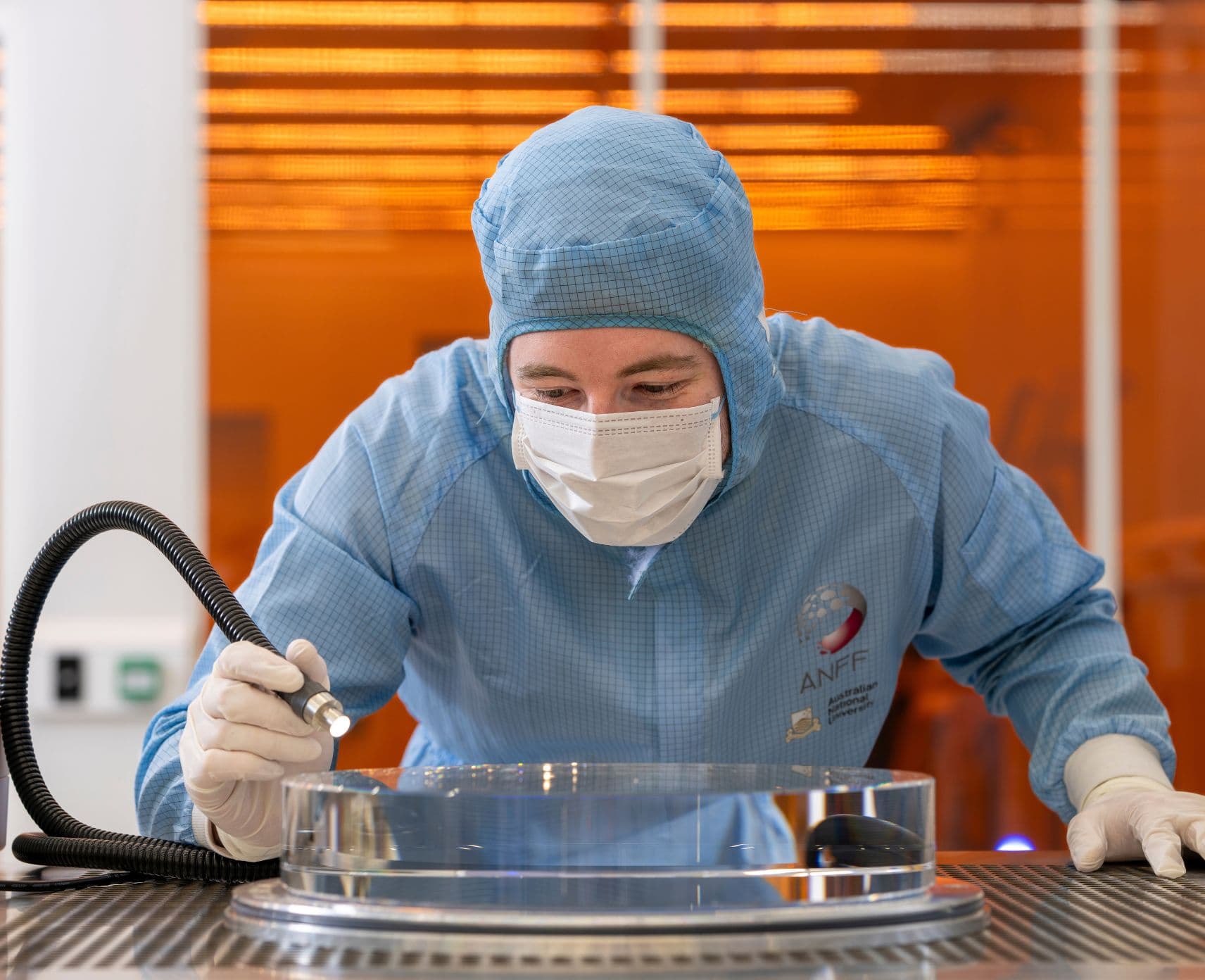
Ultra-precise ANU coatings help power the next generation of gravitational wave detectors
ANU researchers have developed ultra-precise optical coatings for LIGO’s specialised beamsplitters, helping improve the observatory’s ability to detect faint gravitational waves from across the universe.