

Climate change worsening, but we have the means to act
Climate change impacts are larger, more rapid and worse than previous estimates, but humanity has the means to tackle the problem, say leading authors from The Australian National University (ANU) of the latest report from the Intergovernmental Panel on Climate Change (IPCC).
The new report provides the most comprehensive overview of climate change across the globe, and is the definitive stocktake of the IPCC’s work over the past seven years.
Professor Mark Howden and Professor Frank Jotzo from ANU are among three Australians who have played a leading role in the new report.
Professor Howden said the IPCC Synthesis Report left no doubt that climate change poses a clear and present danger to people and to natural systems.
“The latest IPCC report triggers many alarm bells that we cannot afford to ignore,” Professor Howden said.
“It makes it crystal clear that climate change has rapidly altered the atmosphere, oceans, land and ice-covered areas. This has generated more severe extreme weather events and widespread negative impacts on lives, livelihoods and natural systems.
“More change is likely. For example, in almost all emission scenarios global warming reaches 1.5 degrees Celsius in the first half of the 2030s.
“The choices we take now will have consequences in coming decades and potentially for thousands of years.”
Professor Jotzo said the IPCC report made clear that immediate action on climate change was needed and possible.
“Every increment of warming avoided reduces future climate change damages and risks. And every tonne of emissions avoided means less warming.
“Meanwhile, the amount of future carbon emissions we have ‘in the bank’ has greatly diminished. If we keep going as we are, we won’t be able to keep global temperature rises to below 1.5 degrees Celsius.
“The good news is there is lots of action already under way and lots of opportunities for action. We know what needs to be done and we have the technology.
“The actions to take the world economy to a sustainable, net-zero carbon dioxide pathway are well understood, many are already being rolled out, are low-cost, and bring other benefits.
“Examples include the shift from coal to clean energy, better land management and agricultural practices, and the beginning shift towards electric vehicles.
“Experience shows that clean technology becomes rapidly cheaper when governments apply suitable policies and businesses invest at large scale.
“The urgency is rising, but so is the opportunity to act to reduce emissions.”
Professor Howden said: “There are also many options to adapt to climate change that bring substantial co-benefits including emission reduction.
“However, the implementation of these adaptations is not keeping pace with the changes we are observing. This report tells us how we can do better.”
Professor Howden is a Vice Chair of the IPCC Working Group on impacts and adaptation. Professor Jotzo is a lead author of the IPCC’s Assessment Report on emission reduction and of the Synthesis Report. Both were involved in the government approval session for the IPCC Synthesis Report.
Top image: kamilpetran/stock.adobe.com
Featured experts
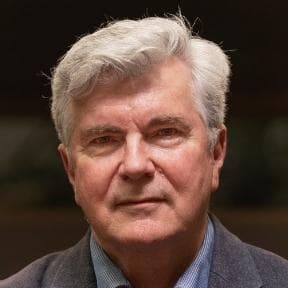
Emeritus Professor Mark Howden
The Australian National Centre for the Public Awareness of Science
Emeritus Professor Mark Howden is the Founding Director of the ANU Institute for Climate, Energy and Disaster Solutions.

Professor Frank Jotzo
Crawford School of Public Policy
Frank Jotzo is Professor of Climate Change Economics and Policy at the ANU Crawford School of Public Policy, and Head of Energy at the ANU Institute for Climate, Energy and Disaster Solutions.
Contact the media team
Related tags:
You may also like

Tiny atomic tweak makes plastic-eating enzymes more powerful
A new approach that changes just one atom in plastic-degrading enzymes could help make them more efficient while maintaining their stability, according to new research from The Australian National University (ANU).

Australia doesn’t need more gas to meet energy needs, research finds
Pumped hydro and battery storage can enable Australia to meet its energy needs without increasing the use of gas to fuel electricity plants, according to a new paper by researchers at The Australian National University (ANU).

Mapping the shadows: scientists predict the ‘hidden highways’ of Mexico’s illegal wildlife trade
Researchers have mapped the hidden routes of Mexico's illegal parrot trade, using almost 30 years of data to predict trafficking hotspots.