
Forget potato scallops and potato cakes – the Australian National Dictionary is on the hunt for Australia’s hidden regional words
From dardy to turbo chook, ANU is calling on Australians to uncover the colourful local words and phrases that make our regional vocabulary unique.
Article by:

Natalia Burgess
Media and Communications Officer
From dardy and Fremantle doctor in Western Australia, to cheerios in Queensland, Darwin rig in the Top End and turbo chook in Tasmania, Australia’s regional vocabulary is as diverse as the country itself. Now, word nerds at The Australian National University (ANU) are asking Australians to help uncover even more local words and phrases.
The Australian National Dictionary Centre (ANDC) is calling on the public to submit regionalisms – words and expressions that are unique to a particular state, territory, town or region – for possible inclusion in the Australian National Dictionary.
“There are more than 16,000 Australian words and phrases recorded in the dictionary, including around 350 that are identified as being specific to a particular state or territory, but we know there are many more waiting to be discovered,” ANDC Senior Researcher Mark Gwynn said.
“We’re interested in the words and expressions that make Australia stop and say, ‘I’ve never heard that before.’
“Whether it’s something your family has always said or a term that’s only used in your hometown, we’d love to hear about it.”
Gwynn said Australia’s regional vocabulary extends well beyond the familiar debates over potato cakes versus potato scallops or parmi versus parma.
“Regional language tells us a great deal about Australia’s history, identity and local communities,” Gwynn said.
“For example, dardy, meaning ‘great’ or ‘excellent’, is widely recognised in parts of south-west Western Australia but is virtually unknown elsewhere.
“Even something as ordinary as ordering a beer or buying a sausage can reveal where you’re from.
“Depending on where you live, you might ask for a schooner, handle, pot, middy, butcher or pony, or buy devon, fritz, polony or cheerios.”
The annual appeal helps researchers identify emerging and overlooked Australian English, with public contributions playing a key role in documenting the nation’s evolving language.
Each submission will be considered for an entry in the Australian National Dictionary.
“Every word and phrase we receive helps build a richer picture of Australian English,” Gwynn said.
“So, whether you’re firmly in the potato scallop camp or you swear by potato cake, we want to know what words are unique to where you live.”
Members of the public can submit regional words and phrases through the Australian National Dictionary Centre’s Word Box or contact page.
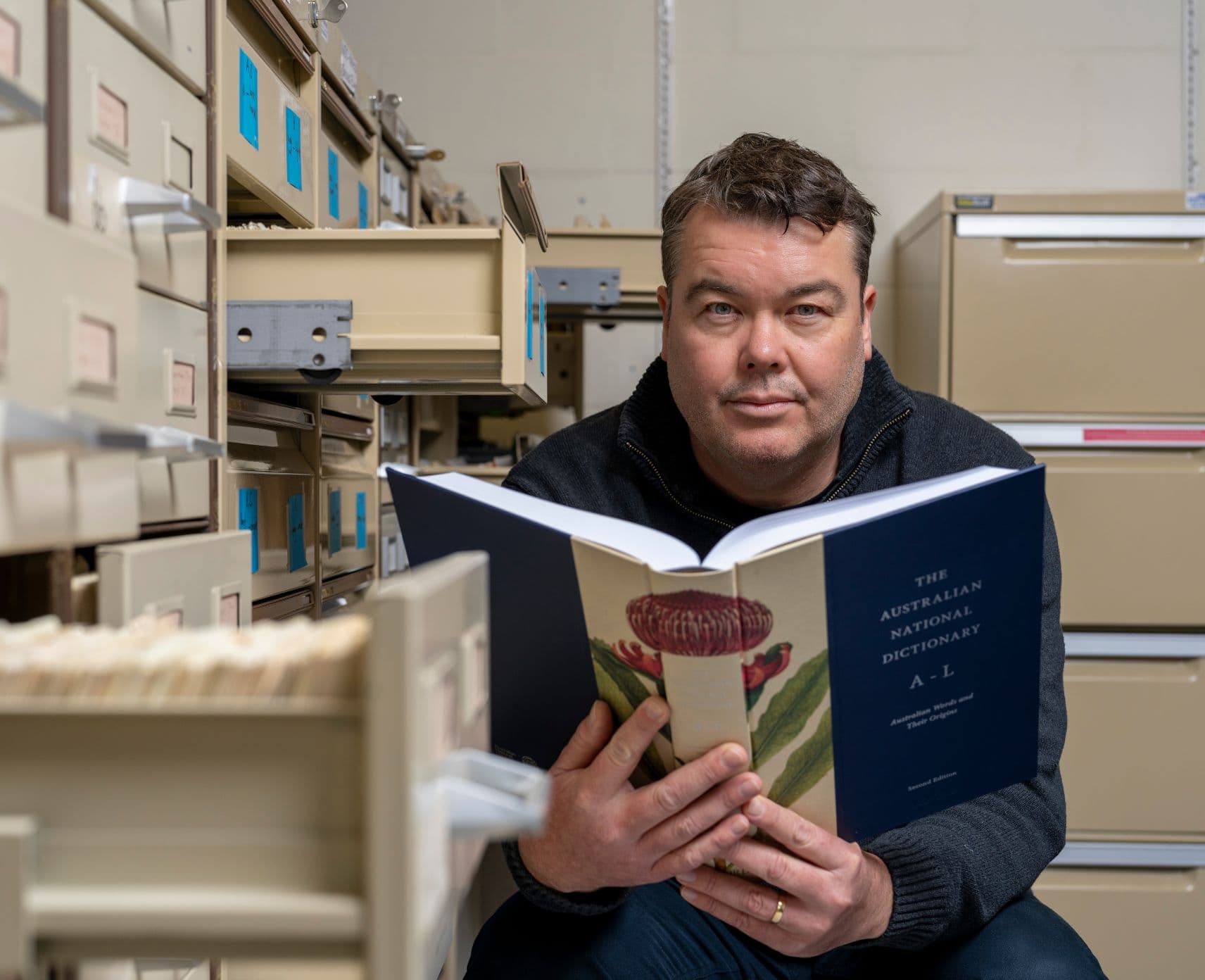
Senior Researcher Mark Gwynn is calling on the public to help uncover Australia’s hidden regional words and phrases for the Australian National Dictionary. Photo: Jamie Kidston/ANU
Featured experts
Contact the media team
You may also like
‘It’s really hard to switch off’: the quest to find Australia’s Word of the Year
Meet the word wizards from the Australian National Dictionary Centre.

One historian, centuries of gossip and a fresh look at Ancient Rome
What did ordinary Romans really think of their rulers? Professor Caillan Davenport’s new book draws on juicy rumours and gossip to reveal the answer.

New national survey asks Australians to help map the nation’s languages
A new national survey is inviting multilingual Australians to help researchers build a clearer picture of the languages spoken and signed across the country.