
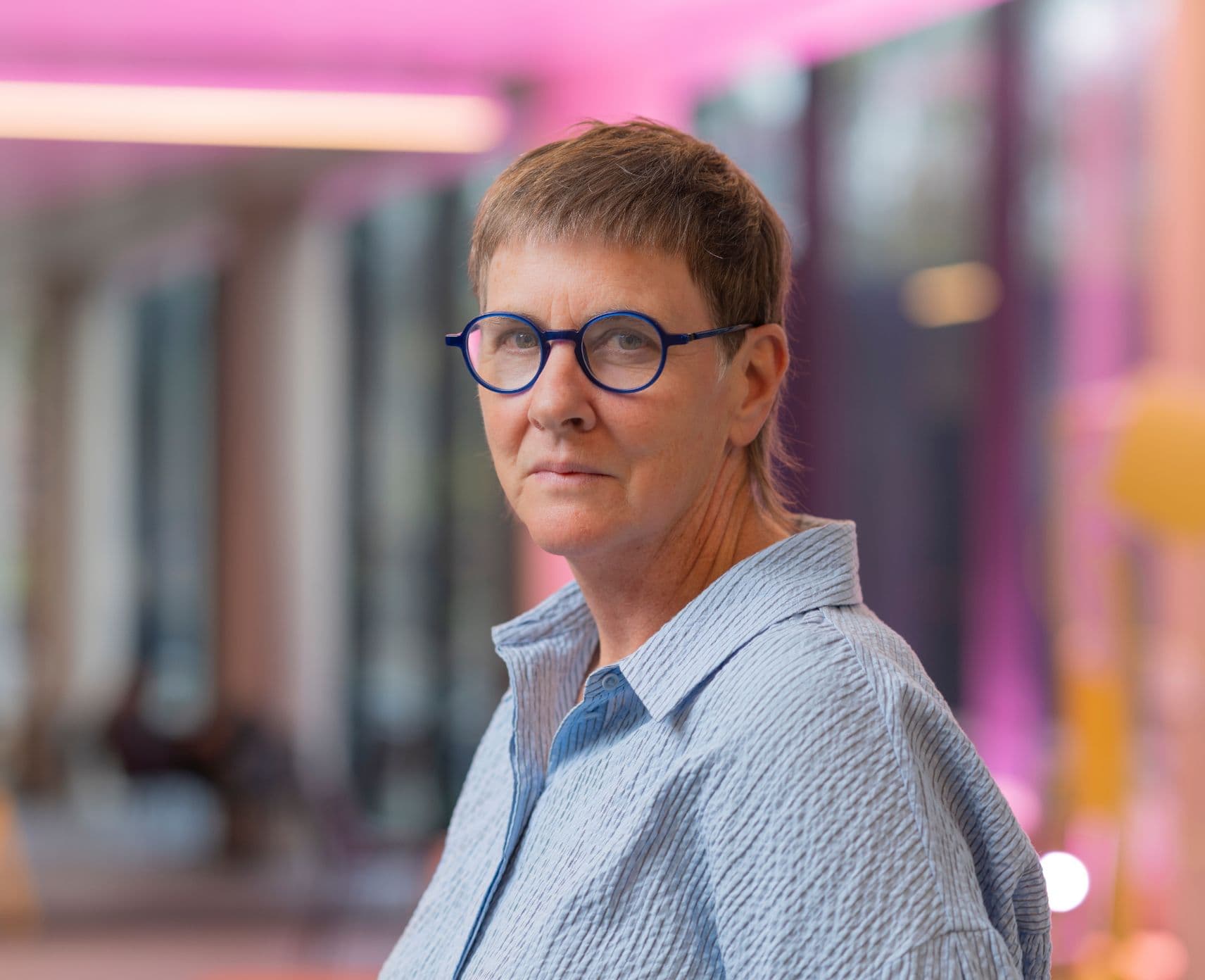
Growing up queer then and now – how has Australia changed?
Sociologist Mary Lou Rasmussen explores how two generations of queer Australians built a sense of belonging in a country that did not always make room for them.
Article by:

Luis Perez
Contributing writer
After a fiery and lengthy public debate, same-sex marriage became legal in Australia only nine years ago.
Professor Mary Lou Rasmussen (she/they) remembers bursting into tears when they first heard the outcome on the radio.
“I had always been ambivalent about gay marriage, but when the announcement came out, I was overcome. It was a surprise to me –that reaction– after so many years,” she says.
As someone born in the 1960s, Rasmussen grew up with the expectation that they would get married and have children.
“Both my family and the Catholic school I went to could be very homophobic, even though a number of my teachers were gay and sensational educators,” she says.
Rasmussen grew up alongside an older gay sibling, witnessing firsthand the pleasures of gay life, but also reckoning with the harassment and violence he faced during the repressive climate of the 1970s and 1980s, as well as the scourge of HIV and the death of friends and lovers.
“Coming out back then meant watching many doors close,” she says.
Rasmussen didn’t come out until their twenties; after moving into a share house and very organically starting a relationship with a woman they shared a roof with.
That experience opened the door to a fuller understanding of herself and eventually took her to the United States (US), where she became a political activist joining the Lesbian Avengers – a 1990s direct action group.
With the Avengers, they worked in New York City, Maine and Idaho engaging in civil rights activism and political protest.
“We were fighting against policies that were trying to make illegal any mention of queer content in education. I met this group by happenstance, but they got me really interested in the nexus between education and sexuality,” she says.
That experience marked them so much that they returned to Canberra to pursue a career in academia.
“Coming out back then meant watching many doors close.”
Today, Rasmussen calls the Australian National University (ANU) School of Sociology home.
“I’m incredibly privileged to be able to do research focused on young people, education and sexuality – which informs my course on Young People, Sex and Consent,” Rasmussen says.
“I also value the opportunity to do this work at an institution and in a time and place where it isn’t constituted as exceptional and not seen as dangerous.”
Rasmussen recently co‑authored Queer Generations, the first book to bring to life the experiences of two generations of LGBTQ+ Australians: people born in the 1970s and the 1990s.
Becoming a sexual citizen
Susie, a woman from Sydney interviewed in Rasmussen’s book, will never forget the day a teacher outed her in front of her class in the 1980s.
Humiliated and furious, she shouted at the principal. What followed was even more disturbing: she was sedated by the school nurse.
The next day, she woke to find her uniform packed and her future decided.
“You’re going home. You’ve got to tell your parents you’re a lesbian,” the school principal said.
Stories like Susie’s reveal how sharply queer lives diverge across two generations of Australians.
Though separated by only twenty years, people born in the 1970s grew up under punitive laws, the collective trauma of HIV and without the connective power of social media.
To make sense of these disparate experiences, Rasmussen and her colleagues turn to the idea of sexual citizenship in their book.
“We normally associate citizenship with a passport and our nationality, but through this concept coined by researchers in the UK, we look at the things that helped queer Australians feel they belong to the broader society,” she says.
By listening to stories about kinship, education, sex, media representation, health, and work, Rasmussen and colleagues were able to examine how each generation experienced coming into adulthood as LGBTQ+.
For those born in the 1970s, accounts of fear and abandonment were common, with many recalling how they had to work harder simply to belong.
Family relationships were, in many cases, fraught. Some research participants recalled feeling like aliens within their own households, having to renegotiate relationships with their own kin.
“It was very interesting to see how people were inventing new ways of knitting themselves together,” Rasmussen says.
“The growing awareness and representation of diverse LGBTQ+ kinship practices are reshaping this space.”

Members of the older generation frequently described schools as hostile environments – where they learned being LGBTQ+ was morally wrong.
In recent decades, schooling has become more accepting of LGBTQ+ identified young people with initiatives such as Safe Schools in Victoria and through the Safe and Supportive Schools Policy in the ACT.
“The challenges of being lesbian or gay in a locker room in the 70s and the pain and suffering associated with it has morphed into a time where there is more awareness about how education can be inclusive,” Rasmussen says.
“While everything is certainly not resolved, today we are seeing queer young people advocating for changes that enable them to participate more fully in their education.
“Bathrooms and changing rooms that recognise gender diversity, such as the ones in Kambri on the ANU campus, are just one important step.”
Can we talk about progress?
In the book, Rasmussen resists the progress narrative that assumes rights, safety and social acceptance inevitably improve over time.
“People’s expectations change,” she says. “I do believe things are materially better in Australia – and we can see that across two generations – but things can change very quickly again.”
The US state of Idaho just introduced a law that forces schools to “out” transgender individuals to their parents, even when doing so may put them at risk.
In Florida, new guidelines prohibit the use of course material explaining how individuals understand or determine their sexual orientation or gender identity.
“This material is considered fundamental to studies of gender, sexuality and identity in Australian universities,” says Rasmussen.
Closer to home, while schooling for queer young people in Australia has improved, many are still reporting very negative experiences.
But the picture isn’t only bleak. Rasmussen’s research captures a brighter side – today, younger generations are defining their identities more freely.
“Back then, when I was growing up in the 70s and 80s, people didn’t want you to be wishy washy. You had to lock in your sexuality,” she says.
In a study of Australia’s Generation Z led by the ANU sociologist, twenty-five per cent of the young people surveyed identified as non-heterosexual.
“I quite like that category,” Rasmussen says. “It demonstrates that young people have much more flexibility in terms of identification.”
In the Queer Generations project, research participants identified in a myriad of ways: agender, androgynous fem, asexual, biromantic, demi-girl, demisexual, gender fluid, gender-queer, grey romantic, no label, non-binary, non-straight, not sure, panromantic and many more.
This means there’s no universal way to be queer.
“One really important thing to remember is that we don’t know more about someone just because they identify in a non‑normative way. Gender and sexuality don’t define us – they might be the least interesting thing about us,” says Rasmussen.
“Maybe in another couple of generations, being queer will mean something different altogether.”
Top image: Photo: Jamie Kidston/ANU
You may also like
Remembering Ernie: the man behind Llewellyn Hall
As Llewellyn Hall marks its 50th anniversary, Emeritus Professor Larry Sitsky reflects on the musician and friend for whom the hall is named.
One historian, centuries of gossip and a fresh look at Ancient Rome
What did ordinary Romans really think of their rulers? Professor Caillan Davenport’s new book draws on juicy rumours and gossip to reveal the answer.
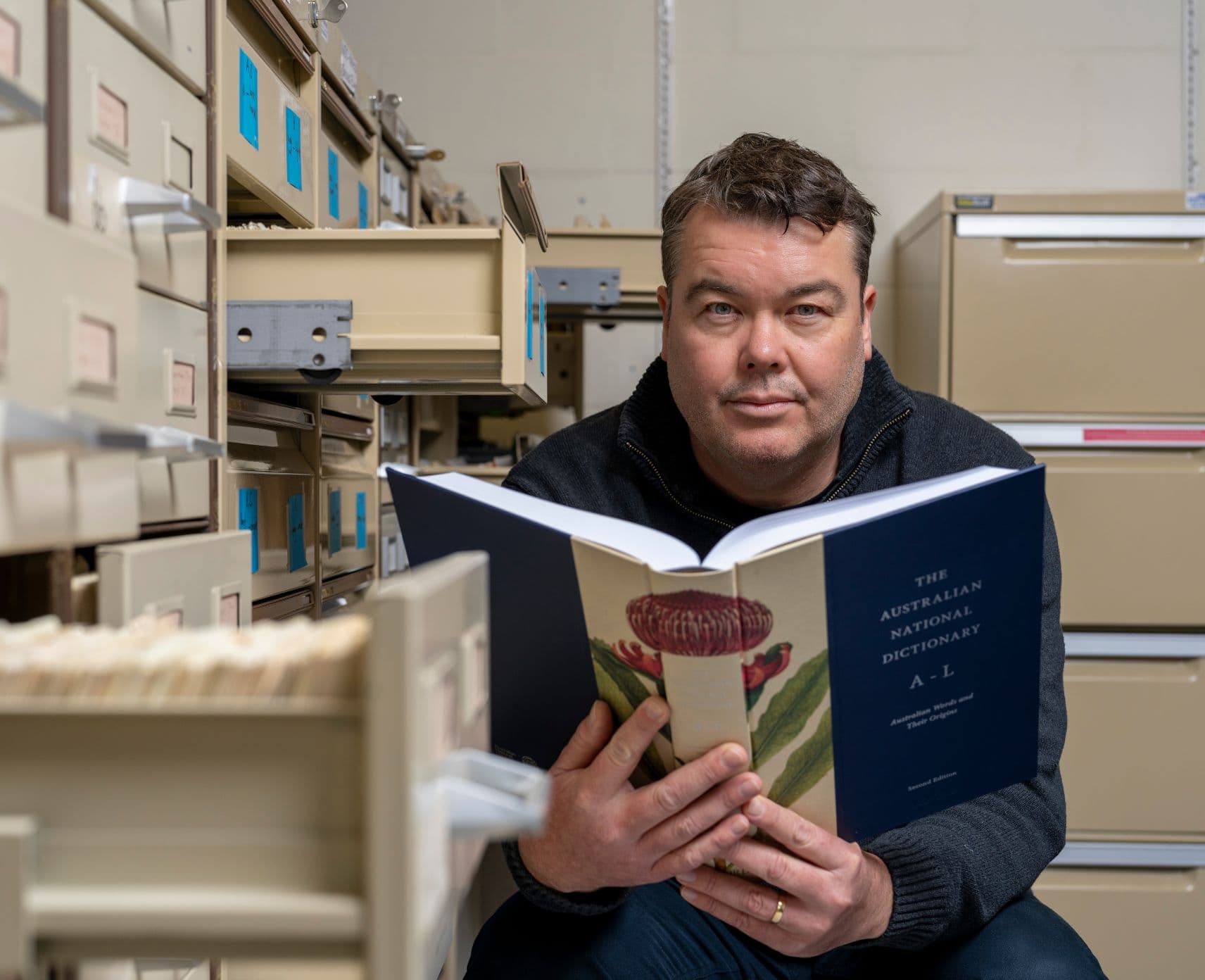
Forget potato scallops and potato cakes – the Australian National Dictionary is on the hunt for Australia’s hidden regional words
From dardy to turbo chook, ANU is calling on Australians to uncover the colourful local words and phrases that make our regional vocabulary unique.