
Humanity is heading back to the Moon. Australia isn’t even funding telescopes
Australia's decision to not renew its longstanding membership with the European Southern Observatory (ESO) will significantly hurt its science research and development.

Australian science policy is in a confused place. The government is negotiating with the European Union to join the Horizon Europe program for funding and collaboration. Australian facilities are crucial to NASA’s Artemis II mission around the Moon.
At the same time, a decision announced over the weekend highlights a lack of vision. A longstanding membership with the European Southern Observatory (ESO) will not be renewed. This will cut Australian astronomers and engineers off from a vital source of data and experience.
Australia is playing a key role in a historic NASA mission right now. The 2026 Australian of the Year is an astronaut and space engineer – Katherine Bennell-Pegg. This year, we finally have a comprehensive report on research and development in Australia, and what needs to improve.
But instead of building a shared scientific vision, the federal government is still focused on funding a patchwork of siloed projects, while pulling out of other initiatives entirely, as the ESO decision shows.
What’s lacking is a bold vision not only for Australian astronomy, but science and research and development more broadly. With the right unifying vision – and investment to back it up – Australia can be ambitious. We can be driven by the vision that space gives us: that we are all in it together on a tiny planet nestled amid the stars.
Losing a window to the universe
As a member of the ESO since 2018, Australian researchers have had access to some of the largest optical telescopes in the world, including the eight-metre Very Large Telescope in Chile.
A 2023 evaluation of Australia’s ESO participation showed it had boosted Australian astronomical skills and knowledge, and enabled millions of dollars in industry collaborations.
Australian astronomers will soon lose this access to some of the world’s most advanced technology. They will also lose access to the complex pathways that scientific collaboration affords Australia. It diminishes our scientific global diplomacy pathway to Europe and globally.
When an established research superhighway like this is closed, it can’t easily be reopened.
The sky is not the limit
The ESO decision arrived while astronauts on NASA’s Artemis II mission make their way around the Moon, travelling further into space than humans ever have before.
One of Australia’s contributions to the mission comes via a team of engineers, technologists and astronomers who designed a laser-based communication system. During the mission, the Quantum Optical Ground Station at The Australian National University (ANU) has been receiving high-definition video and imagery for distribution around the world.

This team’s existence is deeply connected to Australia’s astronomical instrumentation program, which from 2018 has been centred around the ESO.
Australia has played a role in many historic human ventures into space, right back to the first Moon landing when Neil Armstrong took his historic “small step”.
Australian scientists, engineers and innovators produce excellent research and development. But fundamental scientific research is a non-negotiable foundation for all kinds of innovation.
In the past year, Australian science has seen cuts to critical national infrastructure and research and development agencies. History has shown such research investments are highly productive for the nation.
However, federal budgets increasingly see research in narrowed, siloed terms that miss the big picture. Unless this changes, Australia’s prospects of innovation, economic diversification, enviable lifestyles and health will dwindle.
Australia’s global role
Australian astronomy and engineering stretch back millennia to First Nations peoples. Australia played an important role in the Apollo missions. Research done in Australia led to the discovery that the expansion of the universe is accelerating, for which one of us (Brian) was awarded the 2011 Nobel Prize for Physics.
But Australia’s national investment in research and development is falling each year. We’re now well behind our international counterparts. A long, slow erosion in investment has seen Australia slide down the Global Innovation Index rankings, from 12th in 2017 to 22nd today.
Our economic complexity rating – a marker that shows how resilient an economy is overall – is also plummeting. We currently sit in 105th place out of 145 nations, down from 86th in 2019 and 64th in 2003.
Creating an innovation vision
In an unsettled world, it can seem prudent to scrimp and save. It’s sacrificing the future to prop up today’s budget bottom line. But Australia’s productivity is growing at a glacial pace. Recent world events have thrown a spotlight on our lack of resilience to geopolitical shocks.
We can’t counter these forces by shuttering our efforts at the frontiers of science and technology. The only hope is to think big, be bold, and reach for the stars.
This article is republished from The Conversation under a Creative Commons license. Read the original article.
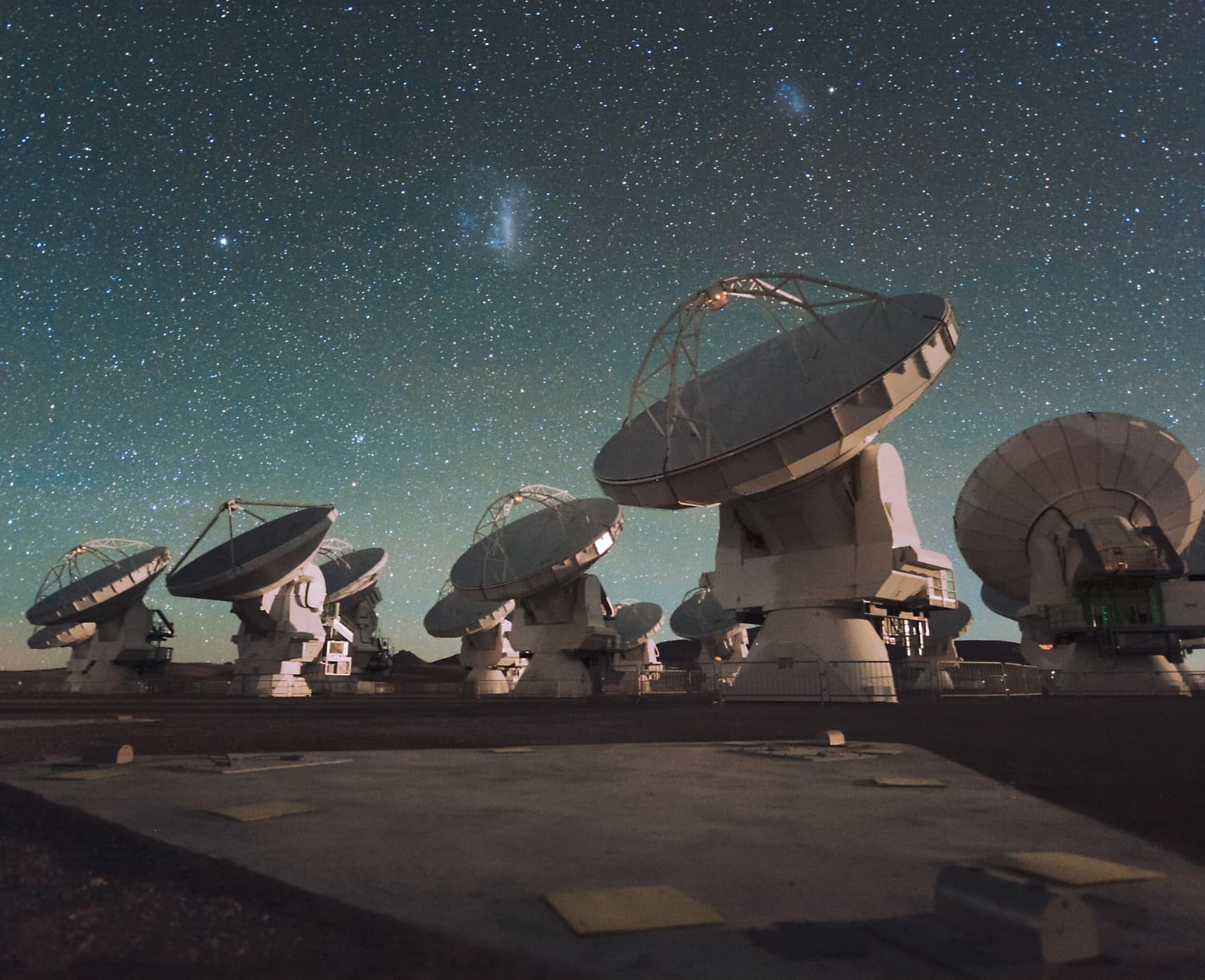
Top image: Antennas of the Atacama Large Millimeter/submillimeter Array (ALMA), a state-of-the-art telescope to study light from some of the coldest objects in the Universe. Photo: ESO/C. Malin
Related tags:

You may also like
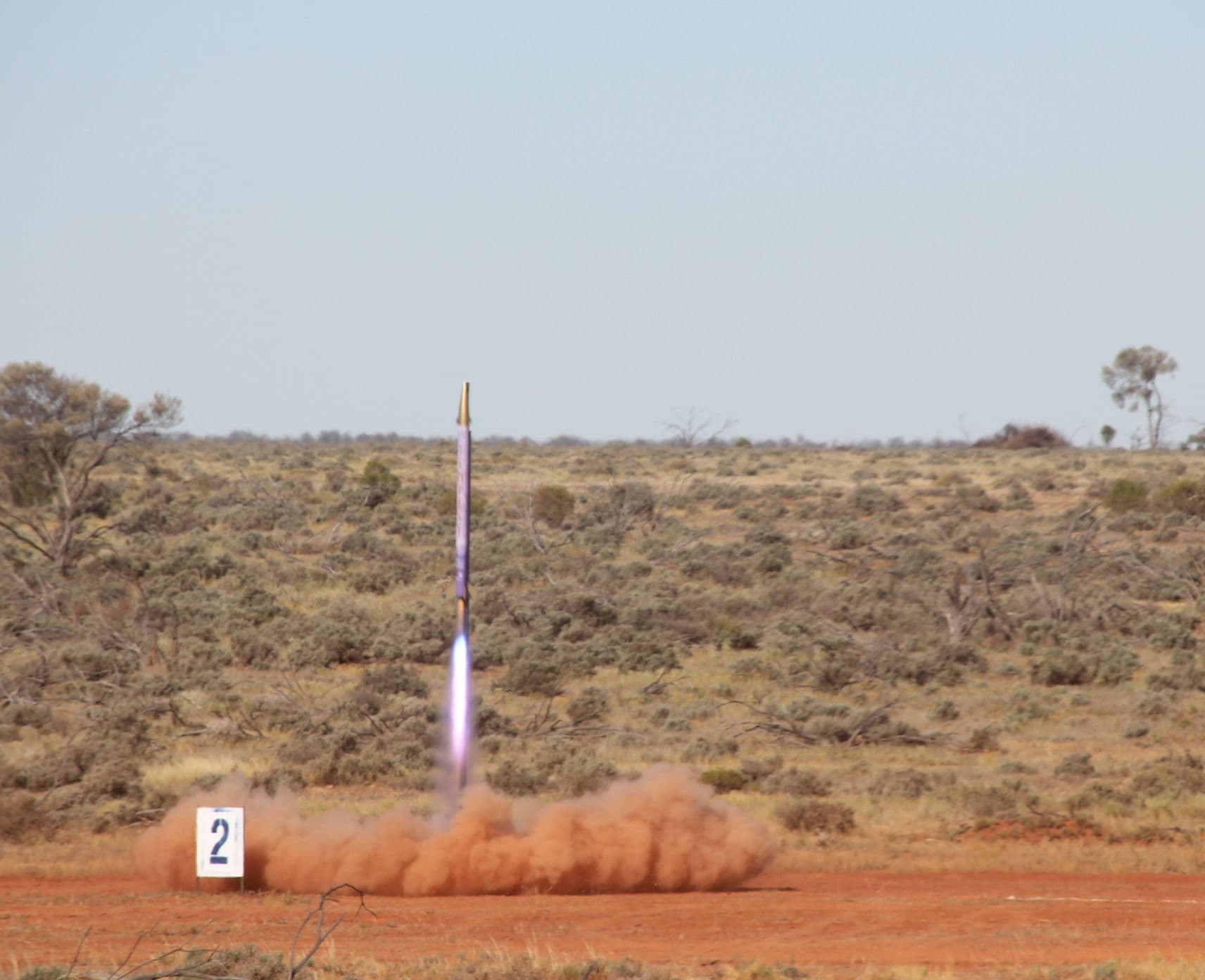
ANU Rocketry reaches new heights with national competition win
After months of design, testing and preparation, ANU students have soared to victory at the 2026 Australian Universities Rocket Competition.

Codebreakers tackle cancer drug resistance with machine learning
Dr Eli Niktab is building a genome atlas to tackle chemotherapy resistance – and is attracting significant global funding.
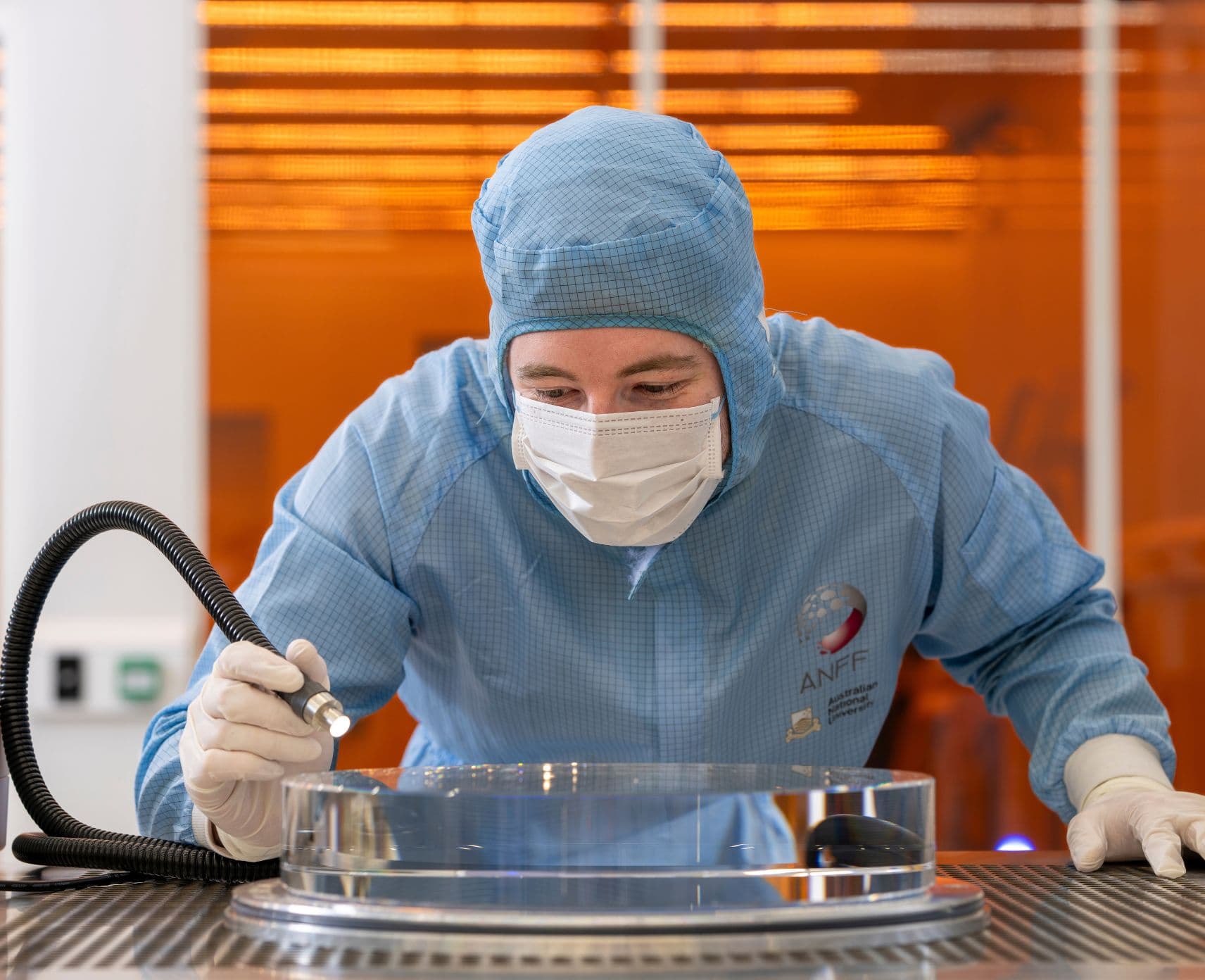
Ultra-precise ANU coatings help power the next generation of gravitational wave detectors
ANU researchers have developed ultra-precise optical coatings for LIGO’s specialised beamsplitters, helping improve the observatory’s ability to detect faint gravitational waves from across the universe.