
New technology takes kilos off early universe’s supermassive black holes
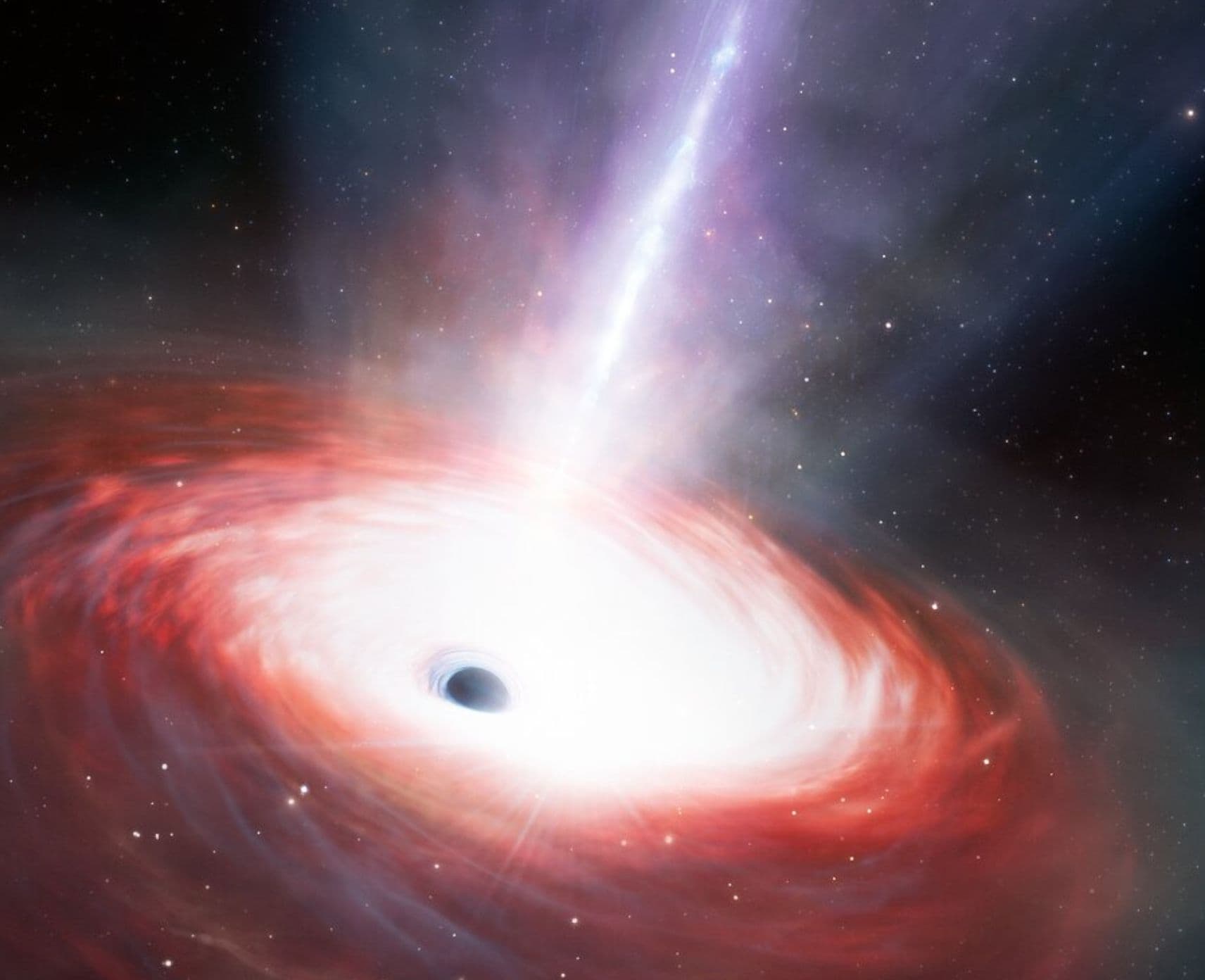
One of the most powerful black holes in the universe is belching out gas at speeds of up to 10,000 kilometres per second, making its estimated mass more than 10 times lower than first thought.
The monster black hole was first discovered in 2024 by Associate Professor Christian Wolf and his team at The Australian National University (ANU).
Using brand-new powerful optical equipment at the European Southern Observatory in Chile, they have now been able to magnify the black hole’s light and get a closer look at the gas swirling around it.
“Despite the quasar’s extreme luminosity, the black hole at its heart was found to have a mass equal to ‘only’ around one billion suns,” Associate Professor Wolf said.
“Instead of rapidly rotating as previously presumed, this black hole is belching up the gas it’s feeding on. The gas is being blown away by the ferocious density of light — this is the brightest object in the universe we know of.”
The black hole is more than 12 billion light-years away, making it challenging to study its inner structure — until now.
“This points at a solution to the question of where all these huge black holes in the universe are coming from,” Associate Professor Wolf said.
“While the rate at which they grow is still too fast to be explained easily, the re-weighing of this object and ones like it means that supermassive black holes may well originate from collapsing stars in the early stages of the universe, which had until recently seemed impossible.
Separately, Professor Michael Ireland from ANU is helping ESO advance its interferometry technology even further, meaning that it can soon be used to look at many more objects across the sky in even greater detail.
“My research area is the birth of planets around young stars, which will be revolutionised by the new technology at ESO. In the near future, our own creation story will only get more colourful,” Professor Ireland said.
This study was a collaboration with the Max-Planck-Institute for Extraterrestrial Physics (MPE) in Germany. The work is supported by Australia’s partnership with ESO.
An early copy of the paper is available online.
Top image: Artist’s impression of a rapidly feeding black hole that is emitting powerful gas outflows. Photo: NOIRLab/NSF/AURA/J. da Silva/M. Zamani

Contact the media team
Related tags:
You may also like
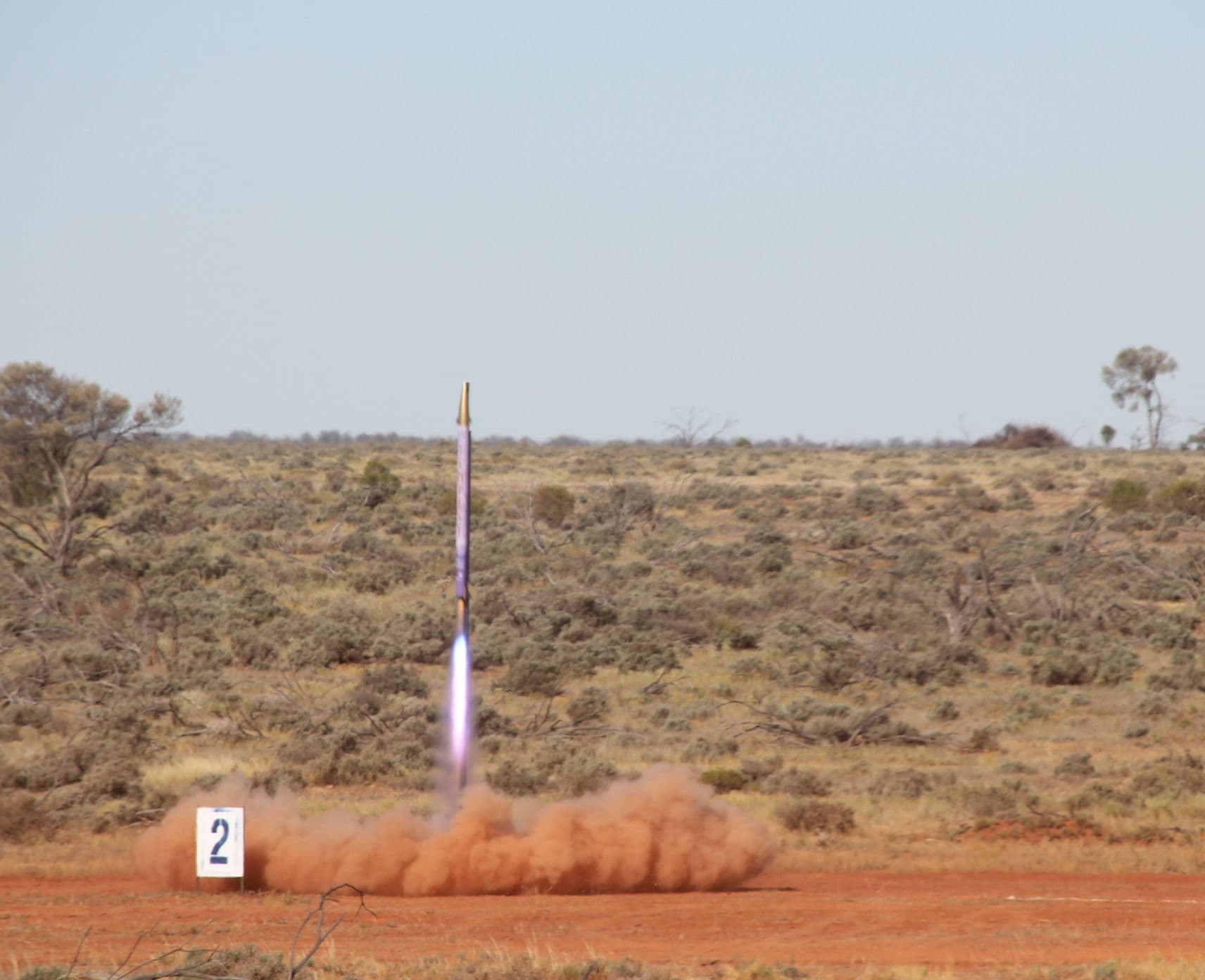
ANU Rocketry reaches new heights with national competition win
After months of design, testing and preparation, ANU students have soared to victory at the 2026 Australian Universities Rocket Competition.

Codebreakers tackle cancer drug resistance with machine learning
Dr Eli Niktab is building a genome atlas to tackle chemotherapy resistance – and is attracting significant global funding.
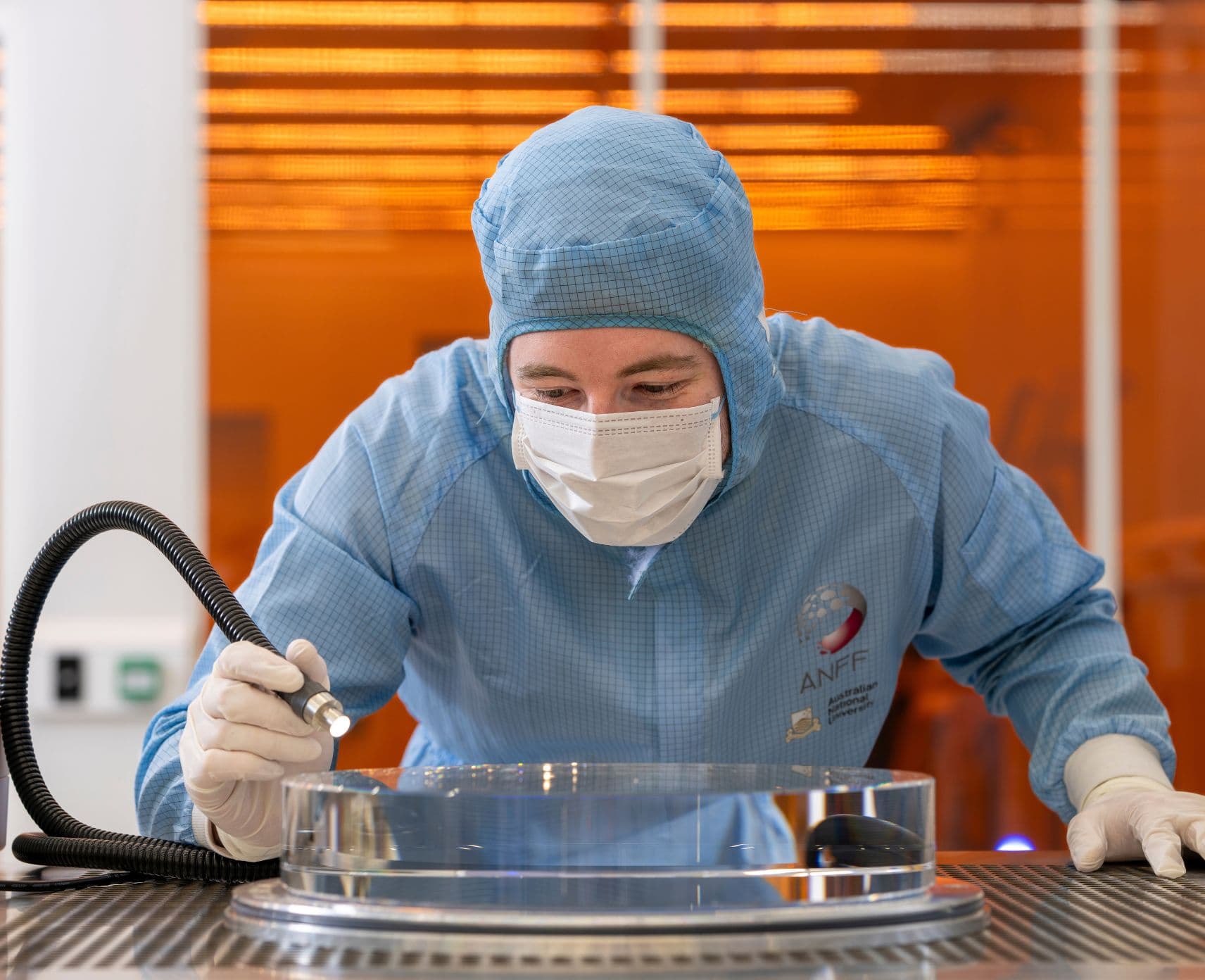
Ultra-precise ANU coatings help power the next generation of gravitational wave detectors
ANU researchers have developed ultra-precise optical coatings for LIGO’s specialised beamsplitters, helping improve the observatory’s ability to detect faint gravitational waves from across the universe.