
Screening blitz could achieve cervical cancer elimination among Indigenous communities within a generation
Research from The Australian National University (ANU) and The University of Sydney (USYD) reveals cervical cancer among Aboriginal and Torres Strait Islander peoples will not be eliminated without urgent and targeted action until 2047 – 12 years later than the federal government’s target of 2035.
The researchers found that a targeted screening blitz, focusing on Aboriginal and Torres Strait Islander women who have never been screened before, could bring cervical cancer elimination forward to 2036, almost closing the 12-year gap.
The study is the first in the world to project cervical cancer elimination for an Indigenous population.
Modelling found the single most effective strategy to accelerate elimination is through reaching First Nations women who have never been screened, ensuring they are screened at least once in their lifetime and supported with appropriate follow-up care.
Wagadagam Gumulgal epidemiologist and senior author Associate Professor Lisa Whop from Yardhura Walani at ANU said Australia could not claim success in cervical cancer elimination until Aboriginal and Torres Strait Islander peoples benefitted equally.
“If we act now, we could protect a whole generation of women from a preventable cancer,” said Associate Professor Whop.
“Our findings support calls for concerted efforts led by Aboriginal and Torres Strait Islander communities and provides a clear blueprint to overcoming longstanding inequities in cervical cancer screening.”
While HPV vaccination remains essential for long-term prevention, the study shows it cannot close the gap on its own as it takes decades to translate into reduced cancer rates. Screening is what saves lives in the near term.
“If current trends continue, Aboriginal and Torres Strait Islander peoples will wait another generation for elimination. That is not acceptable,” said lead author Associate Professor Megan Smith from the Cancer Elimination Collaboration at USYD.
“Vaccination is vital, but it won’t close this gap in time. Screening is what saves lives right now.”
Approaches such as self-collection and community-based point-of-care testing make screening more accessible and acceptable, particularly for people who have faced barriers to clinic-based care.
“Improving cervical screening data systems and sharing at the national level for the benefit of Aboriginal and Torres Strait Islander peoples is key to enabling Aboriginal Community Controlled Health Organisations reach those who have never been screened,” said Associate Professor Whop.
“This isn’t about inventing new solutions – it’s about backing what communities already know works.
With deliberate, Indigenous-led action, elimination for Aboriginal and Torres Strait Islander peoples is not only possible, but also within reach.
“The encouraging message is that this gap is not inevitable – it can be closed within the next decade if we act now,” said Associate Professor Smith.
“The gap we see in cervical cancer is not about biology – it’s about access. And access can be fixed.”
The study is published in Lancet Public Health.
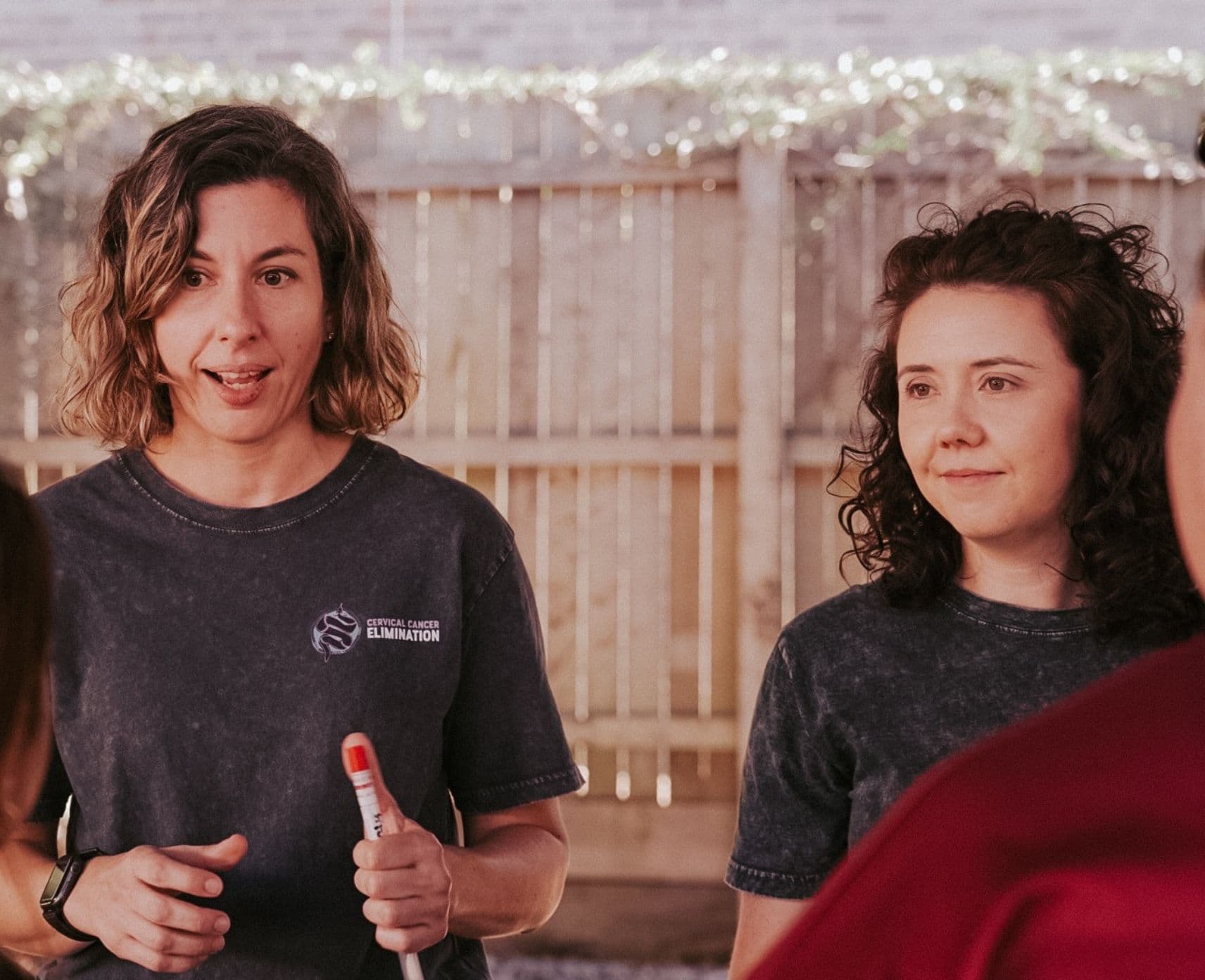
Top image: Dr Louise Mitchell and Dr Tamara Butler from Yardhura Walani talking to women about self-collection cervical screening at an Aboriginal Community Controlled Health Service community health day. Photo: ANU.
Featured experts

Contact the media team
You may also like
Strong and healthy: How Mob-driven leadership is transforming Indigenous health research
The history of Indigenous health research in Australia is deeply entwined with practices that were often extractive, exploitative and driven by non-Indigenous agendas. Now, Yardhura Walani and the National Centre for Indigenous Genomics are leading the way to change that.
Australian cave discovery shows grass was burned for magic, healing and cursing for 25,000 years
Perfectly preserved ‘phytolith’ plant crystals reveal that Indigenous Australians took grasses into a cave for ritual burning since last Ice Age.
Verses of reconciliation: Elfie Shiosaki’s poetry is helping Australia heal
Noongar and Yawuru scholar Elfie Shiosaki sees poetry as a technology for peace and truth-telling.