
Strong and healthy: How Mob-driven leadership is transforming Indigenous health research
The history of Indigenous health research in Australia is deeply entwined with practices that were often extractive, exploitative and driven by non-Indigenous agendas. Now, Yardhura Walani and the National Centre for Indigenous Genomics are leading the way to change that.
By Yardhura Walani and National Centre for Indigenous Genomics (NCIG)
“Like everything else, all our achievements and any benefits were not GIVEN to us; we all FOUGHT for them, set up our own organisations, organised ourselves and fought back.”
These are the words of Aunty Pat Anderson AO reflecting on the power of authentic Mob-driven leadership, as The Australian National University (ANU) proudly reflects on the last decade of Aboriginal and Torres Strait Islander led health research.
The history of Indigenous health research in Australia is deeply entwined with practices that were often extractive, exploitative and driven by non-Indigenous agendas. Too often, research reinforced deficit narratives that have caused, and continue to cause, cultural, physical and psychological harm to Aboriginal and Torres Strait Islander peoples.
ANU, like all Australian universities, has been part of this history. ANU remains accountable to its role in perpetuating colonial harms and celebrates the enduring strength of Aboriginal and Torres Strait Islander peoples and culture.
We look back at the two centres built at the ANU in the past ten years which are restoring trust with communities through genuine partnerships and research agendas driven by Mob.
Yardhura Walani: strong healthy place
Yardhura Walani, the National Centre for Aboriginal and Torres Strait Islander Wellbeing Research, is named after the Ngunnawal words for ‘strong healthy place’.
The Centre produces world-leading evidence on the most significant health and wellbeing factors that impact Aboriginal and Torres Strait Islander peoples’ lives, spanning cultural determinants, racism, tobacco control, family safety, cancer and chronic disease.
Its guiding principle is to be in service to Mob.
Yardhura Walani’s story began in 2014 with Professor Ray Lovett’s creation of the ANU Aboriginal and Torres Strait Islander health program and the landmark, long-term Mayi Kuwayu study.

What started as a team of one, has now become Australia’s largest Aboriginal and Torres Strait Islander led and governed health and wellbeing research centre.
Strong Indigenous governance is central to the Centre’s success, with best practice adherence to Indigenous Sovereignty principles. The Centre is powered by deep community partnerships, with more than 100 partnerships with communities, local governance groups and health services across Australia.
Half of Yardhura Walani’s 60 staff are Aboriginal and/or Torres Strait Islander peoples, led by Director Fiona Cornforth (of the Wuthathi and Maluligal peoples), with Professor Ray Lovett (Ngiyampaa, Wongaibon) and Professor Lisa Whop (Wagadagam, Gumulgal) leading the two overarching research pillars.
By placing Aboriginal and Torres Strait Islander leadership and community priorities at its core, Yardhura Walani is building an equipped and celebrated Indigenous health workforce.
In just four and a half years, the Centre has secured $38.3 million in research funding, become a trusted adviser to governments, helped shape major national health policies and led the Indigenous Data Sovereignty crusade domestically.
Their story, as a self-built and self-sustaining centre, conducting research in a way that genuinely delivers for the community and the broader nation, is not always easy.
“University systems are not built to foster genuine community partnerships and leadership – even though we know this is the most effective way,” says Yardhura Walani Director, Fiona Cornfoth.
But this is how lasting impact is achieved. The same is true of another leading Aboriginal and Torres Strait Islander-led health research centre at ANU.
The National Centre for Indigenous Genomics (NCIG): reshaping genomic research
The National Centre for Indigenous Genomics (NCIG) was established in 2013 with a clear purpose: to harness the power of genomics to improve the health and wellbeing of Aboriginal and Torres Strait Islander peoples, now and for future generations.
Rather than simply creating a research resource, NCIG was founded on a commitment to ensuring that Aboriginal and Torres Strait Islander peoples have equitable access to, and benefit from, advances in genomic medicine.
Overseen by an Indigenous Governance Board, the Centre is the custodian of 7000 biological samples and associated records collected from Aboriginal and Torres Strait Islander people between the 1960s and 1990s.
Director, Professor Alex Brown (Wadi Wadi and Yuin) and Deputy Director, Associate Professor Azure Hermes (Gimuy Walubara Yidinji) say NCIG is reshaping genomic research in Australia.
“Our work is grounded in Indigenous leadership and driven by a conviction that scientific excellence and cultural responsibility must walk hand in hand,” NCIG Director, Professor Alex Brown says.
NCIG generates research across genomics, rare disease, kidney disease, precision medicine, and health system translation.

Their work supports medical research that aims to improve health outcomes for Aboriginal and Torres Strait Islander peoples, ensuring the benefits of genomic medicine are more accessible and meaningful for communities.
Their research reveals unique genetic diversity among Indigenous Australians, creating reference resources to support rare disease diagnosis to support rare disease diagnosis and improve future healthcare.
They are also working with communities nationwide to co-design culturally appropriate genomic resources, such as animations and videos, ensuring accessibility and relevance.
In 2019, NCIG conducted one of Australia’s first large-scale, community-led repatriation efforts. Following extensive consultation with Yolŋu Elders, Traditional Owners, and families, NCIG returned more than 200 historical blood samples from Yolŋu people to Galiwin’ku for ceremonial burial.
NCIG is helping to create a future in which Aboriginal and Torres Strait Islander peoples share in the benefits of scientific discovery and maintain control over their stories, their data and their futures.
“I’d like to see all the benefits that we are talking about with Indigenous communities spread out across all of Australia,” says Associate Director Azure Hermes.
“Because we know that when we look at Indigenous science, and when we look at Indigenous genomics, that the benefits will be for all Australians.”
As ANU marks its 80th year, the work of Yardhura Walani and NCIG stands as a powerful example of how ANU can deliver on its unique national responsibilities.
Only through Aboriginal and Torres Strait Islander control of research agendas can policy and practice be meaningfully transformed to create lasting health and wellbeing benefits for Australia’s First Peoples.
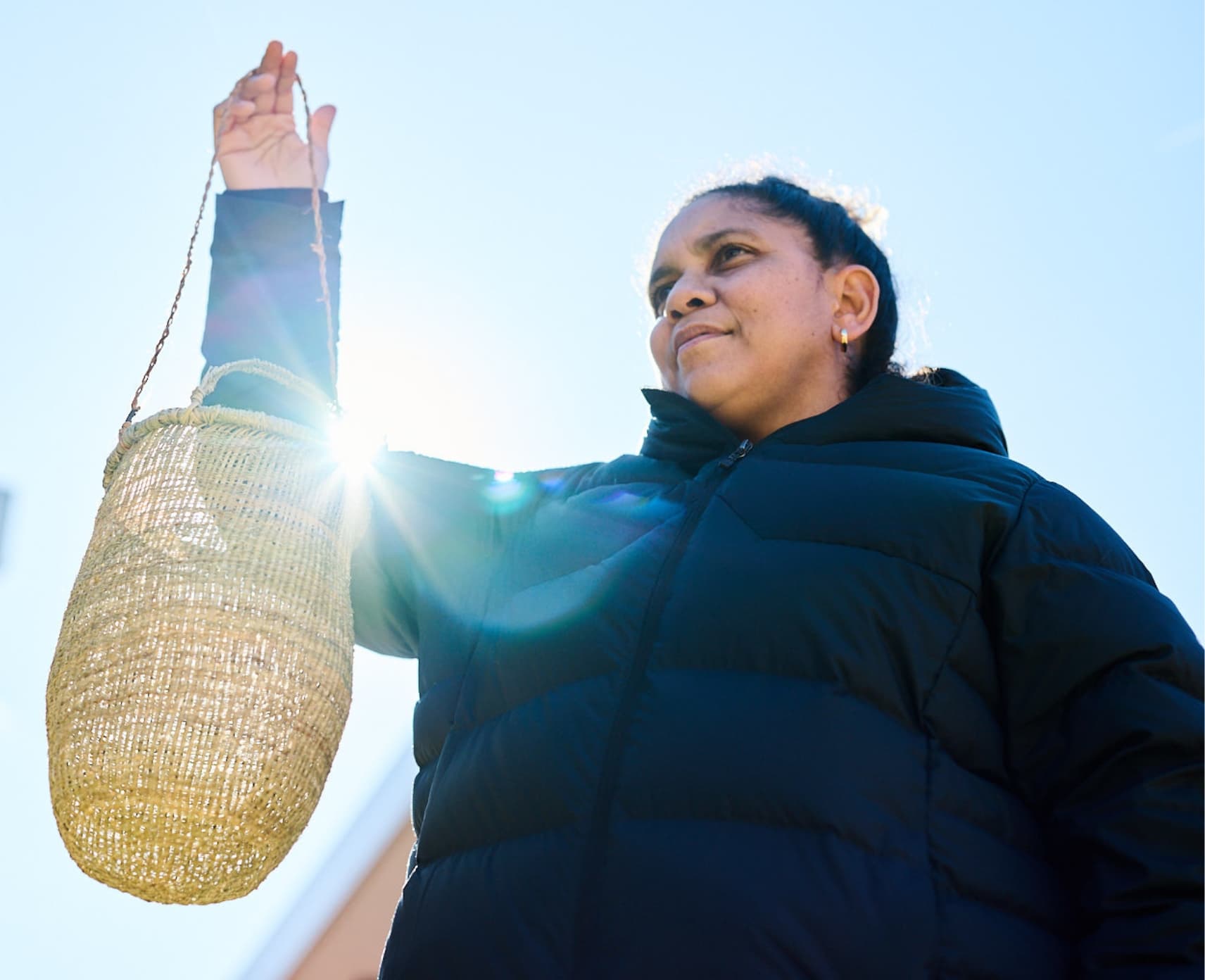
Top image: Nicole Chatfield at the Kulay Kalingka study launch in Condobolin, July 2023. Photo: Pew Pew Studio
You may also like
Australian cave discovery shows grass was burned for magic, healing and cursing for 25,000 years
Perfectly preserved ‘phytolith’ plant crystals reveal that Indigenous Australians took grasses into a cave for ritual burning since last Ice Age.
Verses of reconciliation: Elfie Shiosaki’s poetry is helping Australia heal
Noongar and Yawuru scholar Elfie Shiosaki sees poetry as a technology for peace and truth-telling.
Walking forward together to heal old wounds: truth-telling is a national endeavour
“I want truth-telling, justice and a better future, not only for our people but for all Australians, because we all benefit when everybody's brought along the journey.” ~ Minda Murray (Yorta Yorta and Duduroa).