
Why don’t we talk about suicide? ANU researchers are investigating ways to encourage safe disclosure
Suicide is the leading cause of death for Australians aged 15 to 44, yet many people experiencing suicidal thoughts don’t disclose how they're feeling. ANU researchers want to understand why.
Article by:

Lukas Arns
Contributing writer
You’re sitting in the GP’s waiting room, rehearsing what you’ll say. You’ve made the appointment. You’ve shown up. This is the moment you finally tell someone.
Then you’re in the chair, and the doctor asks what’s brought you in today, and somehow what comes out is: headaches. Trouble sleeping. You leave with a script for something mild and a follow-up in two weeks, and the thing you came to say stays lodged in your chest, unspoken.
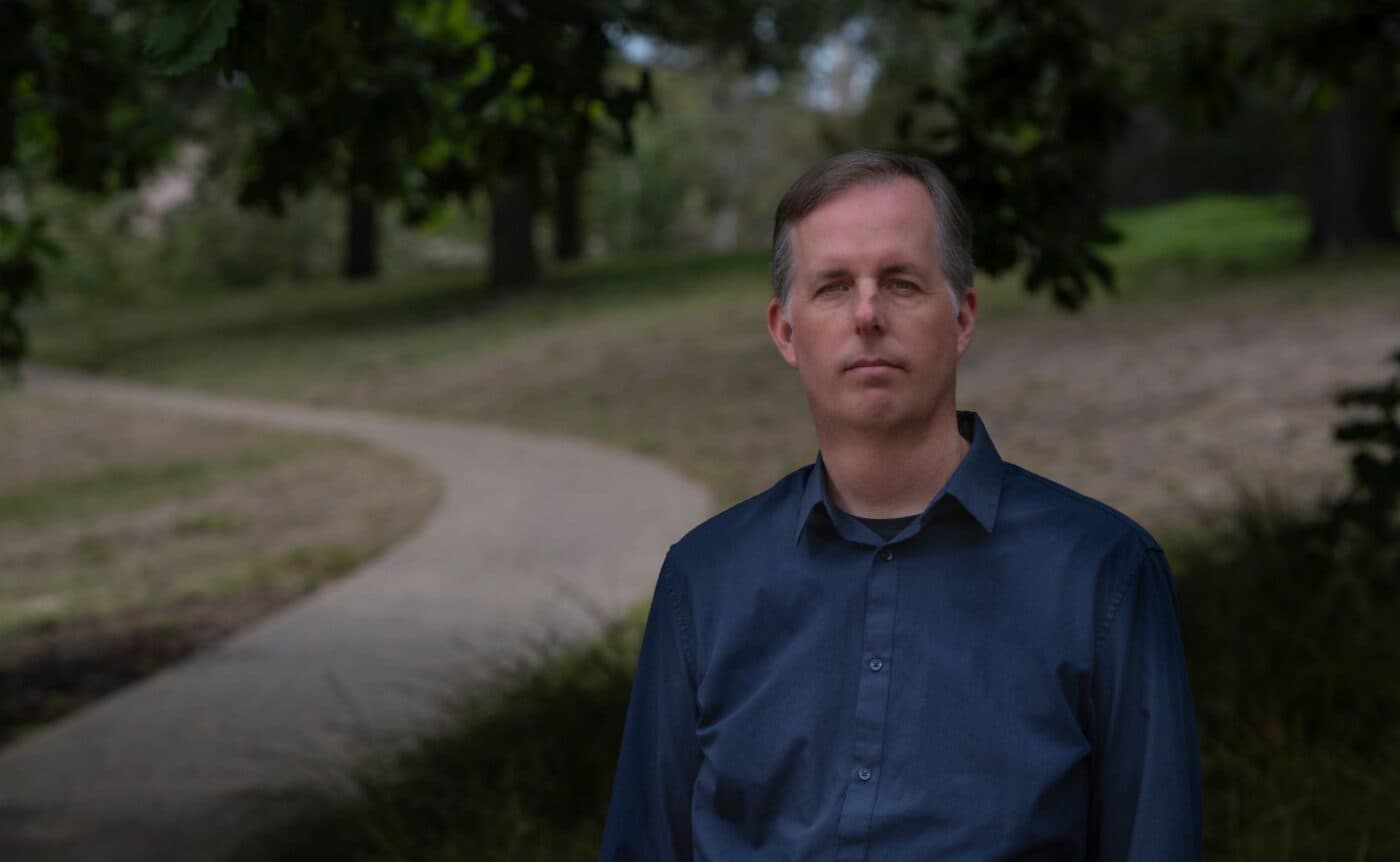
This moment – the almost-disclosure, the words swallowed at the last second – is what Professor Phil Batterham from The Australian National University (ANU) studies.
“We know quite a bit about why people experience suicidal thoughts, but we know very little about why some of those people go on to have a suicide attempt,” he says.
Batterham has spent years investigating why people experiencing suicidal thoughts so often stay silent. His research suggests mental health advice that urge people to ‘just talk’ often miss the mark. When it comes to suicidal thoughts, Batterham explains, the question isn’t just whether we talk – it’s how, when, and to whom.
Suicide is the leading cause of death for Australians aged 15 to 44. Yet Batterham’s research reveals that 39 per cent of people experiencing suicidal thoughts don’t disclose to anyone – not family, not friends, not doctors.
The reasons are more complex – and more rational – than simple stigma.
At the ANU Centre for Mental Health Research, Batterham’s LifeTrack study, a three-year project following 842 participants, is investigating how people transition between suicidal thoughts, attempts, and recovery.
“If somebody has suicidal thoughts, that in most cases will not mean that they’re going to attempt suicide,” Batterham says. “The vast majority, well over 90 per cent, will not die by suicide. If we can provide support early, we can change trajectories. Suicide is preventable in most cases.”
Early findings from the LifeTrack study suggest that those who disclose to trusted people are more likely to engage with professional care.
So why the silence? The barriers are layered. There’s stigma – society’s negative views becoming internalised as shame. There’s fear of consequences: being involuntarily hospitalised, losing autonomy.
“There’s some validity to that concern,” Batterham acknowledges. “There have been historical practices that have reduced people’s autonomy when they are feeling suicidal.”
Then there are past bad experiences. Many who’ve disclosed before were met with dismissal or discomfort that made things worse.
And there’s self-reliance, particularly among some men that believe needing help is a sign of weakness. Beneath all of these runs a calculation most people never articulate: will telling someone make things better or worse?
That calculation isn’t paranoia. Batterham’s research found that responses to disclosure vary dramatically. Psychologists and counsellors were perceived as most helpful; parents and hospital-based professionals least. The difference often comes down to judgment – or its absence.
For example, some parents that lack the resources to process disclosure might push someone with suicidal thoughts to seek professional help – something that person may not be ready for.
“Disclosure can be a negative experience as well,” Batterham explains. “Disclosure that doesn’t meet the individual’s needs can be quite damaging and may lead them to not disclose in the future.”
Therefore, it’s disclosure gone well, rather than disclosure per se, that redirects the trajectory. Disclosure can be a hopeful bridge, but it’s not an endpoint.
So, what does help? Non-judgmental listening. Being available over time. Working with someone rather than trying to fix them. Offering support without forcing it, such as asking “maybe I could come with you to see a doctor?” Rather than saying “you need to go to hospital now”.
Batterham says that if you suspect someone is struggling, ask them directly.
“That doesn’t have a negative effect, people don’t become more distressed,” he says. “If they are having thoughts, it’s often a relief to be asked.”
ANU researchers are building toward systemic solutions. Gatekeeper programs train parents and teachers to respond helpfully. School-based programs embed mental health education early. Non-clinical ‘safe spaces’, staffed by peer workers who’ve experienced mental ill-health themselves, offer alternatives to emergency departments – places where someone can simply sit with you without trying to solve the problem.
“Thinking about where people are and existing pathways to intervene, particularly early intervention for young people, that’s been the most promising so far,” Batterham reflects.
The goal isn’t to demolish every barrier to disclosure. It’s to understand which ones matter and build protective ways through. The person in the GP’s waiting room rehearsing their words, they don’t just need a slogan telling them to speak up. They need the right listener, at the right moment, ready to hear them.
Because when it comes to suicidal thoughts being disclosed, the question is never just whether we listen. It’s how we respond, stay with, and support.
If you or someone you know is struggling, support is available:
- Lifeline: 13 11 14
- Beyond Blue: 1300 22 4636
- Suicide Call Back Service: 1300 659 467
- ANU Health, Safety and Wellbeing
Top image: Professor Phil Batterham. Image: Jamie Kidston/ANU
Featured experts

You may also like

Beyond zero tolerance: what it will take to end sexual harassment in medicine
Drawing on years of global research and testimony, Clinical Associate Professor Louise Stone examines why sexual harassment persists across medical cultures worldwide – and why policy and law alone have never been enough to stop it.
How art uncovers the hidden pain of endometriosis
ANU PhD candidate Susanne Ilschner is combining visual art, patient experiences and laboratory research to better understand the emotional, social and biological impacts of a condition affecting up to one million Australians.
Strong and healthy: How Mob-driven leadership is transforming Indigenous health research
The history of Indigenous health research in Australia is deeply entwined with practices that were often extractive, exploitative and driven by non-Indigenous agendas. Now, Yardhura Walani and the National Centre for Indigenous Genomics are leading the way to change that.