
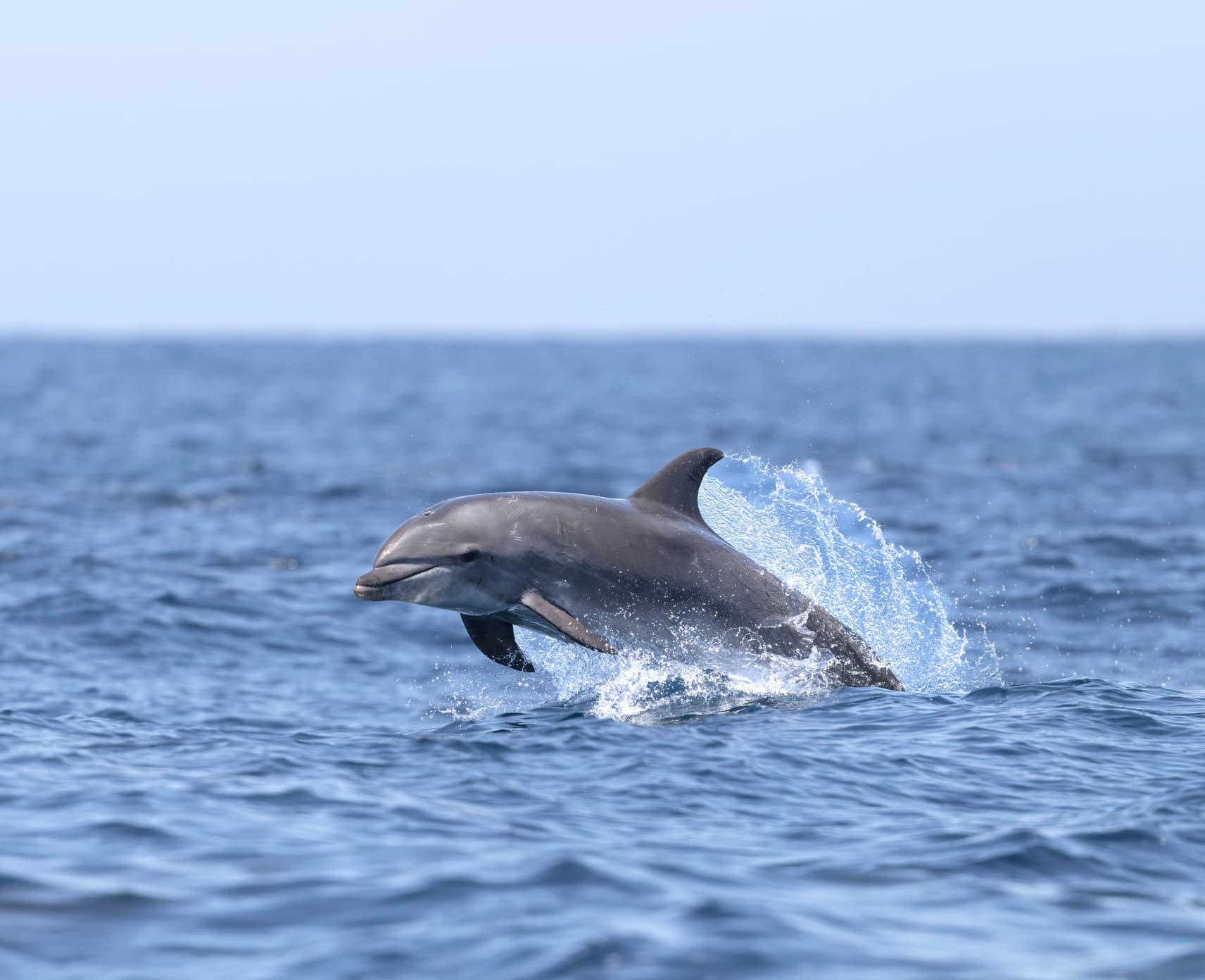
Flippers and flutes: how music helps us talk to dolphins
The universal language of music could serve as a gateway to communicate with dolphins.
Article by:

George Booth
Contributing writer
The universal language of music could serve as a gateway to communicate with dolphins and possibly open doors to learn more about the naturally curious creatures, according to researchers from The Australian National University (ANU).
An ANU-led experiment conducted in Port Stephens, New South Wales aboard the Imagine Eco Cruises boat in December 2021 reveals dolphins are attracted to the high-pitched frequencies of several instruments including the flute, piccolo and the Indian wooden recorder.
According to the researchers, high-pitched singing also seemed to attract the dolphins.
Flautist Sally Walker, from the ANU School of Music, says “within minutes” of performing the flute a pod of bottlenose dolphins approached the boat.
“One dolphin glided directly underneath me at the same speed as the boat, and the rest of the pod danced around it,” she says.
“High frequencies and particular intervallic distances between notes seemed to draw the dolphins in and excite them, and staff of the Imagine boat said that we had seen an unusually large number of dolphins both in the port and out to sea.”
The sounds of the dolphins were recorded using an underwater microphone, known as a hydrophone, and can be heard here.
Dolphin expert Dr Olivia De Bergerac, who is part of the pilot study, has been researching the interaction between dolphins and humans for more than 25 years, but says little is known about how dolphins react and respond to live music.
“Dolphins live in a world of sounds; they communicate with one another by sending a sound which is a hologram of information reflected in their melon – a mass of adipose tissue found in their forehead – so I know we as humans can communicate with dolphins through music,” she says.
“Dolphins are highly intelligent creatures and can sense our thoughts, feelings, state of being and send us sounds to heal us.”
Professor Kim Cunio, Head of the ANU School of Music, says: “The effect of listening to water teeming with life with the aid of a hydrophone is quite exciting.
“Sound travels through water in a very different manner to air, particularly low frequencies, but the dolphin frequencies are very high.
“This means that we are not easily hearing the nuance in their calls.
“As such, having the flute, piccolo and a coloratura voice were really important as they are some of the highest instruments we have and are well above our speech.”
The researchers’ next steps in their study involve investigating the possibility of directly interacting with the dolphins via the hydrophone and seeing what kind of sounds they are most receptive to.
They intend to play their music via an underwater speaker to test whether it influences how the dolphins interact with and respond to music and the musicians, compared to the musicians performing above water.
“For example, do they respond differently to structured music like a Bach sonata?” Ms Walker says.
“Or perhaps more soothing sounds similar to what you would hear on soundtracks designed for meditation.
“Maybe they’re simply attracted to the novelty of someone standing on the bow of a boat and serenading them.”
A video in which dolphins can be seen approaching the boat and interacting with the music can be viewed here.
Top image: FPLV/stock.adobe.com
Contact the media team
Related tags:
You may also like
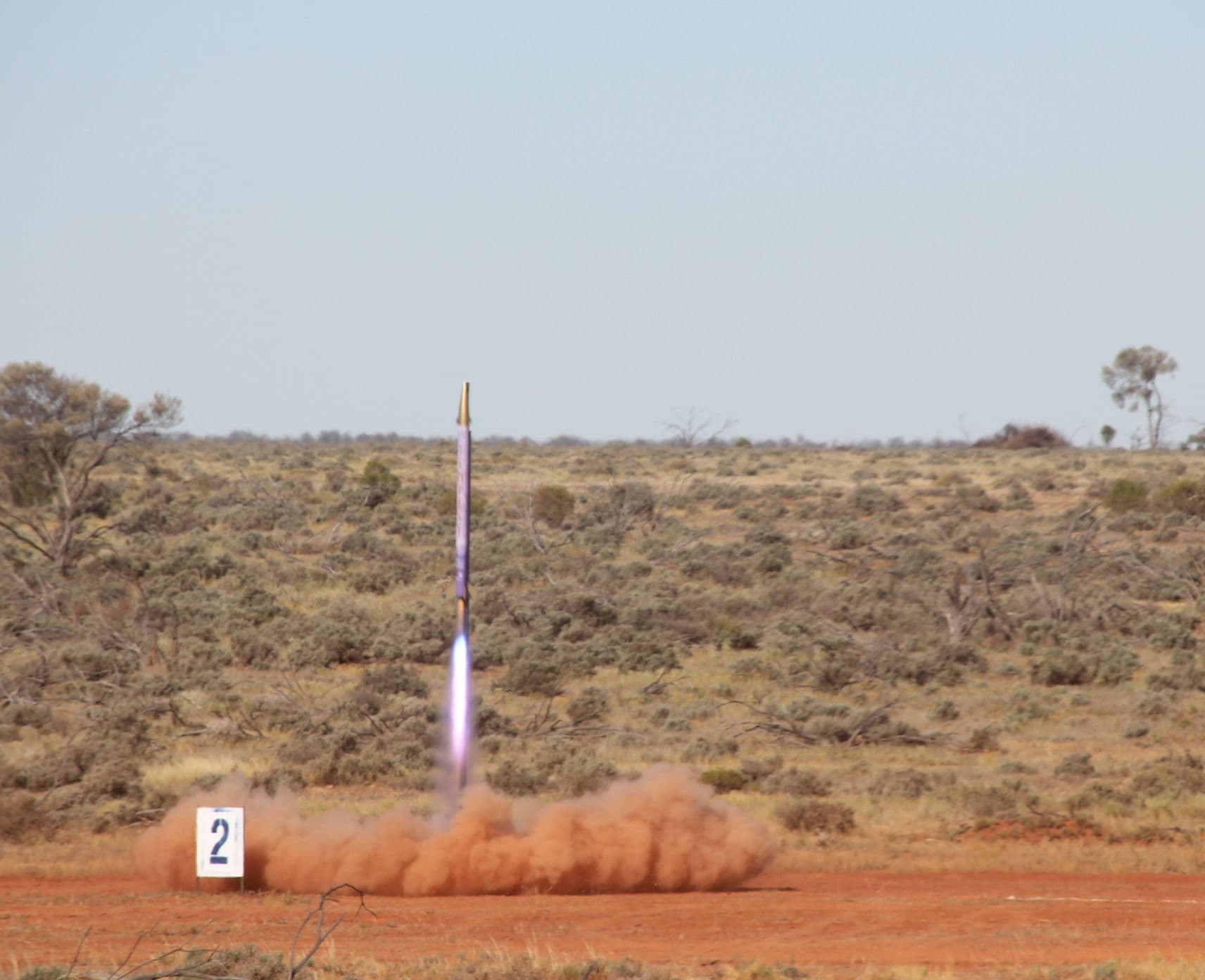
ANU Rocketry reaches new heights with national competition win
After months of design, testing and preparation, ANU students have soared to victory at the 2026 Australian Universities Rocket Competition.

Codebreakers tackle cancer drug resistance with machine learning
Dr Eli Niktab is building a genome atlas to tackle chemotherapy resistance – and is attracting significant global funding.

Ultra-precise ANU coatings help power the next generation of gravitational wave detectors
ANU researchers have developed ultra-precise optical coatings for LIGO’s specialised beamsplitters, helping improve the observatory’s ability to detect faint gravitational waves from across the universe.